Издательства
- Rizzoli (485)
- Thames & Hudson (157)
- Prestel (149)
- Gestalten (106)
- Braun (104)
- teNeues (71)
- Vendome Press (60)
- DOM Publishers (51)
- Phaidon (50)
- Monacelli Press (49)
Подобрать по характеристикам
Разделы
Наличие на складе
Издательства
Цена (130 - 229830 грн)
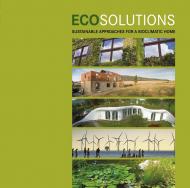
The intention of adapting world sustainability models to the context of a household provides opportunities for a fusion of lifestyle choices which result in sustainable living. Through the various categories which include shelter, power, food, transportation, water, and waste, the goal of sustainable living is to mitigate the impact of modern life on the environment. While some see this way of life as a step backward from a technological standpoint, the fact is that those who practice this lifestyle do so by means of some of the most advanced technology available. Adapting the more general tenets of sustainability to personal lifestyle choices can be considered a small but important step in developing a society that can live in harmony with the Earth. Colour illustrations
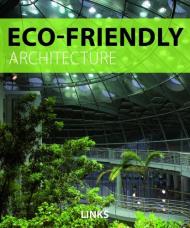
This new, well researched collection is an exemplary survey that brings together some of todays most prestigious architects, whose work in sustainable architecture has helped define this fascinating and vital field. Fertile imagination combines with maximum efficiency in a host of projects, all accompanied by texts and floor plans from the architects themselves, as well as full colour photographs that bring the work to life. Eco-Friendly Architecture will surely be an invaluable inspiration to all those interested in this field, whether professionals, students or architecture enthusiasts.
Fashion consciousness interpreted as modern, ethical living - "ecodesign" considers every project a life-cycle that has to be well thought out, from production to disposal.
This new "green" approach reflects a dynamic lifestyle that imaginatively brings together design, innovation, and the responsible use of resources. The objects and products featured in this book provide attractive solutions for the demands of contemporary life. A wide, fascinating range of unusual possibilities is presented on 352 richly-illustrated pages: from stylish energy savers for everyday life and multifunctional systems of furniture to the natural cosmetics of the future.
The book also offers an insight into the basic principles of ecodesign and sets benchmarks for modern, stylish product design.
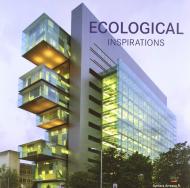
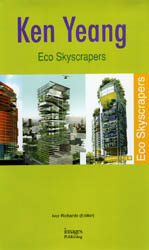
Combining sustainability and environmental awareness with ground-breaking style is one of the most exciting tasks of contemporary building design. Architects meet this challenge with breakthrough creative concepts which transformed ecological innovation into an integral part of building.
The combination of unusual design and visionary application of energy and environment conservation technologies illuminates the projects presented in this volume as the forerunners of contemporary architecture. 112 projects from all around the globe are presented by means of texts, plans and photos as well as specific data concerning the ecological features.
From the contents:
* Genzyme Center, MA, USA (Behnisch Architekten)
* Solar settlement Schlierberg in Freiburg, Germany (Rolf Disch)
* Y-Cabin in Eastern Japan (Kengo Kuma & Associates)
* Penang Peaks, Malaysia (Michael Sorkin Studio)
* Canal House in Venice, CA, USA China (Sander Architects)
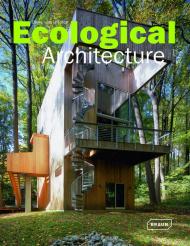
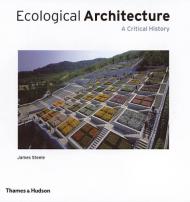
The ecological approach to building is the great untold story in the architectural history of the past century. This book is essential reading for architects and students. As an urgent wake-up call on the state of our built environment, it will be of interest to everyone who cares about the future of our planet.
In the past, many of the key tenets of the ecological philosophy - sustainability, energy efficiency, harmonious relationship with the environment - appeared to stand contrast to the sweep of science-led ‘progress’ that characterized the modern movement. Today, however, past visionaries are vindicated and yesterday’s eccentricities are today’s legal requirements: every architect has an obligation to the environment as well as to his or her client.
After an introduction to the terminology of ecological architecture - including terms such as ‘green’ and ‘sustainable’,
Part one identifies recurring themes in ecological architecture. Part two features twenty-five case studies each focusing on a specific architect, movement or topic. Some of the names are familiar in this context - Rasem Badran, Hassan Fathy - but there are also plenty of surprises - Le Corbusier, Buckminster Fuller, Rudolf Schindler. Part three looks to the future as ecological architecture struggles to deal with global urbanization.
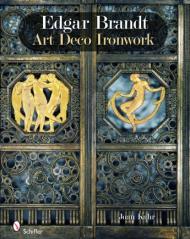
A premier metalsmith in the early 20th century in France, Edgar Brandt (1880-1960) designed and fabricated some of the most beautiful architectural and decorative ironwork of his age.
This elegant book recounts his life and work with scholarly text and photographs. Lyrical gates, doors, and tables, including his most famous screen, L'Oasis, appeared at the seminal 1925 Exposition des Arts Dcoratifs, in Paris, which gave the name Art Deco to the new style of designs.
Combining motifs from ancient Egypt and classical Greek sources, floral and animals forms, and machine-inspired geometric designs, Brandt created items that became synonymous with the most lavish designs of the time. His workshop and showroom in Paris, along with a gallery that featured works by other contemporary artist-craftsmen, produced luxury goods and private commissions.
Grilles, fire screens, doors, tables, andirons, vessels and lighting devices were exquisitely executed, and appear here to be studied and compared. Historians and art collectors interested in this fascinating period will find this book an invaluable reference.
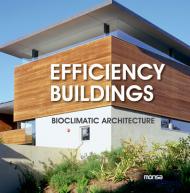
This book teaches us that when the creative processes are used in combination with social, cultural and environmental systems, modern architecture meets without hesitation the artistic and sensible necessities of present days without compromising the requirements of our future generations. A combination of architects versed in sustainable, bioclimatic architecture and emergent architects, across different projects they explore the critical line between how we construct and the natural environment.
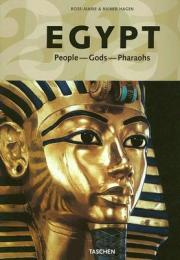
TASCHEN's 25th anniversary - Special edition! What do we really know about our ancestors? Not about the rulers and generals, but about laborers, farmers, soldiers and families. Egypt is a perfect case in point, almost a blank slate for most of us as it regards details of their everyday life. This useful and informative book attempts to set the record straight by offering a distinctive take on that most mythologized of epochs. Who would have guessed, for example, that the first strike in recorded history took place in 1152 BC during work on the necropolis in the Valley of the Kings, a protest by construction workers against delayed deliveries of oil and flour? Two fairly banal commodities maybe, but essential: oil protected the skin against the savage desert climate, whilst flour was the base ingredient for thirty different kinds of nutritional cake. It is this detailed examination of the evidence that distinguishes this volume, with chapters on everything from relationships to leisure activities, the role of women to the manufacture of mummies. And just like the mummies, “fragile as eggshell but solid as a statue” and magically able to transcend death, both people and country are brought alive for us again.
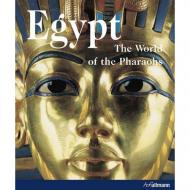
Roman emperors, Arab scholars, and early travellers were already drawn to and enchanted by the fascination of the land along the Nile. The pyramids of Giza, the temple-city of Karnak, or the Valley of the Kings with the grave of Tutankhamen even today maintain their extraordinary force of attraction.Across the centuries, the high culture of the ancient Egyptians has pertained its allure. This can certainly be attributed to their astounding architectural, artistic, and technological achievements as well as their high level of writing and literature. The unified world view of old Egypt, in which science and religion are an indissoluble unity, impresses us deeply, as well.
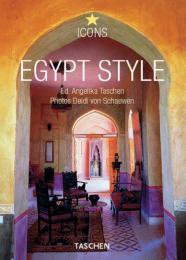
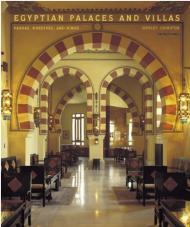
Egypt’s romantic allure does not end with the age of the pharaohs. This lavishly illustrated book offers an unprecedented look inside the opulent estates of the pashas, khedives, and great ladies of 19th-century Egypt, and the princes and kings of the early 20th century. Here in all its cosmopolitan splendor is the world of unparalleled prosperity that attracted adventurers the world over, from the Belle Époque through the Roaring Twenties. The stories of the families and architects behind 41 spectacular villas and palaces make this volume as fascinating to read as it is to look at. Sumptuously illustrated with 174 original color photographs, Egyptian Palaces and Villas will entrance and delight anyone interested in this proud land and its dramatic history.