A woman among Modernists
Издательства
- Rizzoli (485)
- Thames & Hudson (157)
- Prestel (149)
- Gestalten (106)
- Braun (104)
- teNeues (71)
- Vendome Press (60)
- DOM Publishers (51)
- Phaidon (50)
- Monacelli Press (49)
Подобрать по характеристикам
Разделы
Наличие на складе
Издательства
Цена (130 - 229830 грн)
A woman among Modernists
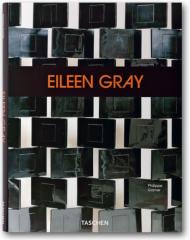
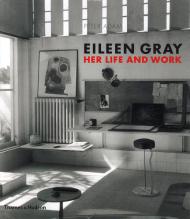
Eileen Gray is now celebrated as a pioneer of modern design and one of the most influential designers of the twentieth century, together with Le Corbusier, Charlotte Perriand, Marcel Breuer, Ludwig Mies van der Rohe, Alvar Aalto, Gerrit Rietveld and Charles Eames.
Her Bibendum chair and E.1027 table are today familiar icons around the world, while E.1027 and Tempe à Pailla – two houses that she built and furnished entirely with her own designs – are cited among the purest examples of Twenties and Thirties architecture.
Peter Adam, a long-time friend of Gray’s, has had privileged access to her surviving correspondence, drawings and journals as well as her architectural sketchbooks and photographic archives. From these sources he has built up a full-scale picture of her eventful life, from her aristocratic beginnings in Ireland, to the extravagant Art Deco period in Paris, and her productive years in the south of France.
Enriched by a wealth of previously unpublished material and an extensive plates section in full colour and duotone, this volume is a mine of rare and fascinating information which reveals above all the contemporary relevance of Eileen Gray’s work.
'More is more'. That is the motto of paster decorator Pieter Porters. His interiors are rich, full and cosy; even a little decadent. Interiors in which people can really live. The luxurious finishing of Elegance & Decadance also reflects that grandness.
What is the use of a lovely house or interior if you dare not live in it? If you are frightened of making something dirty or damaging it? In our eyes, a house should be a warm nest, a place where after a busy day, you can relax, and where family and friends are welcome.
Whether we help build up a house from cellar to attic, or add atmosphere to an existing interior with a few well-chosen accessories, at House of Porters we want to create a timeless world, in which people will feel comfortable. We aim for warmth, light, homeliness, comfort. Cold interiors or harsh colours are not our things. That does not mean that we never take on design or modern interiors, but even then we strive for that timeless atmosphere, regardless of trends or fashion fads. Our interiors are meant to grow and develop with their occupants throughout their lives.
The interiors illustrated in this book show perfectly what the House of Porters stands for: sumptuous, homely, warm and elegant, with here and there a touch of decadence.
Featuring interiors from all over the world, including Belgium, The Netherlands, the UK, Germany and Colombia, the pictures by Studio Verne and the magnificent layout by Leen De Pooter will fully grasp the authenticity and vivacity of Pieter Porters' interiors.
Pieter Porters is a decorator and flower binder. His timeless interiors can be admired in an astonishing house in the centre of Antwerp, where he also gives workshops and has a hotel. His previous book Senses of Living was an international bestseller.
This beautiful book is hand-bound with Linen that Porters designed himself and the book has a special closing system with a ribbon and a knot.

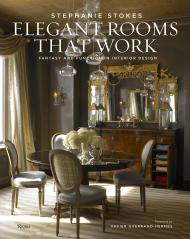
Known for her understated elegance, Stephaniem Stokes explains how to maintain fantasy and functionality in home decor by focusing on the planning of comfortable and multipurpose spaces that include attractive storage.
New York-based interior designer Stephanie Stokes has dealt with demanding spaces in apartments and houses worldwide. With consummate skill, she has delivered unparalleled efficiency of space without sacrificing style.
This design primer is organized by room type from living rooms and kitchens to bedrooms and entryways. Her ingenious solutions to the challenges of creating a livable environment from clever and attractive storage units to libraries that convert gracefully to guest rooms and home offices are inspirational to all homeowners. With exacting precision, she plans every anticipated need and can turn the tiniest of spaces into a cornucopia of cabinetry and imaginative storage. Her secrets for using every cubic inch while creating atmospheric environments that work are illustrated in this attractive yet practical book.
Recently awarded the Venice Biennale 2008 ‘Silver Lion for Most Promising Young Architect’, Elemental is a Chilean initiative creating innovative solutions for subsidized housing. The program’s urban projects aim to improve social housing for poverty stricken families. Elemental organized an international architecture competition which resulted in seven constructed projects throughout Chile as hybrids between house and building, pushing the limits of expansion and density. Built in central areas, these houses are half-constructed, offering inhabitants the infrastructure to extend the house to personal needs. This is a fascinating study of the successes and failures of the ‘Elemental Houses’. ELEMENTAL is a Do Tank affiliated with the Pontificia Universidad Católica de Chile and COPEC, implementing urban projects for social interests.
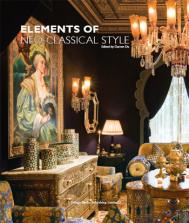
The elements of Neo-classical style are the elements that reflect Neo-classism in modern living space. It could be as big as a solid Roman column, and as small as a beautifully carved artefact. These decorative substances can evoke imagination, cast visual impact, and reach the very inner part of the audience. They are not necessarily ‘vintage’, but they do convey the preciseness, solemnity, and luxury of Neo-classism. Neo-classical elements present strict geometric patterns and are more or less hand carved, bringing the ambiance of solemn elegance and the ‘human’ factor into the interior. Therefore, Neoclassical style is given more consideration in today’s interior decorating industry.
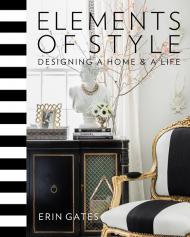
From the rising-star designer and author of the hit blog, Elements of Style, a full-color, fully illustrated book packed with honest advice, inspiration, ideas, and lessons learned about designing a home that reflects your personality and style.
Elements of Style is a uniquely personal and practical decorating guide that shows how designing a home can be an outlet of personal expression and an exercise in self-discovery. Drawing on her ten years of experience in the interior design industry, Erin combines honest design advice and gorgeous professional photographs and illustrations with personal essays about the lessons she has learned while designing her own home and her own life—the first being: none of our homes or lives is perfect. Like a funny best friend, she reveals the disasters she confronted in her own kitchen renovation, her struggles with anorexia, her epic fight with her husband over a Lucite table, and her secrets for starting a successful blog.
Organized by rooms in the house, Elements of Style invites readers into Erin’s own home as well as homes she has designed for clients. Fresh, modern, and colorful, it is brimming glamour and style as well as advice on practical matters from choosing kitchen counter materials to dressing a bed with pillows, picking a sofa, and decorating a nursery without cartoon characters. You’ll also find a charming foreword by Erin’s husband, Andrew, and an extensive Resource and Shopping Guide that provides an indispensable a roadmap for anyone embarking on their first serious home decorating adventure. With Erin’s help, you can finally make your house your home.
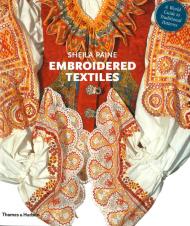
The art of embroidery has been practised for thousands of years. In the West, traditions have been at the mercy of trade and fashion, but in other regions, embroidery continues to be rooted in ancient beliefs and superstitions.
This beautifully illustrated book examines in detail the fascinating symbolism of the motifs and patterns that give life to these traditional textiles from around the world.
The global range is as remarkable as the variety of materials and motifs on display. Each textile – whether Chinese court insignia, Japanese kimono, Sumatran sarong, Turkish napkin, Ghanaian banner, Native American pouch or Peruvian Nasca textile, among others – bears its own distinctive designs.
Complete with:
- glossary
- dictionary of stitches
- information on public collections
- how to collect textiles
– this is an unrivalled guide for anyone interested in textiles, costume or craft.
A beautiful coffee table book on the links golf of Ireland featuring the landscape photography of LC Lambrecht. Every links in Ireland is featured and the text is provided by golf scribes from Ireland who really know the subject. This over sized book is a treasure for anyone who appreciates the beauty of golf course architecture.
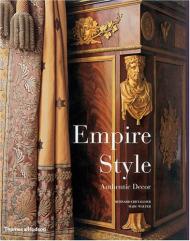
Frances Empire period, guided by the grand visions of the Emperor Napoleon and the more domestic ones of Josephine, was one of the most sumptuous and creative epochs in French furniture and interior design.
By 1800, Neoclassical architects Percier and Fontaine had left an indelible mark on the Imperial residences and on the homes of the countrys leading families. The elegant sensibility of this period reflected a nostalgia for the treasures of ancient Rome and Egypt and resulted in the creation of harmonious interiors to match equally fine facades. Bernard Chevallier takes the reader on a detailed, room-by-room tour through the finest Empire antechambers, bedrooms, libraries, salons and beyond.
This beautifully illustrated volume will be a captivating read for historians, decorators and art lovers alike.
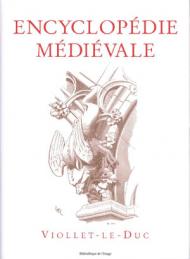
"(…) Le Dictionnaire raisonné de l’Architecture comprend 10 volumes de 450 pages chacun en moyenne, soit environ 4000 pages de texte illustré de 4500 gravures sur bois. Outre le texte fort intéressant et vivant, c’est cette iconographie qui donne à l’ouvrage l’essentiel de son intérêt. (…) Nous avons ainsi sélectionné les principaux passages du Dictionnaire raisonné de l’Architecture écartant ceux qui étaient trop techniques et les courtes rubriques ne comportant que du texte. (…) Sur les 4500 gravures originales nous en avons présenté 1335 dans le présent volume et quelques centaines dans le tome 2. Nous pensons que l’essentiel du Dictionnaire raisonné de l’Architecture est ici présenté… Avec ces deux volumes de l’Encyclopédie médiévale qui reprennent l’essentiel des deux Dictionnaires de Viollet-Le-Duc avec 1440 pages, nous avons publié plus de 3000 dessins !" / Georges Bernage
Refonte en un volume du Dictionnaire raisonné de l’architecture (1854-1868) et du Dictionnaire raisonné du Mobilier (1858-1870) par Georges BERNAGE :
TOME I : Architecture
- Avant-propos de Georges BERNAGE (5 photographies dont un portrait par NADAR)
- TABLE DES RUBRIQUES : 62 entrées de Abside à Porte 720 pages
TOME II : Architecture et Mobilier
- Avant-propos de Georges BERNAGE (9 illustrations)
- TABLE DES RUBRIQUES : 11 entrées de Prison à Vitrail pour la fin de l’Architecture et 7 entrées de Armes à Instruments de musique pour le Mobilier.
720 pages
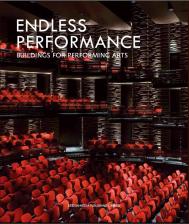
Buildings for performing arts, including theatres, concert halls, opera houses that we show in this book are actual endless live performance. Architecture is connected with music, opera and people by "director" - the architect, and then art is extended.
New-built, renovated and innovative soundscaping, all architects are exploring and aiming to establish a new relationship between art, people and buildings for contemporary life.
This book selects latest and different types of building for performing art from the world. Some of them are set up first, and others reborn with interesting stories, but all of them are cityscapes and endless live performance.
Пролистать книгу Endless Performance - Buildings for Performing Arts
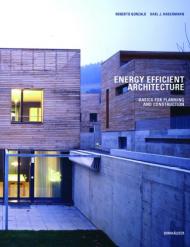
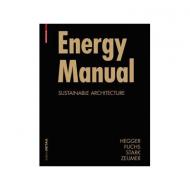
How is an energy efficient building created? Which are the most important criteria pertaining to urban development or the conception of the floor plan? What are the optimal dimensions appropriate for the building’s usage but also ensuring energy efficiency? Which building elements and systems are most suitable?
This book systematically explains all relevant criteria and parameters as regards urban development, design and the subsequent construction of a sustainable building. The immense potential for cutting costs by modernising the energy systems in old buildings is also demonstrated.Completed projects are presented according to their usage and are analysed and evaluated in the light of the above criteria. For this purpose extensive plans and technical information are used to illustrate the "energy profile" of each building. This shows the particular importance of planning details carefully. An annotated subject index concludes the volume.
While the efficiency and sustainability offensive is in full swing in most sectors of the economy, in the construction sector it is still in its very beginnings economically as well as ecologically. However, politicians and policymakers at the global, European, and national levels have begun to address this deficit and are seeking to correct it with legal requirements and laws like EnEV, building certifications, and competitions. Following the proven model of earlier manuals in the series, the Energy Manual presents a comprehensive look at the constructional parameters of energy efficiency and sustainability. It offers an advance look at the legal regulations being planned by the EU, and as a tool ready for immediate use by architects, engineers, and designers in their daily work it points the way toward the efficient and sustainable construction and operation of buildings. With its focus on the entire lifecycle of a building, it provides an integrated perspective a necessary prerequisite for sustainable economic management.
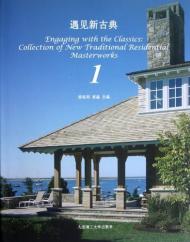
This new book on traditional residential architecture, entitled , aims at introducing worldwide renowned architects who practice in the classical tradition and their excellent works to professional readers. The first Volume features the master works from famous classical architects like Albert, Righter & Tittmann Architects, Andre Tchelistcheff Architects, Austin Patterson Disston Architects, Harrison Design Associates, Mitchell Studio and PolhemusSaveryDaSilva, Architects/Builders.The book will provide the finest examples of new classical residential designs, which interpret the traditional principles in a vital, innovative and ingenious manner and adapt to contemporary needs of technology and lifestyles. The potential power inspired by the combination of the architects knowledge, skill, thought, intuition and strength of imagination, as well as their attention to humanist and environment, endows the traditional architecture with new meaning.
Project Introduction:
Albert, Righter & Tittmann Architects
010 RockSyde
022 Island House
030 Cape Tower House
Andre Tchelistcheff Architects
044 BridgeHampton Beach House
052 East Farm Estate
060 Cartier Mansion – Manhattan Town House
Austin Patterson Disston Architects
072 Darien Waterfront
082 Westport Residence
Harrison Design Associates
092 Arts & Crafts Retreat
102 Beaux Arts Estate
112 The Blue Door Inn: A Lakeside Restreat
126 Country French Residence
140 English Arts & Crafts Manor Home
152 Fairfield Manor
162 Italianate Villa
180 Paces End Estate
188 Regency Estate
Mitchell Studio
200 Maidstone Residence
210 Round Hill Residence
Polhemus Savery DaSilva Architects Builders
222 House at Cotchpinicut
240 House on Champlain’s Bluff
256 Maison Sirene d’Huitre
270 House on Oyster River
286 Sand Dollars