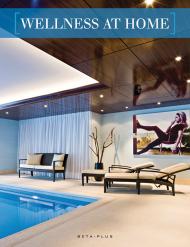
A new theme in the thematic series of Beta-Plus home series: wellness in all its aspects.
This inspirational photo source book showcases tens of designs of spas, hammams, indoor pools and luxury bathrooms.
Подобрать по характеристикам
Разделы
Наличие на складе
Издательства
Цена (130 - 229830 грн)
A new theme in the thematic series of Beta-Plus home series: wellness in all its aspects.
This inspirational photo source book showcases tens of designs of spas, hammams, indoor pools and luxury bathrooms.
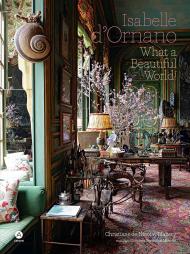
Christiane de Nicolaÿ-Mazery’s What a Beautiful World! offers an intimate look inside the boldly designed spaces of Isabelle d’Ornano’s life, from the personal to the professional.
Isabelle d’Ornano, cofounder of the French skin care brand Sisley, has created places in her life as unique as they are exceptional. For the first time, d’Ornano opens the doors to her personal, family, and professional spaces — from the heart of a Paris apartment to a country house and genuine paradise in nature — in this beautiful, richly illustrated book. This intimate journey goes to London and ends in Paris in the headquarters of Sisley, which she created with her husband, Hubert.
In each of these places, the magic encompassing the luxurious and the spectacular introduces us to the artists and personalities whose friendships bookmark the milestones of d’Ornano’s life. Here, beauty reigns and lives through collages, paintings, watercolors, and sculptures, and even on cushions adorned with messages embroidered by d’Ornano. Punctuated by d’Ornano’s words and mantras, this book is a formidable source of inspiration for decoration enthusiasts and for those attracted to the contrasts, boldness, and talent of Isabelle d’Ornano’s life.
About the Author:
Driven by a passion for lifestyle, decoration, and the history of great families, Christiane de Nicolaÿ-Mazery spent 25 years in a major French office at the Hôtel Drouot and now works as artistic director for Christie’s France, the world leader of auction houses.
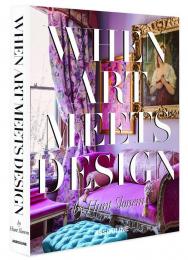
When Art Meets Design offers an exciting view into artist Hunt Slonem’s fantastically decorated and meticulously restored homes such as his two Southern mansions in Louisiana, named Albania and Lakeside.
Pairing vintage furniture with contemporary art, including pieces by Alex Katz and Andy Warhol, Slonem creates spectacular spaces. Vivid and expansive interior photography reveals how the artist combines antiques and artworks, offering an exciting view into his unique world.
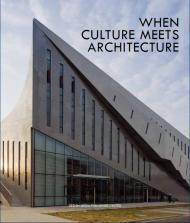
As the most individualized civil architecture, buildings for cultural events are the best stage for architects to practise their dreams, to express their perceptions to architectural art and ambitions. When culture meets architecture, some memories, some scenes or an attitude will find its medium to exist as a real and touchable thing. Besides those architectures that record a history or provide information, such as museum, library, memorial, archives centre and the like, more and more multi-functions cultural centres were built in cities, where people gather together for social event, entertainment, or sports, and they are also the new plaza where people can impress their sense of the city's identification deeper. Selected buildings for culture around the world are included in this book, with an invitation to witness the meeting between culture and architecture.
Пролистать книгу When Culture Meets Architecture
As we think about the future of the office in a post-pandemic world, this book provides an indispensable reference tool.
The office isn’t dead. But just in what form will it live? Departing from Frame’s successful The Other Office series, Where We Work explores ground-breaking workspaces, providing an indispensable reference tool for interior designers, architects and companies alike.
As we think about the future of the office in a post-pandemic world, this book presents important design lessons from the modern office through a curated showcase of 51 projects by designers worldwide. These lessons are highlighted as key takeaways at the end of each of the book’s four chapters: Designing for Community, Flexibility, Identity, and Wellbeing. An introductory essay explores how these four ideas – or ideals – will continue to drive the workspaces of the future.
Features
- As we think about the future of the office in a post-pandemic world, this 320-page reference book showcases 51 pioneering workspace designs.
- The book explores the various iterations of the contemporary workspace, from co-works and corporate offices to work cafés and material libraries, and everything in between.
- Projects are accompanied by a detailed description of the design concept, sketches, and stunning photography on four to eight-page features.
- Key takeaways at the end of each of the book’s four chapters highlight important design lessons from the modern office.
___________
Пролистать книгу Where We Work: Design Lessons from the Modern Office
The most used color in interior design, white can open up a space, add dimension, and invoke a sense of romance, elegance, peace, and possibility. White Rooms is devoted entirely to decorating with this versatile color, offering inspiration and options for every room in the house—from bedrooms to bathrooms to living and eating areas and beyond. Featuring houses from around the world, it offers advice on all aspects of decorating with white and its various shades, including furniture, structural elements, objects d'art, wall coloring, and more.
The Vienna Workshop and the "total work of art"
Founded in 1903 by Josef Hoffmann, Koloman Moser, and Fritz Waemdorfer, the Wiener Werkstätte ("Vienna Workshop") was a collective of architects and craftsmen which aimed at fusing architecture and interior design into a Gesamtkunstwerk, or total work of art. Experimenting with various materials (gold, precious stones, and papier mâché, for example), the artists of the Wiener Werkstätte created buildings and objects which combined classical elegance with streamlined functionality.
Though the workshop lasted only thirty years, its influence is still strong today.
William Burges (1827-81) was arguably the greatest of all Victorian architects. But he was more than just the creator of a modest number of fabulous, and fabulously expensive, buildings. He dreamed of hundreds more, designed dozens, and in addition created some of the most remarkable furniture and jewellery of all time.
He was an art-architect. Rich, clever, well connected and short lived, he was uncompromising, profoundly learned, skilled in every process of design and explosively inventive. A brilliant talker, pungent critic and hilarious companion, he was one of Victorian London's great eccentrics and networkers, though he was bewitched by the Middle Ages.
The great buildings that he completed include Cork Cathedral, Cardiff Castle and the even more eccentric Castell Coch, the great Yorkshire churches of Skelton and Studley Royal, the magnificent country houses of Knightshayes in Devon, and Mount Stuart on the Isle of Bute, and his own astonishing Tower House in Kensington. His furniture, fabric and jewellery designs and his unrealised projects were also hugely influential, and the former are now enthusiastically collected.
This book was a landmark in Victorian studies when first published in 1981 and is now completely revised and re-illustrated substantially in colour.
Through his eclecticism, William Morris (1834-1896) was one of the most emblematic personalities of the nineteenth century. He was a painter, architect, poet and engineer.
Morris created highly distinctive designs for wallpapers and textiles, many of which are still enjoying enormous popularity today. Through his company Morris & Co., he contributed to the transformation of interior design at the end of the 19th-century and gave expression to the ideas of the Arts and Crafts Movement. This highly accessible text looks at pattern and colour, as well as sources of inspiration such as nature, literature and legend. It also offers a fascinating insight into his working practices which were so different from those of many of his Victorian contemporaries. His desire to make beautiful things was at the core of his enterprise and his subtle colour schemes and evocative designs, many of which are still in production, have a timeless appeal. Specially commissioned photography captures many of his designs in situ, as well as in close-up detail, and this new introduction to the work of William Morris should provide a wealth of ideas and inspiration for contemporary homeowners.
In the history of the decorative arts, there has never been another designer who has achieved such lasting impact. While lamenting the excesses of mass-production, he set up the firm of Morris, Marshall, Faulkner and Company. Soon it was producing a range of goods, from hand-woven tapestries, carpets and printed textiles to stained glass, metalwork and furniture. What the company offered was quite simply a way of life.
In 'William Morris and the Arts & Crafts Home', Pamela Todd celebrates Morris’s genius for decoration and design and shows how he envisaged and implemented schemes for interiors in his own homes and those of others, passionately believing that beautiful surroundings promoted creativity and happiness.
To demonstrate how the style can be applied to our living spaces today a series of ‘Case Studies’ explores six contemporary homes – from a modern London townhouse to a traditional Arts and Crafts house in Massachusetts – that have followed and adapted Morris’s guiding principles.
__________
Посмотреть издание книги William Morris and the Arts & Crafts Home в мягкой обложке.
Другие книги о творческом наследии Уильяма Морриса
40 beautiful designs by one of Victorian era's most influential designers. Modestly priced, royalty-free collection of richly detailed patterns, faithfully reproduced from rare 1890s publication. Superb designs for wallpapers, chintzes, velveteens, tapestries, tiles, carpets, more.