Издательства
- Rizzoli (481)
- Thames & Hudson (156)
- Prestel (149)
- Gestalten (106)
- Braun (105)
- teNeues (71)
- Vendome Press (60)
- DOM Publishers (51)
- Monacelli Press (50)
- Phaidon (49)
Подобрать по характеристикам
Разделы
Наличие на складе
Издательства
Цена (130 - 229830 грн)
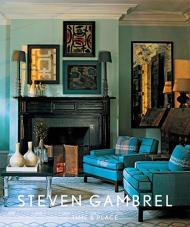
The first book from renowned New York–based designer Steven Gambrel showcases his bold and innovative designs.
Featuring 10 individual residences photographed by Eric Piasecki, Steven Gambrel: Time and Place illustrates the designer’s fresh approach to color and composition in creating spaces that reflect, support, and enhance the lifestyles of today while at the same time embracing the history of each individual home.
From Manhattan townhouses and apartments to beachside retreats in the Hamptons, Gambrel has a passion for timeless and unique interiors that allow him to design a backdrop for individual and changing lives.
The photographs and accompanying text, written by Gambrel himself, reveal the inside stories behind stunning interiors that feature his signature mix of the modern and the traditional, and give the reader a window into his unique inspirations and design point of view.
About the Authors:
Steven Gambrel is founder and president of S. R. Gambrel, Inc., a New York City interior design/architecture firm that also produces custom furnishings. His international projects have been featured in such leading publications as The World of Interiors, Architectural Digest, House Beautiful, Elle Decor, and the New York Times.
Lifestyle photographer Eric Piasecki is a regular contributor to Elle Decor, Architectural Digest, and House Beautiful, among other publications. He has photographed monographs for designers and architects including Steven Gambrel, Juan Montoya, Thom Filicia, Timothy Corrigan, and Cullman & Kravis.
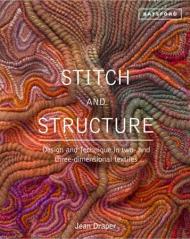
An essential book for any textile artist looking to expand their repertoire into two- and three-dimensional work. Leading textile artist, teacher and examiner Jean Draper takes you through the entire process from designing through construction to embellishment with mixed media.
This beautiful but very practical book includes diagrams, detailed drawings and stitch information to guide the reader through the techniques, which include hand and machine embroidery. It covers Design, including recording information for translation into stitch (with lots of drawing tips); Choice of Threads, including some unusual threads and costumizing them; Constructing with Thread, everything from knotted forms, with decorative threads, grids and stacks, and coiled structures; Stitches in Thin Air, constructing with stitch alone using moulds and soluble fabric; Using Mixed Media in Stitched Structures, such as paper, sticks, wire and plastics; Adding Structure to an Existing Fabric; Three- Dimensional Fabric Structures.
Working in two and three-dimensions is a growing genre of textile art and this incorporates a fresh approach and great design advice.
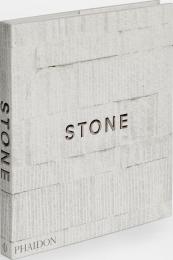
Stone is a fascinating, fresh and insightful global tour of the world's oldest and most beautiful building material
Featuring more than 170 structures, from prehistory through to today, the book includes an incredible range of buildings: awe-inspiring Neolithic monuments and the epic Pyramids of Giza feature alongside the work of twentieth-century icons, from Mies van der Rohe's seminal Barcelona Pavilion to Marcel Breuer's daring Met building in New York.
There are also projects by the world's best contemporary architects, from Snøhetta's angular Norwegian National Opera and Ballet in Oslo to Kengo Kuma's sculptural Chokkura Plaza in Japan and David Chipperfield's geometric Museo Jumex in Mexico City.
Arranged to promote comparison and discussion, each project includes an extended caption providing a perceptive commentary on the building.
An elegant and informative visual exploration, Stone demonstrates the remarkable variety of creative and innovative structures the material has inspired around the world.
About the Author:
William Hall trained at Central Saint Martins and began his career in the office of the minimalist architect John Pawson. He now runs his own design practice in London, working with clients such as Calvin Klein, MoMA and Tate. Hall is the author of Concrete, Brick and Wood (Phaidon 2012, 2015 and 2017).
____________
1300 colour and 700 b/w illustrations
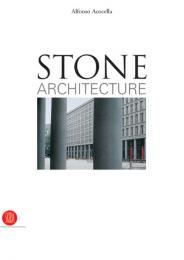
The underlying aim of Stone Architecture is not to redefine the universal language of the “lithic style” based on the age-old traditions of Classical expression—which I have also examined—or the formal articulations of contemporary works, but to search for a single place of convergence that offers practical help in reconsidering and re-enabling one of the most ancient and representative types of architecture.
Although assembled through processes of association to create a single corpus, the contents of this book are presented in a manner that allows them to be dealt with separately. They cover three general themes: the foundations (i.e., the design culture, the sedimentation of the concepts and ideas that underlie stone architecture), the constructive methods and practices that together define the technological style with their prescriptive and essential attributes, and finally the contemporary works that, in their bringing of the “lithic style” up to date, enhance, shift and modify the balance achieved by the design culture to date.
This three-part breakdown of the book is matched by a symmetrically structured presentation of the text, photographs and drawings in the innovative graphical layout with its differentiated composition and paging.
We have thus returned to the medium, the narrative device that I searched for right from the start (and in the end found thanks to the creative talent of Massimo Pucci) to enhance the contents of Stone Architecture. It is my belief that “thinking” and “communicating architecture”—on a level with “designing architecture”—means associating and connecting elements of different origins, character and importance; it means creating hierarchies and constructing conceptual structures able to bring to mind a memory consisting of images that can calmly be “consulted” and “explored” from different perspectives.
Alfonso Acocella (1954, Calitri, Avellino), is the Professor at the Architecture Department at the University of Ferrara. He currently teaches the Technological Culture of Design.
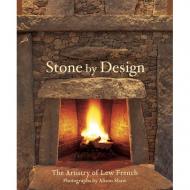
More than 125 gorgeous photographs showcase the beauty of award-winning stonemason Lew French's work in eight different homes, illustrating how rounded fieldstone, gray slate, rough granite, and even curvy driftwood can be incorporated into stunning pieces of functional art. French provides charming narration for each project: how an idea came to be; how a stone-splitting technique is executed; even how one of his most difficult pieces, a three-year-long project, was saved from ruin the day it was completed. With its contemporary hearths of rustic slate, sculptured walls of both great granite slabs as well as stacked and rounded fieldstones, Stone By Design: The Artistry of Lew French will inspire design lovers to incorporate this material in home interiors and exteriors, whether as an artful writer's studio, a playful fireplace, or a carefully crafted garden pathway. More than just a stunning tribute to the work of Lew French and his unique vision and craft, this book celebrates both the function and form of stone. It's the perfect inspiration for anyone interested in adding the beauty of stone to their home or landscape.
Featuring stunning color photography, Stone Designs for the Home explores the work of one of the finest stonemasons practicing today, John T. Morris, who employs the traditional art form of hand-chiseled masonry. Journey through eight properties where Morris's exceptional work abounds while exploring his approach, thought processes, and philosophy behind the stunning art he creates in stone. Filled with a variety of native stones in exterior and interior projects, Stone Artistry for the Home Focuses on utilizing raw stone, masonry, and environmental elements.
Stone Houses: Traditional Homes of Pennsylvania’s Bucks County and Brandywine Valley is a unique presentation of beloved building traditions in one of the most charming and historically significant regions in the nation. Houses, barns, and outbuildings dating from the colonial and Federal periods, built with local stone predominantly in an English Cotswold vernacular style, represent a form that has become popular across the nation.
Geoffrey Gross’s stunning photographs document a remarkable collection of early buildings, including the John Chad House (circa 1720), Peter Wentz Farmstead (circa 1758), and Buckingham Friends Meeting House (1768), as well as more recent designs, in part inspired by such traditional homes, by architects R. Brognard Okie, G. Edwin Brumbaugh, and John D. Milner. Part of the original Pennsylvania Colony founded in March of 1681 by William Penn, the region encompassing Bucks County and the Brandywine Valley is important not only for its history as an early English settlement in the New World, but also for its role as a crucial site in the struggle for American independence.
The evidence for this is obvious in the story of its houses. Some notable examples include the Thompson-Neely House at Washington Crossing, in which, it is said, Washington’s officers were billeted during the famous night of his crossing of the Delaware, and Pennsbury Manor, the reconstructed home of William Penn. With its authoritative text and exquisite full-color photography, Stone Houses is a beautiful record of a historically rich regional building tradition.
There's nothing quite as functional - or as beautiful - as nature's own building blocks. Often shaped and weathered by natural forces, each stone has its own unique look and feel.
Used as elements in a carefully planned landscape design, stonework can add an artful organization to your outdoor spaces. Creating sturdy walls, private patios, graceful gardens, and offering unlimited opportunities for your imagination to soar - with features like ponds, streams and waterfalls that can transform your property into a sylvan sanctuary.
From cover to cover, this delightful book offers hundreds of practical design ideas illustrated with colorful photographs and drawings, all divided into six sections.
Chapter 1: Paths and Steps
Chapter 2: Terraces, Patios and Garden Spaces
Chapter 3: Walls
Chapter 4: Benches, Landscaping Features & Sculpture
Chapter 5: Pools, Ponds and Fountains
Chapter 6: Finishing Touches
Each volume in this new series focuses on one of the key factors that play a role in decoration - Color, Storage, Accessories, Lighting, Flooring & Materials or on different kinds of houses or spaces - rooms for fun, rooms for kids or urban apartments. The full colour photographs, accompanied by descriptive captions.
The items you want to store will dictate the type, size and scale of storage. Organising your lifestyle and clearing out clutter is a good place to start. Discreet storage is key, keeping the storage in perspective of what is already in the room scheme. Storage covers all areas of the house, all the main rooms, upstairs and downstairs and includes utility rooms, as well as 'work'.
Even considers ideas for storing accessories for the family pet; in other words, the book covers the full compliment of efficient storage options now available from which a busy household will benefit. Practical ideas will be interspersed throughout the book, and will include: measuring what it is you need to store, for example having tailor made boxes to slide under surfaces, bed, stairs, kitchen units; consider the access to storage: Is it occasional use of items or daily use?
The need for implementing childproof precautions, etc; good lighting within cupboards under stairs, lofts, shelving etc; using durable finishes on storage units, paint finishes, surfaces; plus, Full Directory of the latest storage design manufacturers.
For all the popularity of e-commerce, store windows are still the most effective way of selling new product to consumers. Window displays connect the reality of the street to the fantasy of the shop and also have a huge influence on the distribution of space within the store itself. This copiously illustrated book analyses current trends in window design and highlights examples marked by extraordinary creativity and visual inventiveness. Helpful captions accompany each photograph to explain the way lighting, props, and graphics contribute to successful displays.