Города мира

Книги по архитектуре городов мира

Вы выбрали:
Сортировка:
наличие
цена
алфавит
Andrew Jones
ID: 14930
Издательство: ACC Art Books

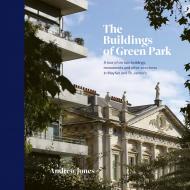
Take a walk around a park trodden by many but known by few. From Lancaster House, venue of famous speeches and summits, to 100 Piccadilly, the stage of an ongoing Soviet-themed reality experience, The Buildings of Green Park captures the unseen history of these well-travelled streets.

Green Park boasts a plethora of London landmarks, including Bridgewater House and the Canada Gates. The Buildings of Green Park gives each of these sites the attention they deserve, while also celebrating a multitude of overlooked buildings: those that are passed every day without comment from the guides. Local history, old photographs, paintings and floorplans offer a tantalising peek into the backstory behind these backdrops. Moving through the winter and into the spring, Andrew Jones’s crisp photography captures a London shaped by past, present and hopes for the future.

About the Author:

Andrew Jones’s Instagram takes us across sub-Saharan Africa, from the Democratic Republic of Congo to the Ivory Coast. For this project, he explores far closer to home. During the 2020 lockdown, Jones combined his outdoor exercise time with photographing buildings and monuments in his native Green Park. To preserve the character of this mid-Pandemic project, the pictures featured here have undergone minimal editing and the research is limited to the resources Jones had access to at the time. The result is an intriguing meld of highly localised travelogue and lockdown memento.

______

Пролистать книгу The Buildings of Green Park: A tour of certain buildings, monuments and other structures in Mayfair and St. James's

Цена: 1500 грн
Есть в наличии
в корзину в избранное
Illustrated by Dominique Mathez, Text by Joël Orgiazzi
ID: 14825
Издательство: Rizzoli

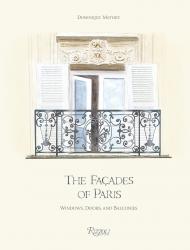
Lively watercolours and ink drawings of refined facades draw a compelling portrait of Paris, where each building is accompanied by its delightful ornamental details.

This elegant book invites readers to lift up their eyes while strolling throughout Paris’s streets and boulevards to pause, discover, and appreciate the facades of its buildings and the delicate artworks that are their windows, doors, and balconies. Innumerable motifs ornament the architecture of the French capital — each a minor masterpiece of fine design and ironwork artistry.

Exquisite, never-before-published watercolours and ink drawings by French illustrator Dominique Mathez bring each building’s beautiful exterior to life. Away from the over-celebrated monuments and landmarks, the city’s true, subtle charm emerges, distilled in a striking invitation to take a new look and rediscover its architecture through the ages. Complete with an informative text by one of today’s most renowned design experts, Olivier Gabet, this sophisticated volume is the ideal gift for Francophiles and Paris lovers everywhere.

About the Authors:

Dominique Mathez is a French medical doctor and clinical researcher known for her pioneering contributions to the knowledge and treatment of HIV and AIDS. This is the first publication of her work as a passionate illustrator. Joël Orgiazzi is a French ironmaster. He has been awarded the prestigious title Meilleur Ouvrier de France in 1986.

_________

Пролистать книгу The Façades of Paris: Windows, Doors, and Balconies

Цена: 2500 грн
Есть в наличии
в корзину в избранное
Francesco “Toto” Bergamo Rossi, Marco Bay
ID: 18092
Издательство: Marsilio Arte

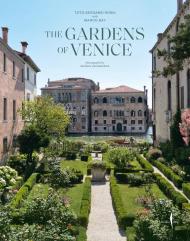
Concealed, protected and hidden: these are the gardens of Venice, protagonists of the illustrated volume published by Marsilio Arte and edited by Toto Bergamo Rossi, director of the Venetian Heritage association with Marco Bay, landscape architect. The texts signed by the two authors of the book, accompanied by the evocative shots of Marco Valmarana, guide the reader to the discovery of these green gems, privileged places where nature, art and history are intertwined.

The volume is a real journey through the gardens of Venice, from the most sumptuous kept in the noble palaces overlooking the Grand Canal to the more vernacular ones of the islands of the lagoon, collected and presented systematically through indexing by districts. The spring flowering, the summer opulence, the colors of autumn, the fog and the winter frost are captured in a new way in a series of photos full of details and emotions, which reveal the secret Venetian green through the seasons.

About the Authors:

Francesco “Toto” Bergamo Rossi, formerly a specialist in the conservation of stone materials, has restored a number of important monuments in Italy. Since 2010 he has served as the director of Venetian Heritage. He is the author of Inside Venice (Rizzoli, 2016) and Venice and Its Doges (Rizzoli, 2023).

Цена: 3800 грн
Есть в наличии
в корзину в избранное
Pavlo Kravchuk, Mykhailo Mordovskoi
ID: 18104
Издательство: DOM Publishers

A quiet rural town until World War I, Zaporizhzhia exploded into a major industrial centre in the 1920s following the con­struction of the Dnipro Hydroelectric Station.

This book looks at a later period in the history of what is now one of the largest cities in Ukraine, the 1950s to 1980s, when the focus in Soviet policy shifted from industrialisation to welfare and from production to consumption. In this respect, Zaporizhzhia may be seen as ‘a local model of the birth of a modern society’ – Soviet consumer society. Historian Pavlo Kravchuk and historian and graphic designer Mykhailo Mordovskoi skilfully combine text and images to show how this shift played out in urban planning, architecture, and, more importantly, the lives of ordinary Soviet citizens.

Prefabricated construction techniques enabled the rapid erection of districts of mass housing, giving ordinary people a small apartment of their own for the first time. With this came a need for consumer goods. At the same time, sitting in their new kitchens, people gained a modicum of privacy and a space in which to meet and discuss, away from the controlling eye of the state. The new Soviet apartment was ‘a place of leisure’, but also of dissidence – the beginning of the end of the regime.

About the Authors:

Pavlo Kravchuk is a Ukrainian architectural historian. Chief specialist in historical and cultural heritage at the Department of Culture and Tourism at Zaporizhzhia City Council. One of the founders of the Zaporizhzhia Museum of Architecture. Creative director of the digital portal Zaporizhzhia Heritage. Author and coordinator of 'Programmes for protecting cultural and historical monuments of Zaporizhzhia City for 2018-2022'. Editor of the Ukrainian-German publication Fragile Heritage: Architectural Modernism of the Ukrainian South and East: late 1950s-1980s (2023).

Mykhailo Mordovskoi is a Ukrainian historian and -designer. Head of the municipal museum network in Zaporizhzhia. Author of the permanent exhibition at the Zaporizhzhia Museum of Architecture. Holder of the Heritage Solidarity Fellowship for Ukraine from Europa Nostra, Global Heritage Fund, and ALIPH (2022). Curator of the Rethinking Space cultural centre - the first public space in Ukraine focused on understanding the events of the current Russian--Ukrainian war (2023).

Цена: 1980 грн
Есть в наличии
в корзину в избранное
Clemens F. Kusch, Anabel Gelhaar
ID: 18232
Издательство: DOM Publishers

Venice has developed into a Mecca for international architects in the last few decades. The elite of contemporary architecture gather to celebrate the most prestigious architecture exhibition of our time at the Biennale in the shadows of St. Mark’s Place, the Rialto Bridge and the Doge’s Palace. It is all the more amazing that there is no current guide which covers the modern architecture of the largest open-air-museum in the world.

This Architectural Guide is a ticket to a journey of discovery off the beaten tourist path through Venice after 1950. The boat trips and walks in the guide lead to new residential complexes and converted harbour sheds, to works by Carlo Scarpa, Tadao Ando and David Chipperfield.

This very practical travel guide also examines controversial new projects like the flood control barriers or spectacular conversions like that of the Fondaco dei Tedeschi by Rem Koolhaas. In addition to never-released designs by Frank Lloyd Wright, Le Corbusier and Louis Kahn, the authors present all the Biennale pavilions from the last six decades.

____________

Venezia è ormai da qualche tempo la Mecca della comunità internazionale degli architetti. All’ombra di Piazza San Marco, del Ponte di Rialto e del Palazzo Ducale, l’élite dell’architettura contemporanea si ritrova alla Biennale per autocelebrarsi e presenziare all’esposizione di architettura più famosa del nostro tempo. Stranamente, non esistono guide aggiornate sull’architettura moderna della città – il museo open air più grande del mondo.

Questa guida è un invito a scoprire la Venezia dopo il 1950, lontano dalle rotte turistiche. Le passeggiate e le escursioni in barca conducono a nuovi complessi residenziali e capannoni portuali ristrutturati, a opere di Carlo Scarpa, Tadao Ando e David Chipperfield. Questa pratica compagna di viaggio illustra anche i progetti di nuove opere tanto discusse, come il sistema per la protezione dall’acqua alta MOSE, o di ristrutturazioni spettacolari, come il Fondaco dei Tedeschi di Rem Koolhaas.

Oltre ai progetti mai realizzati di Frank Lloyd Wright, Le Corbusier e Louis Kahn, gli autori presentano anche tutti i Padiglioni della Biennale realizzati negli ultimi sessant’anni.

Цена: 1980 грн
Есть в наличии
в корзину в избранное
Monocle
ID: 12469
Издательство: Gestalten

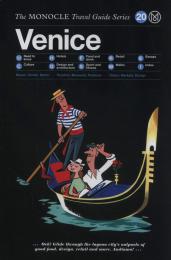
A maritime city, Venice has long lured travellers to its shores. Set sail and discover the romantic and magical charm of a city built upon the water.

Like the tide that laps knee-high against its fine palazzos, Venice is ever-changing. Since its bog-like beginnings as a collection of mini islands in swampy marshland, the city has been forced to use its initiative. Today, faced with floods of day-trippers and acqua alta alike, it continues to rely on innovative ideas. Whether it's a museum with groundfloor channels to cope with high water levels or a theatre in a warehouse once used for stretching sails, it capitalises on its lagoon location and spouts ingenuity.

The Monocle Travel Guide to Venice looks beyond the teeming tourist traps to discover La Serenissima's true charms, from classical and contemporary architectural wonders to galleries brimming with both Venetian and international works of art. We've wended our way through the city's willowy calli to find the trattorias offering the finest seafood, as well as the best bàcari to visit when you're craving a spritz. Venice is made for walking so we've mapped out four neighbourhood trails that will show you the way, as well as our favourite independent shops and the plushest hotels.

The magazine, Monocle, covers the world with its network of bureaus in New York, Toronto, Zurich, Hong Kong, Istanbul, Tokyo, and Singapore. It also employs more than 30 dedicated correspondents - in cities from Bangkok to Bogota, Sao Paolo to Stockholm - as well as a team of on-the-road reporters based out of its headquarters in London. This team's deep understanding of cities and all they have to offer has now been compiled in The Monocle Travel Guide Series.

Цена: 980 грн
Есть в наличии
в корзину в избранное
Paul Roberts
ID: 19171
Издательство: Thames & Hudson

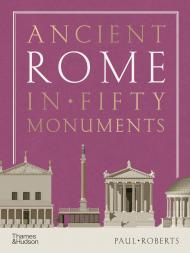
A sweeping new history of the city of Rome, told through its emperors and the monuments they built to make their mark on one of the great capitals of the classical world

‘What is worse than Nero? What is better than Nero’s Baths?’ – so wrote the poet Martial in the first century AD, demonstrating the power that buildings have on public consciousness. In ancient Rome, who built a monument and why mattered as much as its physical structure. Over centuries and under many different emperors, a small village in Italy was transformed into the crowning glory of an empire. Seeking out the personalities behind the great building projects is key to understanding them.

With this firmly in mind, Paul Roberts takes the reader on a tour of ancient Rome, vividly evoking the sights and sounds of the city: from the roar of the crowds at the Circus Maximus and the Colosseum, to the dazzling gleam of the marble- and mosaic-covered baths of Caracalla and Diocletian. He tells this story emperor by emperor, drawing out the political, social and cultural backdrop to the monuments and ultimately the very human motivations that gave rise to their construction – and destruction. These fascinating buildings are further brought to life with reconstructions that show how the ancients themselves would have experienced them.

When and why were these monuments built? What did they add to the lives of the people who used them? What impact did they have on the shape of the city? Roberts expertly weaves together the latest archaeological research with social and cultural history, to tell the story of the Eternal City, always in some way rising, falling and being rebuilt.

About the Author:

Dr Paul Roberts was Sackler Keeper of the Department of Antiquities at the Ashmolean Museum of Art and Archaeology in Oxford. He has curated numerous popular exhibitions, including ‘Life and Death in Pompeii and Herculaneum’ at the British Museum in 2013 and ‘Last Supper in Pompeii’ at the Ashmolean in 2019–20. He wrote the accompanying exhibition catalogues to both. A trained archaeologist, Paul has been involved in various fieldwork projects across Italy and Greece.

Contents List:

INTRODUCTION: The Monuments That Made Rome

PART I. Beginnings and Regime Change
THE KINGDOM OF ROME
Temple of Jupiter Optimus Maximus
Cloaca Maxima

THE REPUBLIC
Largo Argentina
Temple of Hercules Victor
Tiber Island
Pons Cestius and Pons Fabricius
Republican City Walls

JULIUS CAESAR
Forum of Caesar and its Temple of Venus Genetrix
Curia
Rostra

PART II. From Brick To Marble
AUGUSTUS
Basilica Julia
Temple of Concordia Augusta
Temple of Divus Iulius
Forum of Augustus and its Temple of Mars Ultor
Porticus of Octavia
Theatre of Marcellus
Temple of Apollo Medicus Sosianus
Mausoleum of Augustus
Ara Pacis Augustae
Pyramid of Gaius Cestius

CLAUDIUS
Porta Maggiore

NERO
Domus Aurea (Golden House) and the Colossus of Nero

PART III. New Builders
VESPASIAN
Forum of Vespasian
Colosseum

TITUS
Arch of Titus

DOMITIAN
House of the Vestals
Stadium of Domitian
Forum of Nerva
Palace of Domitian

PART IV. Rome in Glory
TRAJAN
Forum of Trajan
Circus Maximus

HADRIAN
Tenement Building
Temple of Venus and Roma
Pantheon
Mausoleum of Hadrian and Pons Aelius

ANTONINUS PIUS
Temple of the Deified Hadrian

MARCUS AURELIUS
Equestrian Statue of the Emperor Marcus Aurelius

COMMODUS
Column of Marcus Aurelius (the Antonine Column)

SEPTIMIUS SEVERUS
Temple of Vesta
Arch of the Bankers (Arco degli Argentarii)

PART V. An Uncertain City
CARACALLA
Baths of Caracalla

AURELIAN
Walls

DIOCLETIAN
Baths of Diocletian

MAXENTIUS
Basilica of Maxentius

PART VI. From Old to New
CONSTANTINE
Arch of Constantine
San Giovanni in Laterano and San Giovanni Obelisk

LATE PAGAN
Temple of Saturn
Portico of the Harmonious Gods

CHRISTIAN
Santa Maria Maggiore

PHOCAS
Column of Phocas

EPILOGUE: Aftermath

Цена: 1800 грн
Ожидается поступление
в корзину в избранное
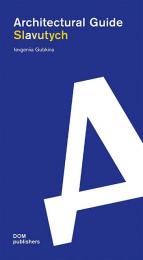
Ievgeniia Gubkina
ID: 18830
Издательство: DOM Publishers

Today, Kharkiv’s unfortunate geographical position on the eastern edge of Europe makes it a frequent target for the Russian army’s relentless shelling and airstrikes. Yet, not long ago, Ukraine’s second-largest city was a vibrant centre of student life, progressive art, intellectual thought, and techno-logical innovation, all spiced by the tough post-industrial identity of its citizens. Born from waves of migration, modernisation, industrialisation, and revolution, Kharkiv trod a stormy path from its origins as a Cossack military fortress to a period (1919–1934) when it was the capital of the Ukrainian Soviet Socialist Republic. This decade and a half was a golden age, marked by a dramatic construction boom that turned Kharkiv into a legendary Modernist city.

In this publication, author Ievgeniia Gubkina takes the reader on a journey through the city’s history and architecture, from its Old Centre to its New Centre, home to Derzhprom, a Constructivist gem which was also the embodiment of a new model of social and economic relations. This architectural guide is a tribute to the indomitable spirit of freedom of Kharkiv’s citizens. But it is also an important act of remembering and resistance: in documenting the city’s buildings in words and photographs, even as many of them are, day after day, being destroyed by Russian bombs, it keeps them intact and alive in our minds as a model for the city’s future.

This title is part of the Histories of Ukrainian Architecture programme initiated by DOM publishers in response to Russia’s attack on Ukraine’s sovereignty on 24 February 2022.

About the Author:

Ievgeniia Gubkina, born 1985, architect, researcher and curator. Organised and held numerous conferences. Co-founder of the NGO Urban Forms Center. In 2013 she started the women’s avant-garde movement Modernistky. Her research interests include modernist architecture, urban planning and planned cities as well as the heritage of Socialist cities. Currently working on a PhD project on Soviet workers’ settlements in Ukraine in the 1920s and 1930s. Lives and works in Kharkiv.

Цена: 1980 грн
Ожидается поступление
в корзину в избранное
Semen Shyrochyn
ID: 15381
Издательство: DOM Publishers

Since the Euromaidan, Kyiv has been the place where Europe‘s future is decided between East and West. Meanwhile, the hybrid war in eastern Ukraine and on the Crimean peninsula has escalated into an open Russian war of aggression. Significant buildings in the capital Kyiv and vital infrastructure has come under fire.

The Kyiv Architectural Guide presents over 100 buildings worth seeing from 100 years of the city‘s history, compiled by Ukrainian architectural historian Semen Shyrochyn. The typical residential complexes of avant-garde architecture, the imposing palaces of the Stalin era, the iconic designs of Soviet modernism, as well as the most significant construction projects built since independence are also expertly presented.

In over 300 pages, this architectural guide proves that Kyiv is much more than the capital of Ukraine. Kyiv is an inseparable part of the European community of nations, where mutual respect of values counts more than the power of the strongest.

Цена: 1980 грн
Ожидается поступление
в корзину в избранное
Ievgeniia Gubkina
ID: 13461
Издательство: DOM Publishers

Славутич – украинский провинциальный город к северу от Киева – во многом кажется принадлежащим другой эпохе. Город был построен после ядерной катастрофы, которая произошла в 1986 году на Чернобыльской АЭС, для переселения рабочих электростанции из загрязненной Припяти. Славутич – последний идеальный плановый город Советского Союза.

Однако тема Славутича весьма актуальна – особенно в период политического кризиса в Восточной Европе. Славутич является архитектурной манифестацией дружбы советских народов. Архитекторы восьми республик СССР участвовали в планировании и строительстве города. В результате, постмодернистская архитектура Славутича одновременно характеризуется социалистическими, советскими парадигмами и региональным воздействием Кавказа, Балтии и России. Кроме того, поиски последнего поколения советских архитекторов экологически устойчивой, удобной для жилья архитектуры, безусловно, актуальны и сегодня.

Архитектурный путеводитель по Славутичу документирует все районы и большинство зданий города, давая критический анализ уникальной поздней советской архитектуры и градостроительства в контексте Перестройки.

Второе издание.

_________

Slavutych, a city in the far north of Ukraine, occupies a strategic position where the borders of Ukraine, Belarus, and Russia meet. Built in the aftermath of the 1986 Chornobyl nuclear disaster to replace the contaminated homes of the power plant’s workers, it is the last purpose-built ideal city of the Soviet Union – and a unique architectural and political experiment.

Planned and constructed by architects from across the Soviet republics, Slavutych reflects both the diversity and contradictions of its time: Postmodernist forms infused with socialist paradigms; regional motifs from the Caucasus, the Baltics, and Russia; and an early awareness of ecological and human-centred design. In the decades since its founding the city has faced economic upheavals, demographic change, and, most recently, the challenges of war. However, its strong civic spirit has made it a model of urban resilience – demonstrating how an engaged community can sustain and adapt an entire city.

Marking the 40th anniversary of the Chornobyl catastrophe, this second, fully revised edition presents a sharpened perspective on Slavutych’s architecture and urban form. It documents all districts – including those renamed in 2022 as part of Ukraine’s derussi-fication – and offers a critical analysis of this late Soviet planned city in the shifting geopolitical landscape of Eastern Europe.

This architectural guide is part of the Histories of Ukrainian Architecture programme initiated by DOM publishers in response to Russia's attack on Ukraine's sovereignty on 24 February 2022.

Second Edition.

Цена: 1500 грн
Ожидается поступление
в корзину в избранное
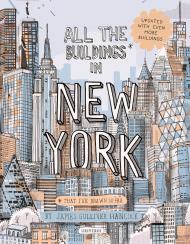
James Gulliver Hancock
ID: 16534
Издательство: Rizzoli

A charmingly illustrated journey through New York City, neighborhood by neighborhood, updated to include newer buildings and more classic favorites.

All the Buildings in New York is a love letter to New York City, told through James Gulliver Hancock’s unique and charming drawings of the city’s diverse architectural styles and cityscape. His buildings are colorful and chock-full of fun and offbeat details, and this book is full of new discoveries as well as old chestnuts for anyone who loves the Big Apple.

Organized by neighborhood, this revised and updated edition features iconic New York buildings, such as the Empire State Building, Rockefeller Center, and Flatiron Building; other beloved landmarks, such as the New York Public Library and Brooklyn Museum; and new skyline-changing buildings constructed in the last ten years, such as One World Trade Center, Oculus, and Via 57 West. Also included are the everyday buildings that make up New York City—the boutique shops in SoHo, timeless brownstones in Brooklyn, and rows of busy markets in Chinatown. Cultural musings, accessible histories, anecdotes, and informative details accompany the illustrations throughout, making this volume as practical as it is beautiful.

New Yorkers and tourists alike will savor this one-of-a-kind book that uniquely celebrates the energy and spirit of the city that never sleeps.

About the Author:

James Gulliver Hancock is an artist and illustrator from Sydney, Australia. His work has been exhibited in galleries worldwide and featured on everything from train cars, furniture, ceramics, and clothing to billboards and murals. He has worked with a wide variety of high profile clients, including Coca-Cola, the New York Times, and Herman Miller. He is the author of All the Buildings in LondonAll the Buildings in Paris, and All the Buildings in Los Angeles.

Цена: 1500 грн
Доступно под заказ
в корзину в избранное
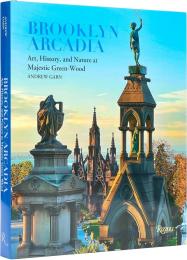
Ghassan Zeineddine
ID: 17240
Издательство: Rizzoli

The New York City treasure, newly photographed, is revealed as garden in the city, repository for memory, and a place for repose, inspiration, and delight.

Green-Wood is a living cemetery that brings people closer to the world by memorializing the dead even as it embraces the art, history, and natural beauty of New York. Founded in 1838 and now a National Historic Landmark, Green-Wood was one of the first rural cemeteries in America. By the early 1860s, it had earned an international reputation for its beauty, attracting 500,000 visitors a year, second only to Niagara Falls as the nation’s greatest tourist attraction. Crowds flocked here to enjoy family outings in the finest of first-generation American landscapes. Green-Wood’s popularity helped inspire the creation of public parks, including New York City’s Central and Prospect parks. Green-Wood is 478 spectacular acres of hills, valleys, glacial ponds, and paths, throughout which exists one of the largest outdoor collections of nineteenth- and twentieth-century statuary and mausoleums. Four seasons of beauty offer a peaceful oasis to visitors, as well as its 570,000 permanent residents, including Leonard Bernstein, Boss Tweed, Jean-Michel Basquiat, and Louis Comfort Tiffany.

At once a celebration and an invitation, the book ranges from a consideration of the natural landscape in which it is set to a close look at its architecture, statuary, symbols, typography, birds and fauna, trees, and typography.

About the Author:

Ghassan Zeineddine was born in Washington, DC, and raised in the Middle East. He is an assistant professor of creative writing at Oberlin College, and co-editor of the creative nonfiction anthology Hadha Baladuna: Arab American Narratives of Boundary and Belonging. He lives with his wife and two daughters in Ohio.

______________

Пролистать книгу Brooklyn Arcadia: Art, History, and Nature at Majestic Green-Wood на сайте издательства.


Цена: 4800 грн
Доступно под заказ
в корзину в избранное
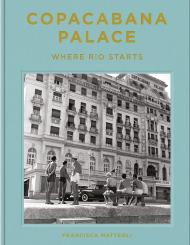
Francisca Mattéoli, Tuca Reinés Vendome Press
ID: 17050
Издательство: Vendome Press

Celebrate 100 years and explore the stories behind the iconic Copacabana Palace, A Belmond Hotel, Rio de Janeiro — its cinematic views, star–studded guests, legendary parties, and carnival chic.

This sumptuous book tells the legendary story of Copacabana Palace Hotel, A Belmond Hotel, Rio de Janeiro, from its extraordinary beginnings to the contemporary and stylish destination that it is today. Themed chapters and exquisite photography explore how the hotel has been a part of Rio de Janeiro life for 100 years — from its opening in 1923, when there were few other buildings in the area, to the golden age of Hollywood glamour, the extraordinary free concert on Copacabana Beach given by the Rolling Stones in 2006 (with more than 1.5 million people attending), and beyond. Affectionately dubbed “the Copa” by cariocas (locals) and guests alike, the hotel is famous for events such as the Carnival balls in February and the celebrations at New Year’s Eve, when everyone flocks to Copacabana Beach. Events and stories such as these are featured in this stylish book, which also includes specially commissioned photography that reveals the hotel’s stunning cinematic views, magnificent design, and extraordinary guests. Capturing the magic of one of the world’s most fabulous destinations, this book is a story of people and a culture—of both old–world elegance and contemporary flamboyance.

About the Authors:

Francisca Mattéoli was born in Santiago, Chile, to a Chilean father and Scottish mother. After living for many years in Brazil, she now resides in Paris as a respected travel writer. Her work has been published in magazines such as National Geographic France and Condé Nast Traveler, and her previous books, including Hotel Stories and Extraordinary Voyages, have been translated into many languages.

Tuca Reinés is a fine art photographer specializing in fashion, portraiture, architecture, and design. Based in Los Angeles and New York, he frequently appears in the leading publications for which he also shoots, including Harper’s BazaarELLE DecorWallpaper*, and others.

Цена: 4500 грн
Доступно под заказ
в корзину в избранное
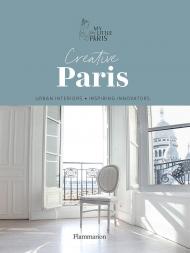
My Little Paris
ID: 14820
Издательство: Flammarion

For the past decade, French online phenomenon My Little Paris has divulged the city’s best-kept secrets in fashion, food, housewares, and lifestyle to almost four million subscribers. Now, this creative young team takes us inside their personal homes and workplaces, sharing Paris’s freshest interior inspiration.

The view from an 11th arrondissement apartment reveals slate rooftops and open sky, while a pair of silver Margiela designer boots, plush orange bomber jacket, and hot pink visor pepper the furniture, in fashion-showroom style. The My Little Paris workspace in an old carousel factory in Montmartre has a “dream room” vegetal wall, and rooftop terrace overlooking the Sacré-Coeur. In a relaxed apartment on the edge of the Canal Saint-Martin, an aquamarine wall complements a matching Smeg fridge and coffee mugs, all in the same vibrant, yet soft hue. Bird cages, vinyl records, colourful kimonos, vintage photographs, flashy African wax cushions, and contemporary art all coexist harmoniously.

More than forty spaces ― each brimming with Parisian life ― provide Instagram-ready inspiration for interior decoration, and are rich with ideas for sparking creativity.

About the Author:

My Little Paris (mylittleparis.com) is the source for the most unusal and interesting things to do in Paris, from single-table restaurants to clandestine poetry clubs. Their team of writers, creatives, scouts, photographers, developers, videographers, engineers, account managers, and an illustrator share one common goal: to surprise. They published My Little Paris: The Best Kept Parisian Secrets in 2011.

_____________

Пролистать книгу Creative Paris: Urban Interiors, Inspiring Innovators

Цена: 750 грн
Доступно под заказ
в корзину в избранное
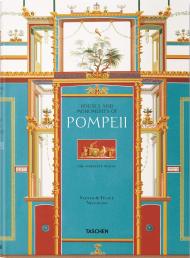
Sebastian Schütze, Valentin Kockel
ID: 17432
Издательство: Taschen

Rising from the Ashes. The first color lithographs of the rediscovered Pompeii

When the excavations at Pompeii were first placed on a scholarly archaeological footing in the 19th century, brothers Fausto and Felice Niccolini were close at hand and ready to respond. Making use of the newly introduced technique of color lithography, they documented the buildings, frescos, statues, as well as the most ordinary everyday objects, of the city buried in just 24 hours by the catastrophic eruption of Vesuvius and preserved for over 1,600 years under a mantle of volcanic ash.

The Niccolinis’ goal was to illustrate all aspects of life in the antique city. Their publication, Le case ed i monumenti di Pompei (“The Houses and Monuments of Pompeii”), which was issued in installments between 1854 and 1896 in Naples, presented over 400 color plates providing not only views, maps, and groundplans of the city and its public buildings, but also offered unprecedented access to Pompeii’s private residences. They revealed the astonishing painted wall decorations that adorned these long-buried abodes, their intricate works of art, and the practical utensils of everyday use, conjuring up a vivid picture of each house as a real domestic space. In total, the plates illustrated more than 1,000 items, each extensively specified and located for the first time, making the publication a major reference in Pompeii research. In addition, “animated” representations visualized daily life in Pompeii’s workshops, taverns, and shops, on its public squares, and in its temples, theaters, and baths.

This meticulous facsimile revives the Niccolinis’ extraordinary achievement with all color plates and two introductory essays setting the project in its contemporary context and presenting the historical protagonists of the Vesuvian excavations. In addition, we explore the remarkable influence exerted by Pompeian art — and by the haunting plaster casts made of victims of the eruption — on the visual arts. Across painting, sculpture, and interior design, we trace the Pompeii legacy in the work of Robert Adam, Anton Raphael Mengs, Angelika Kaufmann, Jean-Auguste-Dominique Ingres, Lawrence Alma-Tadema, Pablo Picasso, and Giorgio de Chirico, right through to recent masters Duane Hanson and George Segal.

The authors:

Sebastian Schütze was a longtime research fellow at the Bibliotheca Hertziana (Max Planck Institute for Art History) in Rome. He is a member of the academic board of the Istituto Italiano per gli Studi Filosofici in Naples, and a member of the Österreichische Akademie der Wissenschaften. From 2003 to 2009 he held the Bader Chair in Southern Baroque Art at Queen’s University in Kingston. In 2009 he was appointed professor of early modern art history at Vienna University.

Valentin Kockel studied classical archaeology and obtained his doctorate in 1978 with a thesis on the necropolises of Pompeii. He has worked at the German Archaeological Institute in Rome, the Technical University of Darmstadt, and until 2014 he was Professor at Augsburg University. Kockel has headed excavations in Ostia Antica and at the Forum in Pompeii.

Цена: 7800 грн
Доступно под заказ
в корзину в избранное
показать по:
на странице