монографії. Збірники робіт

Монографії та збірки робіт відомих архітекторів

Ви обрали:
Сортування:
наявність
ціна
алфавіт
Wim Pauwels
ID: 4752
Видавництво: Beta-Plus

Nathalie Van Reeth was born on 18 June 1965 in Wilrijk (near Antwerp).
Today she is one of the most promising interior architects of the Low Countries: she has created some very remarkable private projects in previous years, and others for boutiques and office spaces. Newly graduated from the Academy of Fine Arts at Antwerp, she first worked abroad for a couple of years. In 1989 she started out as an independent employee at Suzon Ingber, where she looked after a lot of projects for diamond merchants.

After that Nathalie Van Reeth was active at Interni in Wilrijk, a furniture-making shop and cabinet maker where she gained a lot of experience regarding choice of materials and developed an eye for detail. She also worked with the late Jean De Meulder, where she followed up on various projects. In 1993 she started “Nine D”: a furniture shop, unique of its kind, with extraordinary, sobered down objects austerely designed furniture and rough, high-grade fabrics. Three years later the shop has been transformed into a full-service studio for interior architecture. The trend had been set for over fifteen years of creative and exclusive projects: renovations, new development and furniture design.

This book shows some of her most recent end most characteristic creations. Anyone leafing through this book one will immediately notice that Nathalie Van Reeth has her own very specific signature, an unmistakable style idiom. Her vision on interior architecture is based on a few strong power lines: modern and minimal, rough and yet warm, restful and serene, monochrome and with a preponderant sense of space, perspective and light.

Nathalie Van Reeth is a big fan of Luis Barragan (1902-1988): she loves the austerity, the openness with which this Mexican architect created volumes.
His buildings have a sacral power, yet have also been conceived in a human fashion, with a lot of attention to light, colour, texture and natural materials.
The rich use of colour by Barragan is not as present with Van Reeth – she often preaches about monochrome spaces with attention to contemporary art – but the serenity that his work radiates, was one of the major sources of inspiration for Nathalie Van Reeth.
The importance of American sculptor Donald Judd (1928-1994) for the Antwerp interior architect is also not to be underestimated.

With his minimalist, serially arranged sculptures, Judd is one of the most important representatives of the Minimal Art, which has had a major effect on (interior) architecture as well – and still has in 2009.
The monachal interiors by Claudio Silvestrin (° 1954) are equally convincing for Van Reeth. His work has an intensity that exceeds pure minimalism. For him minimalism is a result of the essence of things: searching for purity, cleanliness, presence of timeless spaces, the use of noble, honest and natural materials, and the continuous quest for perfection.

On her own form language Nathalie Van Reeth is modest; it is a self-evident extension of her personality.
Relativising and no-nonsense, and at the same time with a strong sense of harmony, refinement and serenity in an interior. Nature plays a dominant part in this: in all her designs the outside environment is at one with the client’s living environment.

In the past years Nathalie Van Reeth has become active as a furniture designer as well. After all she found it increasingly hard to find furniture for the interiors she designed herself: not a single existing collection complied with her demand for that lived-in look but in a sober design. These designs, which conclude this monograph, are the final piece in the interior philosophy of the Antwerp interior architect: they show, in a very individual sense, how much attention Van Reeth pays to the proper choice of materials, perfect proportions, and the urge for perfection in form and function. In contrast to many, more theoretically oriented, (interior) architects she is very pragmatic in this field: no “l’art pour l’art” but always creations made to measure for the client, beautiful, harmonious, sober and refined, but also user friendly, intimate and radiating warmth.

Wim Pauwels (Editor)
ID: 4753
Видавництво: Beta-Plus

Claire Bataille and Paul ibens studied together at the Henry Van de Velde Institute where they graduated cum laude in 1962. They have been working together since 1968 – in 2009 they are still partners. The recent private projects of the frequently awarded design agency are presented in this new monograph.

Посмотреть избранные развороты книги  A&D SERIES 10 : Claire Bataille & Paul ibens – Selected Works  в pdf-формате.

Wim Pauwels
ID: 4881
Видавництво: Beta-Plus

Sandrine Van Eldom and Nathalie Delabye together with their colleague Dorothée Engels make up the interior architecture agency Ensemble & Associés. In just a few years time they realised a number of top projects in and around Brussels, but also by the Belgian coast and in Wallonia. This book shows recent work from one of the most promising young design agencies in Belgium, with a consuming passion for durable quality and a feel for details in serene design.

Посмотреть избранные развороты книги  A&D SERIES 11: Ensemble & Associés  в pdf-формате.

ID: 2023
Видавництво: Page One

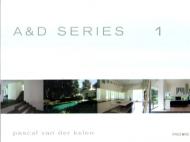
This first volume is dedicated to architect Pascal van der Kelen. All of his designs (which include a lot of private homes, but also a number of offices, hairdresser's, boutiques, a notary's practice and other projects) are distinguished by an exquisite sense of serenity, and by forms and lines that are pure and clean, yet still luxurious.

ID: 2024
Видавництво: Page One

This volume shows the work of the young, Paris and Brussels based interior architect Olivier Lempereur.

Brooke Hodge
ID: 10047
Видавництво: Prestel

Filled with beautiful photographs and informative essays, this volume presents the genius of A. Quincy Jones, whose collaborative nature provides a timely example for today’s architects.

While the architect A. Quincy Jones is most recognized for his glamorous homes for Los Angeles’s cultural elite, he was equally dedicated to postwar Southern California’s rapidly expanding middle class. As this fascinating book reveals, Jones and his collaborators were truly ahead of their time. Their vision of creating affordable, aesthetically pleasing structures prefigured the advent of several important architectural trends, such as sustainable building designs, maximization of available space, and sensitive site planning. Filled with images by noted photographer Jason Schmidt, as well as period photographs by Julius Shulman and others, this volume looks at every aspect of Jones’s career. Original drawings, models, and furniture designs from the architect’s personal archives illustrate a wide variety of projects featuring the hallmarks of Jones’s style: soaring interior spaces, the blurring of indoors and out, laminated timber construction, angled walls, and innovative use of concrete, redwood, and glass.

Essays explore Jones’s quintessentially collaborative nature as he consulted with other noted architects, landscapers, interior designers, developers, and city planners to create buildings of lasting beauty and importance.

Louna Lahti
ID: 4562
Видавництво: Taschen

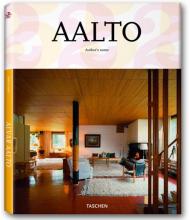
Finnish architect Alvar Aalto (1898–1976) was strongly influenced by both the landscape of his native country, as well as the political struggle over Finland's place within European culture. After early neoclassical buildings, Aalto turned to ideas based on Functionalism, subsequently moving toward more organic structures, with brick and wood replacing plaster and steel. In addition to designing buildings, furniture, lamps, and glass objects with his wife Aino, he painted and was an avid traveler. A firm believer that buildings have a crucial role in shaping society, Aalto once said, "The duty of the architect is to give life a more sensitive structure."

About the Series:
Every book in TASCHEN's Basic Art Series features:

* a detailed chronological summary of the artist's life and work, covering the cultural and historical importance of the artist
* approximately 100 color illustrations with explanatory captions
* a concise biography

Louna Lahti
ID: 13147
Видавництво: Taschen

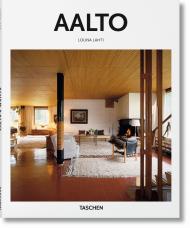
Alvar Aalto (1898–1976) made a unique modernist mark. Influenced by both the landscape and the political independence of his native Finland, he designed warm, curving, compassionate buildings, wholly set apart from the slick, mechanistic, geometric designs that characterized much contemporary European practice.

Whether a church, a villa, a sauna, or a public library, Aalto’s organic structures tended to replace plaster and steel with brick and wood, often incorporating undulating, wave-like forms, which would also appear in his chair, glassware, and lamp designs. An adherent to detail, Aalto insisted upon the humanity of his work stating: “Modern architecture does not mean using immature new materials; the main thing is to work with materials towards a more human line.”

Many of Aalto’s public buildings such as Säynätsalo Town Hall, the lecture theatre at Otaniemi Technical University, the Helsinki National Pensions Institute and the Helsinki House of Culture may be seen as psychological as well as physical landmarks in the rebuilding of Finland after the ravages of war.

About the series:

Each book in TASCHEN’s Basic Architecture series features:

- an introduction to the life and work of the architect 
- the major works in chronological order
- information about the clients, architectural preconditions as well as construction problems and resolutions
- a list of all the selected works and a map indicating the locations of the best and most famous buildings
- approximately 120 illustrations (photographs, sketches, drafts, and plans)

University David Collins
ID: 10568
Видавництво: Assouline

“I have always wanted to see things I imagine made into a reality,” renowned architect David Collins once said, a statement that rings powerfully true in the projects of his eponymous studio.

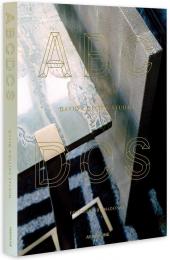
Featuring a foreword by Madonna, ABCDCS showcases a bold portfolio of images that manifest the architect and interior designer’s creative vision, one that pervades the contemporary aesthetic.

Presented alphabetically to reveal David Collins’ myriad influences and inspirations and the motifs within his Studio’s work, this volume is a visually captivating journey from A to Z.

The much-loved and talented David Collins set up his eponymous Studio in 1985, assiduously gathering around him an expert team of designers and architects of diverse disciplines. Across the next 28 years, David Collins Studio has redefined how people live in public and private, creating timeless and beautiful spaces, each of which exhibits a definitive sense of place, whether a hotel, restaurant, residence or retail space.

ID: 8832
Видавництво: Татлин

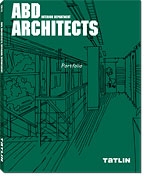
Объемные постройки ABD architects хоть раз видел каждый москвич: они изменили облик многих центральных улиц и площадей города, от площади Тверской заставы до Нахимовского шоссе и Крылатских холмов. Но в данном издании речь идет о другой, менее заметной для широких масс стороне деятельности бюро – интерьерах общественных и офисных пространств. За 22 года деятельности ABD architects создали 54 коммерческих интерьера, из них в книгу вошли 46. Среди интерьеров, представленных в книге, - офисы крупнейших российских и зарубежных компаний, интерьеры представительств банков, учебных центров, а также частной клиники и самого большого атриума в Москве. Масштабы проектов колеблются от небольших офисов в 80 квадратных метров до шестиэтажных представительств, внутренний облик которых был полностью создан в бюро. Книгу открывает интервью с Борисом Левянтом, генеральным директором ABD architects, и Денисом Кувшинниковым, руководителем Департамента интерьеров компании. Издание может представлять интерес для практикующих дизайнеров и архитекторов, занимающихся разработкой офисных зданий, студентов соответсвующих специальностей и людей, желающих познакомиться с лучшими примерами современного российского офисного проектирования.

Author Beth Dunlop, Photographs by Steven Brooke
ID: 16378
Видавництво: Rizzoli

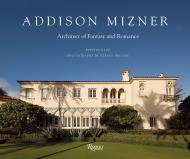
The work of the acclaimed designer of villas in Spanish, Moorish, Venetian, and Mediterranean style, in all-new color photography.

The go-to architect for the Jazz Age elite of South Florida and beyond, Addison Mizner created a new architectural style and a new lifestyle for the wealthy and socially prominent of Palm Beach--America's preeminent winter resort town of the time. Building mansions, clubs, hotels and apartment houses with a bent toward fantasy and romance, Mizner established a design vocabulary and tradition that to this day influences architects, designers, and builders. Evocative of old Spain, Venice, and the Moorish capitals of Granada and Seville, Mizner's work is a dream realized: courtyards with fountains, trellises with climbing bougainvillea, arched windows, glazed tile floors, spiraling marble columns, expansive interiors with grand proportions.

This book explores Mizner's legacy through the extraordinary houses and other structures he built, including such storied homes as La Guerida, an 11-bedroom Spanish Revival mansion, best known now as the Kennedy Estate -- the place where JFK he composed his Inaugural Address. Known for their beauty, opulence, fantastic detail, as well as the stories of those individuals who have lived or played in them, the houses and buildings of Addison Mizner stand as monuments to grand living and romance made in stone and iron, stucco and tile.

About the Authors:

Beth Dunlop is an Alicia Patterson Fellow writing about the environmental, cultural and architectural consequences of overbuilding. Her newest book, Addison Mizner: Architect of Fantasy and Romance, is the 29th book on architecture and design she has either written or co-written. Most recently she conceived, co-authored and edited the book, Heroes: A Tribute, an homage by the New York artist Doug Meyer to fifty important creative figures who died of AIDS, as well as The Tropical Cottage: At Home in Coconut Grove. She was a Pulitzer-nominated architecture critic for the Miami Herald for more than two decades. From 2011 to 2017 she was editor of Modern Magazine, which was a sister publication to ArtNews and Art in America, and before that, she was editor of HOME MiamiHOME Fort Lauderdale, and the online-only HOME Los Angeles and has contributed widely to prominent design and architecture magazines. A graduate of Vassar College, she divides her time between Miami Beach, Florida and Ipperwash Beach, Ontario. Steven Brooke is a fellow of the American Academy in Rome and winner of the AIA National Institute Honor Award for photography. Based in Miami, he is the photographer for many Rizzoli books, including Historical Houses of Virginia and Miami Deco.

______________

Пролистать книгу Addison Mizner: Architect of Fantasy and Romance

August Sarnitz
ID: 1610
Видавництво: Taschen

Widely regarded as one of the most significant prophets of modern architecture, Adolf Loos (1870-1933) was a star in his own time, known throughout Vienna as an outspoken, audacious dandy and moralist who defied the establishment. His work not only represented the beginning of modernism, with its stark, unornamented style, but also revolutionized architecture by introducing the concept of "spatial plan" architecture, which allowed for economizing space by designating rooms` sizes and heights based on their purposes. Loos also published numerous essays during his lifetime, the most notable of which is the oft-misunderstood "Ornament and Crime."

About the Series:

Every book in TASCHEN's Basic Architecture Series features:

- approximately 120 images, including photographs, sketches, drawings, and floor plans
- introductory essays exploring the architect's life and work, touching on family and background as well as collaborations with other architects
- the most important works presented in chronological order, with descriptions of client and/or architect wishes as well as construction problems and resolutions
-an appendix including a list of complete or selected works, biography, bibliography, and a map indicating the locations of the architect's most famous buildings

August Sarnitz
ID: 13151
Видавництво: Taschen

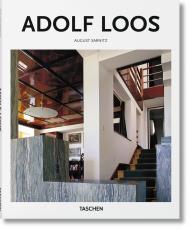
Adolf Loos (1870–1933) was a flamboyant character whose presence in the cultural hotbed of early 1900s Vienna galvanized the country’s architectural landscape. An early, impassioned advocate of modernism, he all-out rejected the grand Secessionist aesthetic prevalent at the time, as well as any hallmarks of the European fin de siècle.

Instead, in lectures and essays, such as the milestone Ornament and Crime of 1908, Loos articulated his “passion for smooth and precious surfaces.

He advocated that architectural ornamentation was, by its nature, ephemeral — locked into current trends and styles, and therefore quickly dated. Loos, himself a Classicist at heart, argued instead for simple, timeless designs with time-honoured aesthetic and structural qualities.In this essential introduction, we explore Loos’s writings, projects, and legacy, from his key concept of “spatial plan” architecture to his rejection of decorative fripperies in favour of opulent, fine-quality materials and crisp lines. Featured projects include Vienna’s Café Museum (1899), the fashion store Knize (1913), and the controversial Loos House (1912), which Emperor Franz Joseph I would refuse to travel past, bristling with rage at its insolently minimalist aesthetic.

About the series:

Each book in TASCHEN’s Basic Architecture series features:

- an introduction to the life and work of the architect 
- the major works in chronological order
- information about the clients, architectural preconditions as well as construction problems and resolutions
- a list of all the selected works and a map indicating the locations of the best and most famous buildings
- approximately 120 illustrations (photographs, sketches, drafts, and plans)

Roberto Schezen
ID: 6953
Видавництво: Monacelli Press

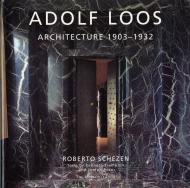
Adolf Loos not only was part of the first wave of modern architecture but also served as an important source of inspiration for all architects who followed. He is emblematic of the turn-of-the-century generation that was torn between the traditional culture of the nineteenth century and the innovative modernism of the twentieth. Loos’s masterful “astylistic architecture” is captured in this volume by the esteemed photographer Roberto Schezen in over one hundred exceptional photographs.

Starting with the refurbishment of his own apartment in 1903, twenty of Loos’s most significant buildings are beautifully displayed: Villa Karma, the Kärntner Bar, the Goldman & Salatsch Michaelerplatz Building, the Zentralsparkasse Bank, and the Steiner, Scheu, Moller, and Müller houses. Schezen’s vivid color and luminous black-and-white photographs display each building in detail, showing both the formal characteristics and the rich textures and materials Loos most frequently used.

Complementing this remarkable visual material is Kenneth Frampton’s perceptive essay, which places Loos within the context of Viennese intellectuals of the time. His circle, which included Arnold Schönberg, Ludwig Wittgenstein, and at the center, Karl Kraus, explored the essential nature of architecture, and the other arts and sciences, through linguistic structures. Frampton identifies the hallmarks that Loos derived from these structures and with which he created his work: the blank, “degree-zero” exterior with its luxurious interior; his commentary on architecture’s position between art and function, plus subtle recollections of both the classic and the vernacular. All these ploys were to subvert typical architectural expectations. Joseph Rosa’s accompanying descriptions comprehensively discuss each building, from the circumstances surrounding the realization of the projects to the use of Loos’s architectural conventions.

Ralf Bock, Philippe Ruault
ID: 3809
Видавництво: Skira
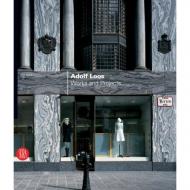
In this volume, Ralf Bock reveals for the first time the sensuality of Loosâ interior designs, demonstrating that Loos was not an architect of the âwhite modern movementâ but rather fought against it as he saw the work of purism move in the opposite direction of what he had envisioned. He believed in culture, comfort, intimacy and privacy. He advocated the evolution of tradition and utility, and not revolution and the permanent invention of formal design.
показати по:
на сторінці