


ID:
5984
Издательство:
Ca Press
Подобрать по характеристикам
Разделы
Наличие на складе
Издательства
Цена (130 - 229830 грн)
In “New Houses”, editor Llorenc Bonet takes us through thirty six of the most spectacular houses built in recent years. Located all over the world, they are set apart by their imaginative and innovative design, as well as their use of the latest in construction technologies, newly developed building materials, and furnishings from leading designers. Some projects focus primarily on the landscape, while others take into account the conservation of both space and energy.
For many years, water has been an essential element for live and for the evolution of man. Countless examples throughout history present an interaction between this liquid element and man's way of life. In Roman times, the domus was built around a patio with a small pool, which became the centre of the house. However, with the passing of time, its original function as a place to collect rainwater has given way to another much more thought -provoking one, which contributes to improving people's life. Swimming pools, especially those found inside a home, such as the ones in this book, have become a popular feature for architects and designers, who see the creation of these spaces as a great ally fo their most innovative architectural projects.
160 colour and b/w illustrations
This volume makes an important contribution to the understanding of contemporary Italian architecture by analyzing the works of the most interesting young architects and photographers: an opportunity to reflect on the new Italian landscape through the works of those who are designing it firsthand and are interpreting it through the camera lens.
Through the writings and works of the ten architects (ABDR, Aldo Aymonino, Carmen Andriani, Stefano Boeri, Giuseppe Ciorra, Alberto Ferlenga, Mosè Ricci, Renato Rizzi, Mirko Zardini and Cino Zucchi) it is thus possible to reconstruct the complex panorama of a different way of practicing architecture in Italy: each architect is identified through a key theme and a selection of texts that provide an introduction to the research and works produced in recent years, then three of the most significant projects are presented from the creative phases to final construction.
The works presented, in many cases unpublished or just completed, examine design applied to new types of construction, as in the case of the redesign of power stations (Boeri), or forms of experimentation applied to such traditional categories as the city squares designed for the suburbs of Rome (Aymonino), new residential complexes in Venice (Zucchi), Portoferraio (ADBR) and Senigallia (Ciorra), university campuses (Venice, ADBR and Ciorra) and museums (Ricci and Spaini, Zardini and Aymonino).
At the same time the works of ten Italian photographers on landscape and architecture are presented, from the better known Olivo Barbieri and Vincenzo Castella, to the emerging Paola De Petri, Francesco Jodice and Paola Di Bello.
An original comparison between architecture and photography and, at the same time, an interesting stimulus to reflect on the contemporary Italian scene.
From bedroom makeovers to clutter control, New Kidspace Idea Book presents over 250 up-to-date ideas for creating fun and practical places for children. Theres something here for every house and every budget: big ideas and simple ones, whole rooms and shared spaces, off-the-shelf and custom storage solutions, clever built-ins, accessories and decor, and outdoor play spaces.
The fires lit long ago inside traditional kitchens defined the concept of home since antiquity. Since today, the kitchen can be considered the heart of any domestic space. Kitchen types have evolved over time and adapted to the needs of each time period. Today, kitchen designs from a great number of countries look to the model of the American kitchen, characterized by its open-plan scheme and its integration into traditional apartments, lofts of studios.
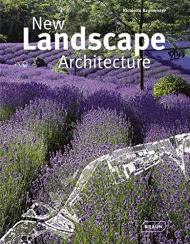
Landscape architecture today is a broad range of very different uses of free spaces: sometimes strict, sometimes playful, powerful or reserved, provocative or almost unnoticeable. The title reflects the aesthetic and also ecological effects of landscape architecture upon public spaces. The one thing all the landscape architects whose projects are in the book have in common is that they all create spaces for people. The title New Landscape Architecture that is published in the series Architecture in Focus presents a wide range of contemporary projects among these are landscape parks and horticultural shows, gardens and courtyards, squares and promenades, as well as open spaces for health, recreation and public life. The publication provides an overview of eighty ways of structuring and designing open spaces and illustrates these projects by means of texts, photographs, plans and drawings.
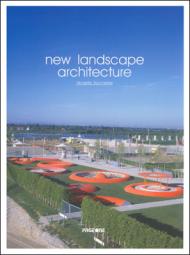
Landscape architecture runs the gamut of very different presentations of free spaces: sometimes strict, sometimes playful, powerful or reserved, provocative or almost unnoticeable. It comprises spacious natural and cultural landscapes, peaceful, almost intimate inner courtyards, town squares and parks, and installations outside buildings where people live and work. New Landscape Architecture reflects on the aesthetic and ecological effects of landscape architecture on public spaces. The publication provides an overview of more than one hundred ways of structuring free spaces from the German speaking countries, such as the outdoor installations of the Allianz Arena in Munich, the Potsdamer Platz in Berlin, the Landesgartenschau 2006 (2006 State Horticulture Show) in Wernigerode and the redesigned lake basin in Zurich. Detailed text, photographs, plans, and drawings provide insights into each project. The one thing all these projects have in common is that they create and structure free spaces as spaces for people to live in.
This volume presents light as an element with the same importance as furniture or layout; it is treated innovatively and imbued with a distinctive personality. In this book, light transcends the simple function of illumination, becoming a tool for emphasizing elements that modify space and turn it into something different by creating an interesting effect or simply a more pleasant atmosphere. This approach leads to homes with their own original identity.
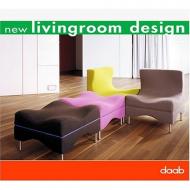
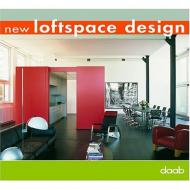
The loft as we know it today is quite different from its original conception during the 1960s, when this typology of residence became popularized to reconvert warehouses that artists maintained with very few means. Today a loft can simply imply an open-plan, diaphanous and flexible space that alludes to an industrial aesthetic through exposed materials like steel and wood. New materials and design techniques have produced a new generation of lofts that have transformed it into a sophisticated asset desired by many. This selection bears proof of this growing trend, offering a wide variety of design solutions for today’s contemporary loft.
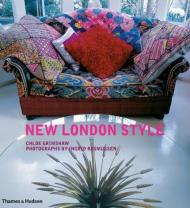
New London Style takes a fresh look into the homes of the most exciting young creatives in the city, from the music, fashion, design and art worlds. This new wave is injecting funkiness and bright ideas into highly individual and inspirational interiors.
A great number of these ideas begin in the intimacy of their own homes but have come to attract international attention, so a glimpse into these interiors reveals a world of creativity.
The twenty-eight houses are in the grooviest, on-the-edge neighbourhoods – from Shoreditch to Notting Hill, Camberwell to Clerkenwell – and reflect the cosmopolitan melting pot that influences London’s design trends – whether in a mews house, a derelict pub, or even a church.