Издательства
- Rizzoli (486)
- Thames & Hudson (156)
- Prestel (149)
- Gestalten (106)
- Braun (104)
- teNeues (71)
- Vendome Press (60)
- Monacelli Press (51)
- DOM Publishers (51)
- Phaidon (49)
Подобрать по характеристикам
Разделы
Наличие на складе
Издательства
Цена (130 - 229830 грн)
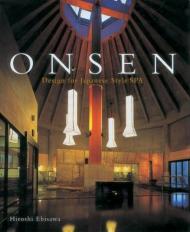
The very best designs from all over Japan with a historical overview of the role of the Onsen.
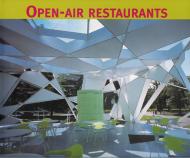
In today's world, restaurants have become places where the desire to meet, converse, and see and be seen converge. They are places that offer the paradox of privacy in a public space. Eash restaurant illustrated in Open Air Restaurants elaborates on the relationship between the natural, exterior surrounding of the space and how it is incorporatedinto the restaurant. Readers visit noteworthy establishemnts with diverse styles that have opted for original architectural solutions.
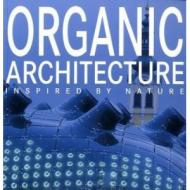
Organic Architecture – "Organic architecture seeks superior sense of use and a finer sense of comfort, expressed in organic simplicity." - Frank Lloyd Wright (1867-1959)
Organizing is a process and not one that requires you to tackle the entire house in one sweeping session. As such, you'll find that this book is arranged according to the various hot spots in the home, starting with the area inside the front door and continuing through to the garage. Chapter by chapter, room by room, youll find helpful and practical techniques for creating (and maintaining) order.
"One of the most useful books to cover the whole of the field...Mr. Ford is to be congratulated on having produced a work that should stand the test of time." — Carpet Review Weekly
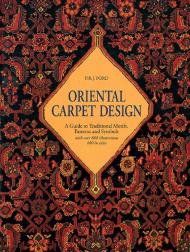
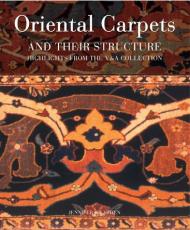
In this comprehensive survey, P. R. J. Ford shows readers how to recognize the different structural and design features of oriental rugs and carpets. The designs are grouped according to their essential characteristics. This approach illuminates the cultural background of each, revealing at once the similarities and the differences between the various carpet-weaving areas
Illustrations of modern types, with descriptions of their key characteristics — construction, materials, sizes, colors — and of the clues that establish a rug's precise origins, appear together with a balanced appraisal of the qualities of modern production from towns, villages, and tribal areas. Extensive cross-referencing and detailed indexes make this an invaluable reference guide for dealers and collectors, and for anyone who has an appreciation of and interest in rugs.
800+ illustrations and photographs, 400 in color
A short introduction covers the history of carpets in the West, from the 16th-century when they became synonymous with wealth and fashionable living, and were often included in the portraits of the day.
In the nineteenth century they were reappraised as examples of good design, and seen as a source of inspiration for the creative industries. William Morris himself was instrumental in the purchase for the V&A in 1893 of the famous Ardabil Carpet, hailed in The Times as 'the finest Persian carpet in the world'. It is only when we have an understanding of how carpets are woven that we can explore the real nature of their design: how patterns evolve and straddle boundaries of time and place.
An illustrated chapter on weaving methods is supplemented by detailed structural analyses of each carpet: the result is a volume that illuminates the subject and will be of great value to collectors, designers and textile historians alike.
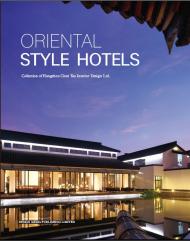
The book presents Chinese top designers’ successful works, which elaborate not only the dissimilation and assimilation between Chinese traditional culture and modern design styles but the characteristics of neo-regionalism as well. The publication of the book opens a gate for foreign designers to know about contemporary Chinese hotel space design.
Internationally renowned designer Orla Kiely describes her career as 'a journey in pattern and colour'. Her distinctive palette, and graphic and stylized motifs in clean repeat constructions, have won her devoted fans across the world, and have helped to turn, what began as a small British business designing bags, into a global fashion, accessories and homeware brand.
Following the success of her first book Pattern, Home opens the door on Orla's own house, looks at a series of British, Irish and Scandinavian case studies - all beautifully photographed by Richard Powers - reveals the mid-century modern items that have inspired her work and tracks the creation of her homeware range including furniture, textiles, wallpaper and ceramics.
'I have always been inspired by architecture and interiors so the move into furniture and homewares was completely natural,' Orla says. 'To me, the home is where we can truly express our style and personality, where we can be playful.'
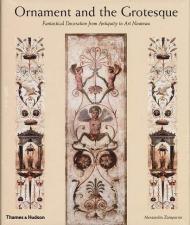
A lavish survey of the grotesque style in European painting and decoration, from Roman times to the late nineteenth century.
In the fifteenth century, the ruins of Nero's Domus Aurea were discovered in Rome. The first explorers to enter the interior of this spectacular palace complex had the sensation of finding themselves in a series of grottoes, and this is why the fanciful frescoes and floor mosaics discovered there were called "grotesques."
A fashionable form of ornamentation in ancient Rome, grotesques consist of loosely connected motifs, often incorporating human figures, birds, animals, and monsters, and arranged around medallions filled with painted scenes. Fifteenth-century artists such as Perugino, Signorelli, Filippino Lippi, and Mantegna copied the ancient Roman examples; the most famous use of the style was Raphael's Loggie in the Vatican Palace, which became immensely famous and influential all over Europe.
This magnificently illustrated book covers the entire history of the grotesque in European art, from its Roman origins through the Renaissance to the late nineteenth century. It illuminates how grotesque decoration was transformed in the seventeenth and eighteenth centuries into arabesque, chinoiserie, and singeries, and how it continued in the nineteenth century, leading eventually to Art Nouveau.
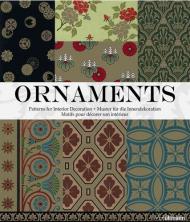
This volume is based on the well-known 1892 collection of ornament designs, The Practical Decorator and Ornamentist, by George A. and Maurice A. Audsley. Originally conceived as a collection of samples for architects and decorative painters, many professionals have found inspiration in this book, including cabinet-makers, ceramicists, and engravers.
This way, these ornaments found their way into tapestry designs, carpets and upholstery fabrics. Ornaments is not restricted to a mere reproduction of the original designs, though; it also provides commentary based on the original annotations of the Audsleys and describes the background of ornament from a perspective of the history of style and cultural studies, from Ancient Greece to the Middle Ages, from the Renaissance to classicism, from Japanese style to floral style. The book is completed by detailed instructions on how to copy the ornaments.
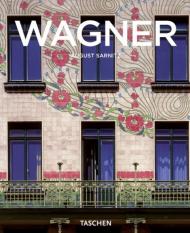
One of Austria’s most influential architects, Otto Wagner (1841-1918) played a key role in modernizing urban architecture. Forming an approach described as structural rationalism, Wagner pioneered use of materials such as glass, steel, and especially aluminum. He was associated with the Viennese Succession, a group of artists and designers headed by Gustav Klimt that initiated a departure from the conservative style of the Viennese Künstlerhaus. Among Wagner’s most important buildings are the Vienna Postsparkassenamt (Postal Savings building) and the Steinhof Church.
About the Series:
Every book in TASCHEN's Basic Architecture Series features:
The Pioneer of Viennese Modernism. Discover the groundbreaking structures of Otto Wagner
At once a realist and a visionary, an architect and a builder, Otto Wagner innovated a new era in building-making. Born in Vienna, the visionary architect made his presence felt — he pioneered the use of materials like glass, steel, and aluminum, in a ceaseless experimentation with form that would come to redefine Viennese structural identity, and urban architecture altogether.
Otto Wagner (1841–1918) is one of the most significant figures of turn-of-the-century architecture. He was associated with the Viennese Secession, a group of artists and designers headed by Gustav Klimt that initiated a departure from the conservative style of the Viennese Künstlerhaus. Wagner’s visionary approach, described as structural rationalism, pioneered the use of materials such as glass, steel, and especially aluminum to redefine Viennese structural identity.
From the imposing Austrian Postal Savings Bank to the scintillating St. Leopold Church at Steinhof, one of the most important Art Nouveau churches in the world: Discover the breadth of Wagner’s career as well as the political, economic, and social dynamics of his time. This incisive overview features a map locating all of the architect’s most renowned projects and recent, fresh photography from masters like Keiichi Tahara.
The author:
August Sarnitz is a practicing architect and professor of history and theory of architecture at the Akademie der bildenden Künste in Vienna. His many publications include books on R. M. Schindler, Lois Welzenbacher, Ernst Lichtblau, Adolf Loos, and E. A. Plischke.
About the series:
Born back in 1985, the Basic Art Series has evolved into the best-selling art book collection ever published.
Each book in TASCHEN’s Basic Architecture series features:
- an introduction to the life and work of the architect
- the major works in chronological order
- information about the clients, architectural preconditions as well as construction problems and resolutions
- a list of all the selected works and a map indicating the locations of the best and most famous buildings
- approximately 120 illustrations (photographs, sketches, drafts, and plans)