Издательства
- Rizzoli (101)
- Thames & Hudson (25)
- Taschen (11)
- Phaidon (8)
- Monacelli Press (6)
- Vendome Press (6)
- Flammarion (6)
- Beta-Plus (6)
- Gestalten (6)
- Princeton Architectural Press (5)
Подобрать по характеристикам
Разделы
Наличие на складе
Издательства
Цена (660 - 15000 грн)
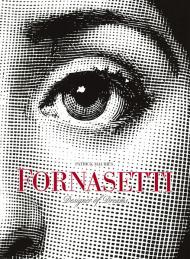
A celebration of the enormously popular Italian painter, sculptor and interior decorator
Piero Fornasetti established an enduring reputation as a designer with a style that was all his own – a style based on illusionism, architectural perspectives and a host of personal leitmotifs, such as the sun, playing cards and fishes, from which he spun seemingly endless variations. 'He makes objects speak' said Gio Ponti, his friend and longtime collaborator.
Designers and collectors today celebrate his use of allusion, unsettling images and striking juxtaposition to create unique, whimsical objects. Fornasetti's masterpieces shock, delight and inspire.
200 color and 950 b/w illustrations
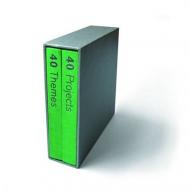
40 years, 40 projects, and 40 themes central to the success of Foster + Partners.
In 2007 Norman Foster celebrates 40 years of independent practice. Founded in 1967 as Foster Associates and now known as Foster + Partners, for over four decades his studio has grown to become one of the largest and most respected in the world. Since its inception, the practice has received more than 400 awards and citations for excellence and has won more than 70 international and national competitions. The new book celebrates 40 years of Foster's most important projects, together with 40 themes that have consistently underpinned his work. Echoing the spirit of Foster's architecture, the book itself is designed around a pioneering format which allows the content to be accessed interactively. This inventive volume provides an extraordinary view into the ideas that drive Foster's seemingly inexhaustible creative energy.
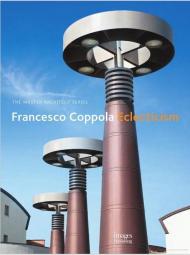
Francesco Coppola has always been an architect with wide-ranging interests: from architecture to communication, graphic arts and design. His interdisciplinary approach has resulted in a diverse body of work that ranges from urban and private architecture to global communication projects for companies. His most recent projects include the M1 Headquarters Tower in Imola, Italy and two urban upgrade projects: La Citta di Toscanella, a residential complex and urban park, and a master plan for the Town of Castel Guelfo in Bologna.
Francesco Coppola: Eclecticism also explores Coppola's work as a design and brand consultant with some of the worlds leading ceramic companies and his wide portfolio of industrial and product design such as furniture, lamps, tiles, mosaics and patented new systems of prefabrication for homes and displays
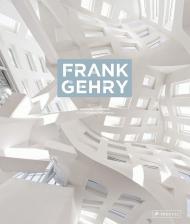
Featuring fifty of Frank Gehry’s most important projects, this lavish monograph presents the full range of the architect’s work from the past six decades.
Arranged chronologically, this book follows the arc of Gehry’s career, from his early residential projects through the public and cultural facilities his studio is currently focused on. The book explores the evolution of Gehry’s work, and how he has ceaselessly embraced formal, technological and constructional innovations, while his practice has never wavered from his vision. It examines his work in the context of the urban environment, showing how Gehry continually strives to challenge the idea of the city, creating urban buildings that respond to their surroundings without trivializing them.
The buildings profiled here — including the Vitra International Furniture Manufacturing Facility and Design Museum in Switzerland, Walt Disney Concert Hall in Los Angeles, the 8 Spruce Street Skyscraper (Beekman Tower) in New York, and the Fondation Louis Vuitton — are represented in dazzling color photographs as well as preparatory drawings, plans, and models. From his early years working within the L.A. Art Scene, to his Pritzker-winning recognition, to his pioneering research into the application of computer-aided-design in all aspects of the building design process from the first sketches to the final elements of construction, Frank Gehry, now in his eighth decade, continues to surprise and inspire the public.
This informative, fascinating volume is a must-have for his ardent fans and anyone interested in architecture.
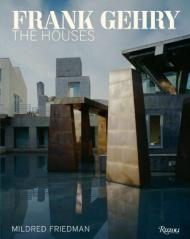
One of the great architects of our time, Frank Gehry has revolutionized the use of materials in design and redefined how architects use computers as a design tool to advance form-making as we know it. He has achieved worldwide fame for such large-scale public projects as the Guggenheim Museum in Bilbao, Spain, and the Walt Disney Concert Hall in Los Angeles, California, but it was in private houses that Gehry first explored and interrogated the principles of modern architecture.
In these houses - most notably his own, in Santa Monica, California - Gehry distorted, expanded, and collapsed the modernist box, exploring everyday materials (corrugated metal, unfinished plywood, and chain-link), experimenting with colour, and challenging accepted notions about geometry and structure. In houses such as the Schnabel House in Brentwood, California, and the Winton Guest House in Wayzata, Minnesota, he experimented with collage and assemblage. More recently, Gehry’s work has taken on sculptural forms, aided by new structural and geometric potentials of digital design, as in the near-legendary Lewis House in Lyndhurst, Ohio.
Colour photographs, sketches, and plans create an illuminating visual record of some of the most groundbreaking, seminal projects of Gehry’s oeuvre.
Frank Lloyd Wright is one of the great masters in the history of modern architecture. His career spanned over sixty years, and his unique stylistic invention kept ahead of any passing fashion.
This definitive monograph provides an unparalleled account of Wright’s career. It explores the key themes in Wright’s work, and presents the consistent qualities that underlie all of his designs. The themes of space and the spatial experience of the user are thus examined, together with a discussion of construction and Wright’s search for what he termed the ‘nature of materials'. The relationship between Wright’s architecture and landscape is also investigated.
The book includes an extensive selection of archival drawings and photographs; clear, redrawn plans and detail drawings; beautiful colour photographs; and a complete list of Wright’s buildings and projects compiled by Bruce Brooks Pfeiffer of the Frank Lloyd Wright Archives.
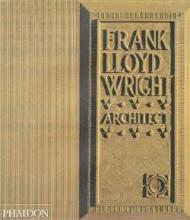
The American Architect Frank Lloyd Wright (1867-1959) exerted unique influence on architecture during the first half of this century. This book contains more than 100 full-color and black-and white photographs of exteriors and interiors of Wright's most admired buildings as well as many of his drawings.
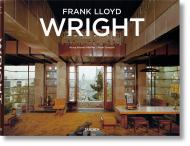
Wright on. The star pieces of Americas greatest architect
Frank Lloyd Wright’s paradigm-shifting projects. This authoritative overview, based on TASCHEN’s previous three-volume monograph and unlimited access to the Frank Lloyd Wright archives, scours the length and breadth of Wright's career to bring you all the gems of his genius at a new, bargain price.
A building by Frank Lloyd Wright (1867-1959) is at once unmistakably individual and evocative of an entire era. Notable for their exceptional understanding of an organic environment, as well as for their use of steel and glass to revolutionize the interface of indoor and outdoor, Wright’s designs helped announce the age of modernity, as much as they secured his own name in the annals of architectural genius.
This meticulous compilation from TASCHEN’s previous three-volume monograph assembles the most important works from Wright’s extensive, paradigm-shifting oeuvre into one authoritative and accessibly priced overview of America's most famous architect. Based on unlimited access to the Frank Lloyd Wright Archives in Taliesin, Arizona, the collection spans the length and breadth of Wright’s projects, both realized and unrealized, from his early Prairie Houses, through the Usonian concept home, epitomized by Fallingwater, the Tokyo years, his progressive “living architecture” buildings, right through to later schemes like the Guggenheim Museum, New York, and fantastic visions for a better tomorrow in the “living city.”
Author Bruce Brooks Pfeiffer, who served as Wright’s apprentice during the 1950s, discusses recent research on Wright and gives his own insights on these game-changing buildings.
About the Author:
Bruce Brooks Pfeiffer became Frank Lloyd Wright’s apprentice at the Taliesin Fellowship in 1949. In 1957, he attended the Ecole Nationale des Beaux-Arts in Paris, returning in 1958 to continue his apprenticeship with Wright until his death in 1959. He remains at Taliesin to this day, as director of the Frank Lloyd Wright Archives, a vice-president of the Frank Lloyd Wright Foundation, and author of numerous publications on Wright's life and work.
The editor:
Peter Gössel runs an agency for museum and exhibition design. He has published TASCHEN monographs on Julius Shulman, R. M. Schindler, John Lautner, and Richard Neutra, as well as several titles in the Basic Architecture series.
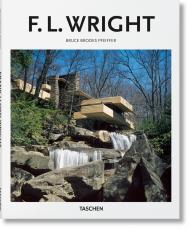
That’s Wright! One of the greatest pioneers in the history of architecture
From prairie houses to skyscrapers and the Guggenheim Museum, explore the life and work of one of the greatest pioneers in the history of architecture, Frank Lloyd Wright. Sketches, plans, and photographs chronicle all of Wright’s major works, celebrating his organic architecture philosophy, innovative use of industrial materials, and vision for a new way of American living.
Acclaimed as the “father of skyscrapers,” the quintessentially American icon Frank Lloyd Wright (1867–1959) was an architect of aspiration. He believed in giving cultivated American life its fitting architectural equivalent and applied his idealism to structures across the continent, from suburban homes to churches, offices, skyscrapers, and the celebrated Guggenheim Museum.
Wright’s work is distinguished by its harmony with humanity and its environment, a philosophy he called organic architecture, and which found its paradigm at Fallingwater, a house in rural Pennsylvania, cited by the American Institute of Architects as “the best all-time work of American architecture.” Wright also made a particular mark with his use of industrial materials, and by the simple L or T plan of his Prairie House which became a model for rural architecture across America. Wright was also often involved in many of the interior elements of his buildings, such as the furniture and stained glass, paying particular attention to the balance between individual needs and community activity.
Exploring Wright’s aspirations to augment American society through architecture, this book offers a concise introduction to his at once technological and Romantic response to the practical challenges of middle-class Americans.
The author
Bruce Brooks Pfeiffer became Frank Lloyd Wright’s apprentice at the Taliesin Fellowship in 1949. In 1957, he attended the Ecole Nationale des Beaux-Arts in Paris, returning in 1958 to continue his apprenticeship with Wright until his death in 1959. He remains at Taliesin to this day, as director of the Frank Lloyd Wright Archives, a vice-president of the Frank Lloyd Wright Foundation, and author of numerous publications on Wright's life and work.
The editor
Peter Gössel runs an agency for museum and exhibition design. He has published TASCHEN monographs on Julius Shulman, R. M. Schindler, John Lautner, and Richard Neutra, as well as several titles in the Basic Architecture series.
About the series:
Each book in TASCHEN’s Basic Architecture series features:
- an introduction to the life and work of the architect
- the major works in chronological order
- information about the clients, architectural preconditions as well as construction problems and resolutions
- a list of all the selected works and a map indicating the locations of the best and most famous buildings
- approximately 120 illustrations (photographs, sketches, drafts, and plans)

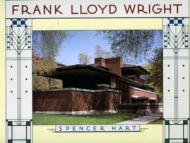
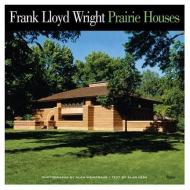
With the advent of Prairie style architecture, Frank Lloyd Wright embarked on a journey that would forever change the course of architecture.
During this extraordinarily prolific period, roughly the first quarter of the twentieth century, Wright built the first great modern American houses. He cast aside many of the conventions of the past, opening up interior spaces so that there might be a more subtle flow of rooms. The plans for Prairie style architecture were based on a tartan plaid of main spaces and secondary spaces, of public rooms and circulation spaces. Their decentralized asymmetry did not follow the Beaux-Arts insistence on a primary, often dominating, focal point — a vestige of its roots as a symbolic architecture for divine-right royalty. Following Wright's philosophy, Prairie design was emphatically democratic and non-hierarchical.
Frank Lloyd Wright Prairie Houses comprehensively demonstrates this philosophy. Focusing on interiors and details, the book features more than 70 Prairie style houses and other buildings, still extant, in lavish, full-color photography.