Мир Востока

Книги о восточном искусстве

Вы выбрали:
Сортировка:
наличие
цена
алфавит
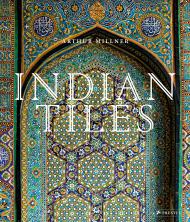
Arthur Millner
ID: 16173
Издательство: Prestel

This definitive book tells the visual history of tile decoration in the Indian subcontinent, through vibrant photography and thorough research.

Historic India, which now encompasses the modern nations of India, Pakistan and Bangladesh, is celebrated for the richness of its architectural and decorative arts, but less well-known for glazed tiles. Arthur Millner opens up this hitherto neglected subject with a richly illustrated narrative. Millner traces the craft’s roots in Muslim Persia, Afghanistan and Central Asia, showing how imported glazing techniques combined with an ancient local tradition of clay craftsmanship. He explores the production, designs and influences in Indian tiles from antiquity to the colonial period, tracing the historical evolution through a series of key eras, including the Delhi Sultanate and the Mughal Empire in Northern India. Although glazed tiles are generally associated with Islam, they also briefly flourished in both Hindu strongholds, such as Gwalior and Orchha, and in Christian Portuguese-ruled Goa. More than four hundred photographs, many of little-known sites, are drawn from the author’s years of travel as well as from colleagues, the V&A Museum archives and other celebrated institutions. These images capture the architectural context and beauty of the designs, providing a visual compendium of styles and techniques. Taken together they offer a unique chronicle of an environmentally threatened aspect of the region’s cultural, artistic and religious evolution over centuries.

About the Author:

Arthur Millner is a consultant and independent scholar in the field of Indian and Islamic art. He lectures at the London School of Oriental and African Studies, the V&A Museum, the Royal Asiatic Society and the Oriental Rug and Textile Society. He is the author of Damascus Tiles (Prestel, 2015).
 

Цена: 4500 грн
Доступно под заказ
в корзину в избранное
Gian Carlo Calza
ID: 11302
Издательство: Phaidon

The authoritative and wide-ranging visual essay on the aesthetics of Japan, a classic volume now back in print with a stunning new cover design

‘Japan style’ is an aesthetic recognizable to everyone: a beautifully displayed flower, an elegant piece of calligraphy, or a simple rock garden, yet it is also difficult to define.

Written by one of the world’s most respected scholars of Japanese art and culture, this book does just that. Illustrated with over 150 stunning images that unlock the essence of Japanese art and culture, alongside Gian Carlo Calza’s groundbreaking and insightful text, Japan Style explores specific achievements in Japanese art and architecture and offers an in-depth analysis of the whole of Japanese culture, its vision of the world and of humankind.

About the Author:

Gian Carlo Calza is an academic researching on Asian cultures and arts and their interplay with the West. He is a leading authority in Japanese art and aesthetics, author of many books, and curator of many exhibitions in the field.

He was a professor of Asian Art History at Ca’ Foscari University of Venice and director of the International Hokusai Research Centre in Milan. Among the most important of his books are: Tanaka IkkoHokusaiUkiyo-e, and Poem of the Pillow and Other Stories, all of which were published in English by Phaidon.

Contents and sections:
Irregular Beauty
 - Japan Style
 - Tea and the Aesthetics of the Undefined
 - Images of Emptiness
 - The Seductiveness of Impermanence
 - Eccentric? No, Extraordinary
 - The Secret Message of No
 - Tears of the Mask
 - The Colours of Darkness
 - interlude: Small but Great
The Feeling of Nature
 - The Harmony of Things
 - An Intimate Perception of Reality
 - The Dragon in Tranquillity
 - Nature's Magnificence
 - Nature and Beauty in the Floating World
 - Interlude: Eating with the Eyes
Masters of Art
 - Zeami: The Flower in the Demon
 - Hokusai: The Old Man Mad about Painting
 - Kawabata: The Power of the Ethereal
 - Mishima: When Will You Kill Yourself, Master?
 - Ikko: A Flash of Light
Glossary
Bibliography
Acknowledgements
Index

Цена: 2500 грн
Доступно под заказ
в корзину в избранное
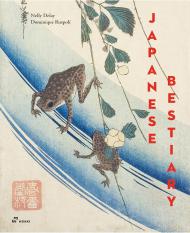
Nelly Delay, Dominique Ruspoli
ID: 18019
Издательство: Hoaki

At the heart of this book are twenty-eight real-life animals and the myths and literature, paintings, drawings, textiles and ceramics they have inspired some of the most celebrated Japanese artists and writers to create

Since the dawn of Japanese folklore and religion, the Japanese soul has cultivated a special connection with nature and wildlife, in part due to the natural abundance of the Japanese archipelago. Every animal, from the frightening crow to the sublime crane, is sacred, occupying a central place in Japanese mythology, literature, arts, and crafts. In this text-rich art book, readers will find twenty-eight real-life animals, including the fox, frog, cat, monkey, and firefly, described in texts combining haikus, tales and anecdotes from everyday life and illustrated with objects produced by the some of the most celebrated Japanese artists and craftsmen.

Readers will see just how central animals -from the most fleeting to the most majestic, from the wildest to the most domesticated -are to Japanese legends and literature but also in the latest manga and animated films. In some cases, the animals are transformed and endowed with human attributes; in others, through a representative selection of Japanese art -paintings, prints, fashion and common Japanese objects such as netsuke (miniature sculptures)- they appear lovingly portrayed in their natural element: typical animals of the countryside, mountains, forests, rivers and sea, and even today's cities. While most of the animals in this Japanese bestiary are good omens, even ones a tad mischievous, downright evil or uniquely sacred, such as the sika deer or the crane, all are invested with strong symbolism and have become extremely popular in a country where everything is ephemeral and transient, yet everything remains.

Japanese Bestiary is an ideal book for anyone interested in Japanese drawing and painting, animal illustrations and wildlife art and literature.

About the Authors:

Nelly Delay, art historian, graduate of the Ecole du Louvre high school, was an art critic at Combat – founded in 1941 as a clandestine newspaper – and in various Swiss and Italian magazines before specializing, since 1963, in the study of ancient Japanese art. She organized Japanese art events in Paris from 1974 to 1984, for which she published texts on little-explored subjects and books on old Japanese drawings and paintings and the influence of Japanese on Western Art. Since 1989, she has devoted herself to publications and conferences within the framework of different cultural organizations and the OECD. Two of her many titles are available in English: "The Art and Culture of Japan" and "Japan: The Fleeting Spirit".

Dominique Ruspoli is a writer and photographer. Doctor (PhD) of Philosophy (by Paris 1 Pantheon-Sorbonne University, France) specialized on the aesthetics of western lough, she became lecturer on written communication and psychology at the EISEA (Graduate School of Engineering in Ivry, France). Dominique Ruspoli has addressed in her writings subjects as different as psychodrama, the humorous drawing, the Etruscans, Venice or the Lascaux cave, and has published also books on the Japanese artists Hokusai, Hiroshige and Kyosai. She is, since 2000, member of the College of Pataphysics - The Science of Imaginary Solutions, founded after the principles described by the symbolist writer Alfred Jarry.

Цена: 1980 грн
Доступно под заказ
в корзину в избранное
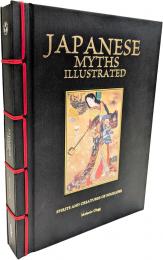
Melanie Clegg
ID: 19096
Издательство: Amber

Discover everything you’ve ever wondered about the legendary spirits, creatures, and figures of Japanese folklore, including how they have found their way into every corner of contemporary pop culture.

Japanese Myths Illustrated provides a sumptuous, accessible guide to the religious beliefs, myths and gods of this enduring culture.

Japanese mythology is a complex system of beliefs that also embraces Shinto and Buddhist traditions as well as agriculture-based folk religion. The Shinto pantheon alone boasts an uncountable number of kami (deities or spirits). One notable aspect of Japanese mythology is that it provided a creation story for Japan and attributed divine origins to the Japanese Imperial family, assigning them godhood.

Beautifully produced in traditional Chinese binding with over 130 photographs and illustrations, this book will fascinate anyone interested in the tales of an ancient culture and still has an enduring appeal today.

About the Author:

Melanie Clegg holds a BA (Hons) in Japanese Studies from the University of Oxford. After almost a decade spent in Japan, she now resides in the UK where she works as a freelance Japanese to English translator of video games and other entertainment media. She lives with her husband and their two one-eyed cats.

Цена: 1700 грн
Доступно под заказ
в корзину в избранное
Julia Hutt, Edmund De Waal
ID: 17706
Издательство: V&A Victoria Albert Museum

‘You will have a moment of quiet delight and a mood of introspection to carry you away.’ Edmund de Waal.

Prized by collectors from East to West, Japanese netsuke are tiny objects of wonder that originated as utilitarian accessories for traditional Japanese dress. Over the centuries these small carved toggles, designed to hook over the top of the kimono sash, evolved into high-fashion depictions of all aspects of Japanese life.

In this richly illustrated and highly accessible book, Julia Hutt draws on the V&A’s world-famous netsuke collection to explore the origins and techniques of this captivating art form.

About the Author:

Julia Hutt is Curator of Japanese Art in the Asian Department at the V&A. Edmund de Waal is a world-renowned ceramics artist and author of The Hare with the Amber Eyes

Цена: 1250 грн
Доступно под заказ
в корзину в избранное
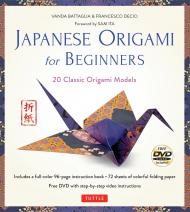
Vanda Battaglia, Francesco Decio
ID: 15506
Издательство: Tuttle

Make simple and fun paper craft models with this easy origami book and paper kit.

The ancient art of origami originated in Japan, where it is steeped in traditional values. The 20 models presented in this kit include many with strong symbolic meanings, such as the carp, the frog and the crane, which symbolize longevity, good luck and perseverance. Also included in this kit are paper models which have practical uses, such as a bag in which to store spices or powdered medications, the masu box for containing small gifts, and uniquely shaped notes with elaborate closures. The more playful side of origami is represented as well: the stylized sumo wrestler with realistic moves has entertained Japanese children for centuries, and the paper Samurai hat is fun to play with.

Origami is an ideal activity for children since paper folding develops dexterity and creativity. Origami is also a craft based on a few fundamental 3D folding techniques, so Japanese Origami for Beginners Kit is a useful starting point for fans of all ages and abilities. Although this book is aimed at origami beginners, it contains projects suitable for origami fans of all ages and abilities and is the perfect book for all those who enjoy making things with their hands.

This book opens with an illustrated history of origami that highlights the masters and evolution of this pastime and art form up until the present day. A glossary of important origami folding symbols shows you how to follow the diagrams, which are commonly used to indicate how to fold origami models. Easy-to-follow step-by-step instructions follow for each of the 20 models. For those who prefer to see the models folded, this kit includes complete video instructions on a free DVD. It also has 72 high-quality origami folding papers, all decorated with a wide selection of traditional Japanese designs and patterns.

All of the folds are simple enough to be origami-for-kids projects and are a great way to learn origami. None of the projects require paint or glue; so just grab the included origami paper and start folding right away!

Цена: 900 грн
Доступно под заказ
в корзину в избранное
Ellis Tinios
ID: 12379
Издательство: British Museum Press

Japanese woodblock prints of the Edo period (1615–1868) were the products of a highly commercialised and competitive publishing industry. Their content was inspired by the vibrant popular culture that flourished in Edo (Tokyo). At any given time scores of publishers competed for the services of the leading artists of the day. Publishers and artists displayed tremendous ingenuity in finding ways to sustain demand for prints and to circumvent the restrictions placed upon them by government censorship. Japanese woodblock prints have long been appreciated in the West for their graphic qualities but their content has not always been fully understood. 

In recent years, publications by scholars in Japan, Europe and the United States have made possible a more subtle appreciation of the imagery encountered in them. This book draws upon this recent scholarship to explain how those who first purchased these prints would have read them. Through stunning new photography of both well-known and rarely published works in the collection of the British Museum, including many recent acquisitions, the author explores how and why such prints were made, providing a fascinating introduction to a much-loved but little-understood art form.

Цена: 980 грн
Доступно под заказ
в корзину в избранное
Anne-Marie Christin, Claire-Akiko Brisset and Torahiko Terada
ID: 15906
Издательство: Abbeville Press

A lavishly illustrated history of Japanese screens — limited to 3,000 numbered copies

Japanese screens (byobu, meaning “barrier against the wind”) are made of wooden lattices with two to twelve panels, covered with a paper or fabric canvas. They are unique for being beautiful artworks as well as portable furnishings, acting as backdrops for court ceremonies or partitions for intimate tea services. Artists have embraced screens as three-dimensional objects, creating dynamic compositions that guide the viewer’s eye from one panel to the next.

This sumptuous book explores the 1,300-year history of Japanese screens. The authors, leading experts on Japanese art and culture, describe how screens developed from the eighth to the twenty-first century, from their ceremonial use in palaces and temples to their functional and decorative use in ordinary Japanese homes. They examine the stylistic evolution of screens and the wide variety of subjects, such as animals, the seasons, The Tale of Genji, and calligraphic designs.

Bound in the Japanese style and housed in a handsome clamshell box, this volume also comes with a poster-sized reproduction of an exceptional screen, suitable for framing. Japanese Screens will be an essential addition to any art lover’s library.

About the Authors:

Anne-Marie Christin was professor emeritus of classical literature at the University of Paris, founder of the Center for the Study of Writing and Image (CEEI), and author of A History of Writing.

Torahiko Terada is a professor of comparative culture and literature at the University of Tokyo.

Claire-Akiko Brisset is a professor of Japanese cultural history at the University of Geneva.

Цена: 7800 грн
Доступно под заказ
в корзину в избранное
Colin M. Roach
ID: 16903
Издательство: Tuttle

With over 300 stunning photographs and woodblock prints along with extensive historical and cultural commentary, Japanese Swords is the ultimate authority on Samurai weaponry.

Historically, Japanese warriors considered their swords to be more elevated than simple weaponry. Their swords were both lethal tools and divine companions -- social and religious icons. Traditionally worn by the samurai as a sign of social status, the Japanese sword represented the junction between the ruling military class and those whom they ruled. Moreover, the samurai sword was a technological and artistic marvel. Many scholars consider it to be the finest sword ever constructed.

Concerning symbolism and historical importance, no other blade comes close to the Japanese sword. With a historical, iconographical, and technological perspective, author Cohn M. Roach provides an in-depth study of these magnificent weapons in Japanese Swords. This richly illustrated sword book weaves the blade's primary influences together, tracking its history and illuminating its progress from infancy to grandeur. By studying the evolution of the Japanese sword from this perspective, we better understand Japan and its warrior archetype.

Combining research materials from multiple disciplines, Roach uses his expertise as an educator to guide readers through the sword's rise to greatness in a unique way. This book discusses the history, development, and spiritual symbolism of the sword, as well as the esoteric metallurgical techniques used in making it. It also covers the intense training practices used by skilled swordsmen.

Japanese Swords also includes accompanying online videos featuring a beautifully-filmed documentary that explores the traditional swordmaker's craft, an introduction to the Japanese sword at a sword shop in Kyoto and a visit to a dojo for a beginner's class in the medieval sword-drawing art called iaido.

About the Author:

Colin M. Roach, M.Ed. lives in the high mountains of Utah with his wife and three sons. He is a private school administrator with expertise in the areas of differentiated teaching and learning, and a member of the All Kinds of Minds Institute's national teaching faculty. Mr. Roach is an avid student of Japanese history, culture, and martial arts. Four generations of familial connection to Japan have fueled Mr. Roach's passionate study of Japan's archetypal warrior culture. In addition to his academic study of sword-related symbolism, he has trained with some of the top teachers of aikido and iaido in Japan and America. He holds the ranks of Youdan (4th degree) in iado and Sandan (3rd degree) in aikido. He also holds the teaching title ""Shidoin" in both arts. Mr. Roach often travels to teach sword-related symbolism, traditional Japanese swordsmanship, the etiquette involved when handling a Japanese sword, and iado's role in cultural preservation.

_____________

Пролистать книгу Japanese Swords: Cultural Icons of a Nation: Cultural Icons of a Nation: The History, Metallurgy and Iconography of the Samurai Sword на Google Books.

Цена: 1980 грн
Доступно под заказ
в корзину в избранное
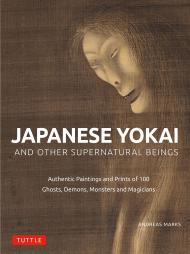
Andreas Marks
ID: 16528
Издательство: Tuttle

Superb Yokai images from the world's leading museums and private collections!

Japan's vast pantheon of supernatural creatures includes demons (yokai), monsters, ogres (oni), ghosts (yurei) and magicians--mythical beings from folklore and popular culture which continue to thrill readers of traditional stories and manga today.

This richly illustrated book by Andreas Marks, the leading authority on Japanese woodblock prints, presents authentic illustrations and descriptions of 100 different creatures, including:

- Bakeneko: Monster cats in human form who lick lamp oil and prey on humans born in the year of the Rat
- Han'nya: Female demons with sharp and pointed horns, metallic eyes and a smirking smile
- Hihi: Large ape-like monsters who live in the mountains and have superhuman strength, enabling them to kidnap and kill humans
- Mikoshi-nyudo: Yokai with an enormously extended necks who appear only at night
- And many more!

The striking visual examples in this book are drawn from the rich canon of early Japanese prints, books, and paintings--sourced from leading museums, libraries and private collections worldwide. They show the "original" forms and appearances of the creatures which form the basis for all subsequent depictions.

Also included are two long handscrolls from the Minneapolis Institute of Art (A Collection of Monsters and Night Parade of One Hundred Demons) which are reproduced here for the very first time.

Prints and Paintings sourced from the following list of museums, libraries and private collections:

Art Institute of Chicago
Christie's, London & New York
The Cleveland Museum of Art
Harold B. Lee Library, Brigham Young University
Kyoto University, Main Library
Library of Congress
Los Angeles County Museum of Art
The Metropolitan Museum of Art
Minneapolis Institute of Art
National Museum of Japanese History
Princeton University Library
Rijksmuseum, Amsterdam
Smithsonian Libraries

About the Author:

Dr. Andreas Marks is the Mary Griggs Burke Curator of Japanese and Korean Art and director of the Clark Center for Japanese Art at the Minneapolis Institute of Art. From 2008 to 2013 he was the director and chief curator of the Clark Center for Japanese Art and Culture in California. He has a Ph.D. from Leiden University in the Netherlands and a master's degree in East Asian Art History from the University of Bonn, Germany. A specialist of Japanese woodblock prints, he is the author of 18 books. In 2014, he received the International Ukiyo-e Society award in recognition of his research and publications. In 2018, he received a book award from the International Fine Print Dealers Association.

______________

Пролистать книгу Japanese Yokai and Other Supernatural Beings: Authentic Paintings and Prints of 100 Ghosts, Demons, Monsters and Magicians на Google Books.

Цена: 1700 грн
Доступно под заказ
в корзину в избранное
Anna Jackson
ID: 13184
Издательство: Thames & Hudson

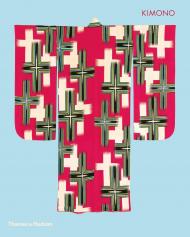
A lavish survey of the Khalili Collection’s world-renowned holdings of traditional Japanese kimono, from the Edo period to the 20th century.

The Khalili Collection of kimonos comprises over 200 garments spanning 300 years of Japanese textile artistry. The form of the T-shaped, straight-seamed, front-wrapping kimono has changed very little over the centuries, yet the collection reveals an astonishing variety of designs. The garments presented here convey the remarkable creativity of designers who produced works of art that would enfold the wearer. The enormous range of patterns were executed in a complex combination of techniques, with some garments requiring the expert skills of a number of different artisans.

The Khalili Collection includes formal, semi-formal and informal kimono, underkimono and jackets, worn by women, men and children. Represented are the sophisticated garments of the samurai elite and the affluent merchant classes of the Edo period (1603– 1868), the shifting styles and new colour palette of Meiji-period dress (1868–1912) and particularly the bold and dazzling kimono of the Taisho- (1912–26) and early Sho-wa (1926–89) eras, which utilized innovative techniques and drew fresh inspiration from both past traditions and the modern world.

Here, an international team of authors examine the art and evolution of the kimono in the historical context of the 17th to the 20th centuries, under the editorship of Anna Jackson, Keeper of the Asian Department at the Victoria and Albert Museum, London.

Contents List:

Introduction • I. Edo (1603–1868) • II. Meiji (1868–1912) • III. Taisho/Showa (1912–1989)

About the Author:

Anna Jackson is Keeper of the Asian department at the Victoria and Albert Museum, and Honorary Curator of the Khalili Collection.

Цена: 2800 грн
Доступно под заказ
в корзину в избранное
Claire Pollard
ID: 18130
Издательство: Arnoldsche

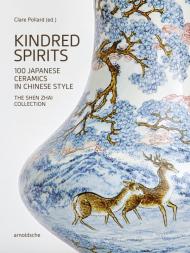
The first comprehensive monograph on Japanese ceramics in Chinese style and their history.

100 beautiful ceramics showcase the artistic relationship between Japan and China throughout the years.

 A valuable reference source for collectors and art historians.

Kindred Spirits showcases the remarkable flowering of Chinese style ceramics that took place in Japan after the mid-19th century. For over a thousand years, Chinese ceramics have been admired and emulated in Japan. This book discusses for the first time how this artistic relationship evolved during the Meiji, Taisho, and early Showa eras. A selection of 100 works from the acclaimed Shen Zhai Collection demonstrates the range and quality of these ceramics, from elegant celadons to sophisticated underglaze blue porcelains. Detailed descriptions, makers’ marks, and box inscriptions make this a valuable reference resource for collectors and art historians.

About the Author:

Rose Kerr is Honorary Associate of the Needham Research Institute in Cambridge (UK), after retiring as Keeper of the Far Eastern Department at the Victoria and Albert Museum in London. She teaches and lectures internationally and is an Honorary Fellow at the University of Glasgow; Trustee of the Sir Percival David Foundation of Chinese Art; and Museum Expert Advisor for Hong Kong. In 2015 she was made an Honorary Citizen of Jingdezhen. An author and contributor to twenty-six books on Asian art, she is a regular contributor to journals and magazines. Patrick M. Kwok (郭建明) is a third-generation Singapore collector whose family art business marked its centennial in 2018. Over the past four decades his research interests have covered a wide range of Chinese art, in particular bronzes and ceramics. These constitute the core collections of 慎齋 (Shen Zhai), the Studio of Reverence. The bronzes were documented in a volume that he edited, Dialogue with the Ancients: 100 Bronzes of the Shang, Zhou, and Han Dynasties: The Shen Zhai Collection (Select Books, 2018). He is a vice president of The China Society, Singapore, and since the early 1980s he has been a member of the Oriental Ceramics Society in London, as well as in Hong Kong, and of the Southeast Asian Ceramic Society, Singapore. His interest in Japanese art led him to focus on the influence of Chinese aesthetics in Japanese ceramics, sculpture and painting. Dr. Maezaki Shinya (前崎信也) is Professor of Art and Design History at Kyoto Women’s University and a Visiting Researcher at the Art Research Centre, Ritsumeikan University and Archival Research Centre of Kyoto City University of Arts. After gaining his doctorate in London in 2009, he worked for six years as a post-doctoral fellow at Ritsumeikan University, Kyoto. In 2015 he took up the position of Associate Professor at Kyoto Women’s University and was promoted to Professor in April 2022. Dr. Clare Pollard is Curator of Japanese Art at the Ashmolean Museum, University of Oxford. After gaining her doctorate in Oxford in 1996, she worked for seven years as Curator of the East Asian Collections at the Chester Beatty Library, Dublin. In 2004 she took up the position of Curator of Japanese Art at the Art Gallery of New South Wales, Sydney, before returning to the Ashmolean in April 2006.

Цена: 4800 грн
Доступно под заказ
в корзину в избранное
Matthi Forrer
ID: 14192
Издательство: Prestel

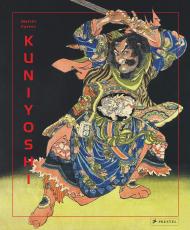
This sumptuously produced monograph showcases the work of Utagawa Kuniyoshi, one of the last great Japanese masters of ukiyo-e prints, illustrations, and paintings.

Best known for his depictions of fierce samurai warriors in battle, Utagawa Kuniyoshi also produced landscapes, portraits of Kabuki actors, and images of mythical animals. His dynamic action scenes and fantastic creatures are recognized today as precursors of manga and anime. This dazzling volume by Matthi Forrer, one of the leading experts on ukiyo-e art, traces Kuniyoshi’s entire career. Chapters look at the major aspects of Kuniyoshi’s oeuvre; his book illustrations and portraits of fashionable women; his enormously popular series featuring actors, warriors, and landscapes; and the influence of Western art on his career. Meticulous, large-scale reproductions highlight the work’s clear outlines, elegantly muted palette, and precise details — from electrifying depictions of a tiger, mid-pounce, and light-hearted interpretations of Chinese folktales, to the terrifying figures of samurai swordsmen and romantic winter landscapes. A Japanese-style binding and box complete this luxurious package that promises an endlessly absorbing journey into the life of Kuniyoshi during the latter days of Japan’s Edo period.

About the Author:

Matthi Forrer is an independent curator and former Curator for Japanese Arts at the National Museum of Ethnology in Leiden, Netherlands. He is the author of numerous books on Japanese art, including HokusaiHiroshige, and Hiroshige: Prints and Drawings (all by Prestel).

Цена: 6500 грн
Доступно под заказ
в корзину в избранное
Pie International
ID: 14637
Издательство: PIE Books

Following the former best-selling title; Heroes and Heroines, this title showcases the most trendy and updated illustrations by about 60 prominent character designers covering both video games and animation. Featuring a bilingual interview with Shiro Miwa, a leading comic artist who is also a character designer of 7th Dragon 2020 (cover art). Featured animations and video games designed from these titles: Girls and Panzer; Kantai Collection; Kill la Kill; Attack on Titan; METAL GEAR SOLID V; and much more.

Цена: 1300 грн
Доступно под заказ
в корзину в избранное
Written by Takashi Murakami, Contribution by Massimiliano Gioni
ID: 12542
Издательство: Rizzoli

A comprehensive volume — overseen by the artist himself — on one of the most renowned living artists today, Takashi Murakami. 

Takashi Murakami is celebrated the world over for his deft blurring of high and low art. In this volume, accompanying a major exhibition of his work and the first in the Middle East, readers are immersed in the unique way Murakami channels the ecstasy and anxiety of contemporary culture. Conceived by the artist as a self-portrait in the guise of a cartoon, Murakami: Ego illuminates the role of the artist as a cipher and critic of pop phenomena as well as a mirror of global networks of consumerism, interpretation, and exchange. 

The book features some of the artist’s most celebrated series, including Kaikai Kiki Lots of Faces and Pom and Me. Murakami has conceived of the exhibition itself as a work of art, creating new modes of display that include sculptural pedestals with digital animation, a circus tent that doubles as an indoor cinema, and an impressive 300-foot-long painting, all of which are featured in the book. In addition to an interview by curator Massimiliano Gioni, Murakami will contribute writings on various works.

About the Author:

Takashi Murakami has become recognized as one of the most prominent contemporary artists of his time. His work has been featured in numerous solo exhibitions at museums and art institutions throughout the world. Recent shows include the travelling retrospective ©MURAKAMI and the Château de Versailles’s solo exhibition of his works on the palace grounds. Massimiliano Gioni is the associate director and director of exhibitions for the New Museum in New York and the curator of the exhibition Murakami – Ego for the Qatar Museums Authority.

_____________

Пролистать книгу Murakami: Ego на сайте издательства.

Цена: 3800 грн
Доступно под заказ
в корзину в избранное
показать по:
на странице