Издательства
- Thames & Hudson (9)
- Victionary (9)
- Rockport (7)
- Laurence King Publishing (7)
- niggli Verlag (6)
- SendPoints (5)
- Princeton Architectural Press (4)
- Rizzoli (3)
- Amber (3)
- Blue Star Press (2)
Подобрать по характеристикам
Разделы
Наличие на складе
Издательства
Цена (780 - 9000 грн)
Explore the fundamentals of typography with this practical new guide. An instructional reader rather than historical survey, Design Elements: Typography Fundamentals uses well-founded, guiding principles to teach the language of type and how to use it capably.
Designers are left with a solid ground on which to design with type. Limitless potential for meaningful and creative communication exists—this is the field guide for the journey!
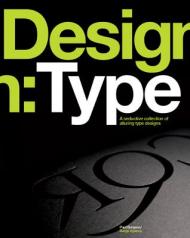
Featuring a curated collection of about 500 exquisite designs, along with essays from top designers about the essence and importance of good typography in design, Design: Type is an insightful resource filled with mini-workshops that dissect several featured projects and highlight the effectiveness of the type treatments. The first in a new series, this informative sourcebook offers the best of typography in practice and is an essential resource for students and professionals alike.
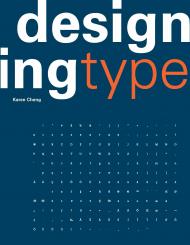
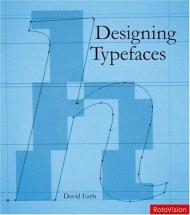
The lack of a specific and comprehensive guide to type design has long been a frustration for typographers, graphic designers and students.
Designing Type finally addresses this important need – and brings new depth and insight to the art and process of developing a typeface.
Copiously illustrated with type specimens and diagrams demonstrating visual principles and letter construction, the book discusses structure, optical compensation and legibility, with emphasis on the often overlooked systematic relationships between letters and shapes in a font. A wide range of classic and contemporary typefaces are analysed, and examples of student work, progress sketches and final type designs are used to demonstrate core issues.
In the light of the rapidly broadening market for original and custom typefaces, Designing Type is a valuable reference for both experienced professionals and novice designers.
About the Author:
Karen Cheng is professor in the Visual Communication Design program at the University of Washington in Seattle, where she teaches type design and typography. An active practitioner, her design work has been published by the American Institute of Graphic Arts (AIGA), Communication Arts, Print, Critique and ID Magazine.
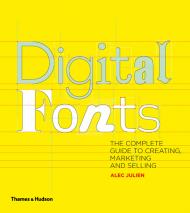
A comprehensive and practical guide to font creation that explores every aspect of the process
Packed with step-by-step tutorials and interviews with professional font designers, Digital Fonts is a comprehensive and practical guide that explores every aspect of the font creation process, from sketching initial letterforms to mastering the font creation software packages Fontlab and Fontographer.
This book addresses the important issue of how designers can best market and sell their fonts, and includes advice on copywriting and working with foundries, as well as how designers can set up their own foundries.
Throughout the book, screen grabs and illustrated diagrams accompany clear, accessible and step-by-step text, clarifying every process and arming readers with all the essential information they need. Interviews with professional font designers and foundry owners provide an insight into their working processes, while accompanying portfolios demonstrate a wide range of inspirational font styles.
Table of Contents:
I. Typography Essentials: 1. Key Principles • 2. Creating Letterforms • II. Creating a Font: 3. From Lettering to Vector File: What is a Font? • 4. Font Creation Software Tutorials • III. Going Pro: 5. Marketing and Selling Your Fonts • IV. Resources
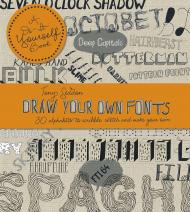
Hand-drawn lettering has never been more popular, and every home designer is in on the act, creating energetic, quirky fonts that seem to jump off the screen, the poster or the page. To the uninitiated this free design can seem a little intimidating can anyone join in? Can you learn to draw appealing letters without a graphics course?
Draw Your Own Fonts proves that the answer is a resounding ‘yes’. A lively mix of inspiration and workbook, it offers 30 complete alphabets, drawn in a variety of styles by an energetic line-up of young artists and illustrators, with tips and demonstrations on how you can copy or adapt them to make them your own. With sections on how to use your fonts online as well as on paper, this is a do-it-yourself book that will appeal to anyone who has ever begun a hand-lettered project (or simply doodled a highly decorated word or two on the cover of a notebook) then wondered why it didn’t have the panache of professional work.
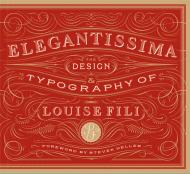
Louise Fili has been an inspiration for designers around the world since the 1980s, when she raised the bar on book cover design, creating close to two thousand jackets as art director for Pantheon Books. In 1989 Fili founded her own graphic design studio, Louise Fili Ltd, and branched out into the fields of restaurant and food packaging design. Her lavish and elegant typography, often hand-drawn, helps advertise and market such well-known brands as Sarabeth's, Bella Cucina, Jean-Georges, and Good Housekeeping, among many others. Known for her intense attention to detail, her fresh reinterpretation of vintage sources, and her passion for all things Italian, Fili has won numerous awards.
Elegantissima, the first monograph on her work, covers the breadth of her nearly forty-year design career. Featuring case studies showing sketches, references, inspiration, and design process, it's a must-have for graphic design students and professionals, as well as anyone interested in advertising, food, restaurants, Italy, and books.
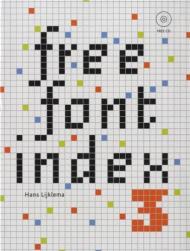
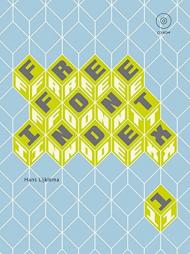
Free Font Index 3 is an indispensable guide to free fonts and their creators. Over 500 fonts from 26 type foundries have been collected in this book and CD set. In addition to comprehensive type specimens of all fonts, the book includes interviews with 6 type designers: Paul D. Hunt, Underware, Dirk Uhlenbrock (TypeType), Santiago Orozco (Typemade), Dave Crossland and Wojciech Kalinowski.
The fonts on the CD are suitable for both Windows (2000 and later) and Mac (OS X and later) systems; however, many of the fonts can also be used on previous versions of either or both systems. Some of the fonts contain extended character sets, including Central and Eastern European, Cyrillic and/or Greek. All fonts are licensed for personal and commercial use.
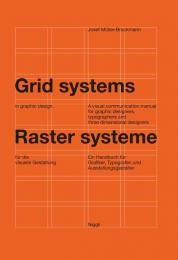
This book is suitable for those who work with automated text and image design. It shows examples of working correctly on a conceptual level. Exact directions for using all of the grid systems presented (8 to 32 grid fields) are given to the user. These can be used for the most varied of projects. The three-dimensional grid is treated as well. Put simply: a guidebook from the profession for the profession.
The development of organisational systems in visual communication was the service and the accomplishment of the representatives of simple and functional typography and graphic design. In the 1920s in Europe, works already arose in the areas of typography, graphic design and photography with objectified conception and rigid composition. In 1961 a brief presentation of the grid with text and illustrations appeared for the first time in an earlier book by the author. Articles published mainly in trade journals then followed.
This book now attempts to close a gap by giving examples and exact directions to the professional concerning all grid problems that can occur.
The author, a world-renowned professional, thus offers his colleagues the tools to solve problems more easily.
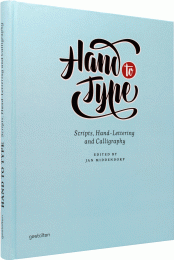
The beauty and art of creating handwritten letter forms.
Hand to Type is a stunning compilation of hand-made and digital scripts that showcases the beauty of handwritten letterforms. The book features work by some of today’s most successful and original calligraphers and lettering artists. In addition to fonts and lettering using the Latin alphabet, it introduces artists who explore Cyrillic, Arabic, and Greek scripts.
The book’s rich visual examples are complemented by in-depth interviews with outstanding calligraphers and type designers conducted by editor Jan Middendorp. Hand to Type also offers a revealing glimpse into processes by which hand-made letters may be turned into digital files. Prominent guest authors introduce the workings of scripts with which many readers may be less familiar — from Arabic and Indian writing systems to the amazing scripts found in pre-war German schoolbooks and on Amsterdam pub windows.
Hand To Type features interviews with Ken Barber, Timothy Donaldson, Tony Di Spigna, Gemma O’Brien, Luca Barcellona, Niels Shoe Meulmann, Brody Neuenschwander, Gabriel Martínez Meave, and Reza Abedini.
Contributing designers include:
Francesca Biasetton, Alison Carmichael, Allan Daastrup, Louise Fili, Cláudio Gil, Gray 318, Cyrus Highsmith, Brian Jaramillo, Seb Lester, Letman, Gabriel Martínez Meave, Erik Marinovich, Marina Marjina, Laura Meseguer, Greg Papagrigoriou, Alejandro Paul, Stephen Rapp, Ricardo Rousselot, Paul Shaw, Wissam Shawkat, Dana Tanamachi, John Stevens, Underware, and Laura Worthington, among others.
With specialist chapters by:
Nadine Chahine, Rick Cusick, Ramiro Espinoza, Kimya Gandhi and Dan Reynolds, Patrick Griffin, Florian Hardwig, Shoko Mugikura, and Alexei Vanyashin.

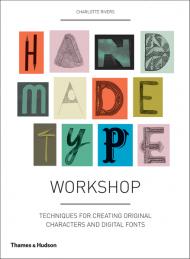
Type and font creation are among the most important aspects of graphic design.
Handmade Type Workshop is ideal for anyone looking to move beyond existing typography and fonts to create, explore and use original or customized letterforms.
This is a comprehensive, practical guide to handcrafting creative fonts, packed with tutorials, profiles and inspirational showcases from a range of international contemporary practitioners, including Lisa Congdon, Toshi Tajima, Mathilde Nivet, Tyrone Ohia, Honey Design, Amandine Alessandra and many more.
Taking font creation back to basics, Handmade Type Workshop explores innovative ways to design contemporary lettering of all kinds, examining everything from classic design examples to 3D and illustrated fonts, digital lettering and radical conceptual alphabets.
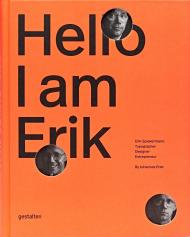
Erik Spiekermann is the epitome of a typographer. This comprehensive book is the first to showcase his body of work and tell the story of his life
Erik Spiekermann is one of the best-known graphic designers in the world. He not only represents German typeface and corporate design like no other, but his work and the companies he has founded have had an unparalleled influence on contemporary graphic design around the globe.
The visual biography Hello, I am Erik is the first comprehensive exploration of Spiekermann’s more than 30-year career, his body of work, and his mindset. Contributions by Michael Bierut, Neville Brody, Mirko Borsche, Wally Olins, Stefan Sagmeister, Christian Schwartz, Erik van Blokland, and others round out this insightful publication.
Erik Spiekermann is one of the best-known typographers and graphic designers in the world. As a teacher and critic who is loved and feared in equal measure, his influence on contemporary graphic design is unparalleled. Spiekermann also represents German typeface and corporate design like no other.
Hello, I am Erik is the first-ever visual biography of Erik Spiekermann’s work. The book documents his projects, traces milestones in his life, and offers his personal perspectives on design. Essays by notable designers and authors provide a framework and further context for this vivid presentation of his body of work.
About the Editor:
Johannes Erler is one of Germany’s top designers. Previously with Factor Design and today with ErlerSkibbeTönsmann, he has shaped the corporate identities of some of the country’s leading brands. As art director of the magazine Stern, he was responsible for the 2011 redesign of one of Germany’s most widely red weeklies.