Результаты поиска

Thomas Murray, Virginia Soenksen
ID: 15385
Издательство: Prestel

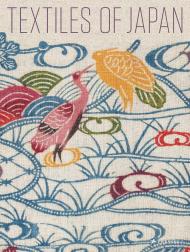
From rugged Japanese firemen’s ceremonial robes and austere rural workwear to colourful, delicately-patterned cotton kimonos, this lavishly illustrated volume explores Japan’s rich tradition of textiles.

Textiles are an eloquent form of cultural expression and of great importance in the daily life of a people, as well as in their rituals and ceremonies. The traditional clothing and fabrics featured in this book were made and used in the islands of the Japanese archipelago between the late 18th and the mid-20th century. The Thomas Murray collection featured in this book includes daily dress, workwear, and festival garb and follows the Arts and Crafts philosophy of the Mingei Movement, which saw that modernization would leave behind traditional art forms such as the hand-made textiles used by country people, farmers, and fisherman. It presents subtly patterned cotton fabrics, often indigo dyed from the main islands of Honshu and Kyushu, along with garments of the more remote islands: the graphic bark cloth, nettle fiber, and fish skin robes of the aboriginal Ainu in Hokkaido and Sakhalin to the north, and the brilliantly coloured cotton kimonos of Okinawa to the far south. Numerous examples of these fabrics, photographed in exquisite detail, offer insight into Japan’s complex textile history as well as inspiration for today’s designers and artists. This volume explores the range and artistry of the country’s tradition of fiber arts and is an essential resource for anyone captivated by the Japanese aesthetic.

About the Authors:

Thomas Murray is a dealer of Asian and tribal art and has an extensive personal collection of Japanese and Indonesian textiles. He is a past president of the Antique Tribal Art Dealers Association (ATADA), and served on President Obama's Cultural Property Advisory Committee at the Department of State in Washington, DC. Virginia Soenksen is Associate Director of the Madison Art Collection at James Madison University in Virginia. Anna Jackson is Keeper of the Asian Department at The Victoria and Albert Museum in London, where she is responsible for the museum's collection of Japanese textiles and dresses.


Цена: 5500 грн
Есть в наличии
в корзину в избранное
Chris Uhlenbeck, Jim Dwinger & Philo Ouweleen
ID: 15380
Издательство: Ludion

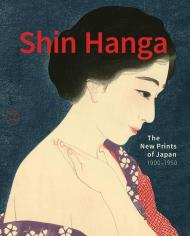
Twentieth-century Japanese printmaking has come in for relatively little attention up to now. This publication sets out to change that. Shin hanga (new prints) are harmoniously balanced designs, printed on the highest-quality paper using the finest pigments and in small editions. They are the fruit of a traditional yet successful collaboration between artist, publisher, block cutter and printer. It is not so much in their subject matter as through their visual language that shin hanga prints set themselves apart from their traditional precursors.

This book presents a unique selection that lets us explore Japanese printmaking in the 20th century. The prints it reproduces are mostly drawn from two large private collections, supplemented by works from the Royal Museums of Art and History in Brussels and several exceptional items from the family collection of the publisher Watanabe, the person who started it all.

About the Authors:

Author Chris Uhlenbeck has curated several major exhibitions on Japanese art. He is assisted here by Jim Dwinger, an expert in Japanese art history and specialist in woodcuts, and Philo Ouweleen, a visual artist with a master’s degree in Japanese Studies.

Цена: 2500 грн
Есть в наличии
в корзину в избранное
Jake Hobson
ID: 15335
Издательство: Timber Press

Over the years, Japanese gardeners have fine-tuned a distinctive set of pruning techniques that coax out the essential characters of their garden trees, or niwaki. In this highly practical book, Western gardeners are encouraged to draw upon the techniques and sculpt their own garden trees to unique effect. After first discussing the principles that underpin the techniques, the author offers in-depth guidelines for shaping pines, azaleas, conifers, broadleaved evergreens, bamboos and deciduous trees. Throughout the text, step-by-step illustrations accompany the instructions, while abundant photographs and anecdotes bring the ideas surrounding niwaki vividly to life.

About the Author:

Jake Hobson draws upon years of experience with Japanese gardens and landscaping. He spent a year at a nursery in Osaka, and in 2004 started his own business Niwaki, Japanese Garden Tools. A keen observer of the artistry of gardens, Jake received his bachelor's degree in sculpture. He lives in England.

Цена: 1980 грн
Есть в наличии
в корзину в избранное
Jim Dwinger, Chris Uhlenbeck & Josephine Smit
ID: 15308
Издательство: Ludion

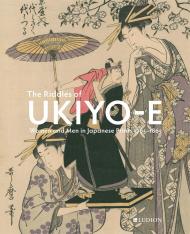
Drawing on images of women and men from the heyday of Japanese printmaking, this book explores the subtle iconography and complex symbols inherent in the tradition of ukiyo-e (traditional Japanese woodblock printing meaning 'Fleeting World'). The intriguing elements refer to Japanese history, literature, mythology, fashion, folklore and gossip of the Edo period and are at times difficult to discern, let alone grasp, without proper knowledge. Divided into classic printmaking themes such as beautiful women, heroes, actors and shunga (erotic prints), this lavishly illustrated book provides readers with the keys to understanding the hidden meanings in more than 100 top Japanese prints. 

Beautiful women – including ladies from Edo's famous Yoshiwara brothel district – take up much of the book. Heroes and villains illustrate Japan's rich mythological and pseudo-historical past. The popular pastimes of kabuki and sumo are also covered: famous actors play their best-known roles as brave men or delicate geisha. These colourful masterpieces demonstrate the economy of line and powerful expression of the woodblock medium. Each print is explored in the finest detail in order to explain the many riddles of ukiyo-e – that intriguing and captivating mode of visual expression that had such a profound influence on Western art.

About the Authors:

Chris Uhlenbeck has been a dealer in Japanese prints for 40 years. He acted as curator of many exhibitions in the field of Japanese art, starting with the major retrospective exhibition on 20th-century Japanese prints from the Robert O. Muller collection in 1992 for the National Museum of Ethnology in Leiden, The Fondation L'Hermitage in Lausanne and the Musée Marmottan in Paris. From 2007, he fulfilled the role of curator of the Nihon no Hanga museum in Amsterdam for 10 years. Between 2011 and 2021 he created various exhibitions in the Japan Museum SieboldHuis in Leiden: on Hiroshige (2011), Yoshitoshi (2012) Kuniyoshi (2013), Kunisada (2015) and recently on Gekko (2020). He is co-author of the recent Ludion publication Shin Hanga: The New Prints of Japan 1900–1960 (2022).

Josephine Smit is a scholar and lecturer who obtained her master's degree in Japanese Studies from Leiden University, The Netherlands. Specialising in Japanese politics and international relations, she wrote her master's thesis on the evolution of post-disaster mental health care responses in Japan after conducting research for a year at Kobe University, Japan. As a freelancer, Smit lectures on kimono culture. Smit is currently employed as a Japanologist at both Japan Museum SieboldHuis and Hotei Japanese Prints in Leiden doing Ukiyo-e related research and exhibition management.

Jim Dwinger is a scholar of Japanese art history with a specialization in woodblock prints. He is co-author of the recent Ludion publication Shin Hanga: The New Prints of Japan 1900–1960 (2022) and is currently involved in preparing an upcoming catalogue of prints by Utagawa Hiroshige. He is also a member of the editorial board of Andon, Journal of the Society for Japanese Art.

Цена: 2500 грн
Есть в наличии
в корзину в избранное
Taku Satoh
ID: 15248
Издательство: Chronicle Books

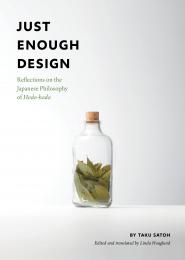
A Japanese designer offers a compelling alternative way to engage with our possessions, our history, our environment, and each other. 

The Japanese phrase "hodo-hodo" originates in ancient times. When contemporary designer Taku Satoh applies it to his work, it means "just enough." Hodo-hodo design deliberately holds back, leaving room for individuals to engage with objects according to their unique sensibilities. In the midst of a consumerist age, Satoh has built an illustrious design career around this philosophy, creating iconic work in fashion, food, and architecture. His ideas speak not just to professional designers, but to anyone who wishes to move more thoughtfully through the world. Within this slim but powerful volume, Satoh explains his philosophy through tangible examples — from the aesthetic of a timeworn ramen shop to a rooftop playground inspired by onomatopoeia. Urging readers to appreciate everyday objects and spaces and to question the lure of convenience, he delivers a message rooted in the past yet perfectly suited to our times.

TIMELY TOPIC: As more people begin to question the structures of consumerism, this thoughtful book offers a different way of seeing the world. Satoh's philosophy aligns perfectly with sustainable lifestyles.

UNIQUE INSIGHTS INTO JAPANESE CULTURE: Japan is a huge cultural exporter and a booming travel destination. Many Japanese ideas and traditions — such as ikigai, forest bathing, and wabi-sabi — are being widely celebrated as pathways to a more fulfilling life. This book presents hodo-hodo, a concept not yet widely exported. Learning about hodo-hodo will enrich readers' understanding of Japan, as well as inspire designers and other creatives in their work.

AUTHORITATIVE VOICE: Taku Satoh has over four decades of design experience. His work is renowned in Japan, and he's worked with major brands and museums and won many awards. Here, he shares wisdom drawn from his design expertise and his deep love for his culture.

ACCESSIBLE CONTENT: The handy paperback format is perfect for a book that you will want to read and re-read. Satoh proposes fascinating and pertinent ideas in an unintimidating way.

About the Author:

Taku Satoh has created designs for prominent Japanese brands including Issey Miyake. He has been awarded honors by, among others, the New York Art Directors Club and the emperor of Japan. He resides in Tokyo.

_________

Пролистать книгу Just Enough Design: Reflections on the Japanese Philosophy of Hodo-Hodo на Google Books.

Цена: 780 грн
Есть в наличии
в корзину в избранное
Francesco Paolo Campione, Moira Luraschi
ID: 15153
Издательство: Skira

An inner journey into the beauty of simplicity through the masterpieces of one of the largest and best-known collections of Japanese art outside Japan Among the many ways one can approach a distant country there are study, travel, and a special sensitivity that allow a person to distinctly interpret the reasons behind a culture.

In the case of Jeffrey Montgomery and his splendid collection all three of these elements interact in a surprisingly harmonious way. The works he has collected during his lifetime lead to the very heart of Japanese art, accompanying us on a fascinating journey to discover the aesthetic ideals of a civilization that goes back millennia.

Published on the occasion of the exhibition in Lugano, the volume presents one hundred and seventy works from the period between the 12th and 20th centuries – including textiles, furniture, paintings, religious and everyday-objects – carefully selected from the over one thousand objects collected over a lifetime by Jeffrey Montgomery. Renowned worldwide, the Montgomery Collection displays an extraordinary richness and a very singular substance: it is a collection of “oriental art”, and at the same time it expressed a “folk culture” reinterpreted in very elevated aesthetic terms by the elegant and refined choices made by the collector who had dedicated his entire life to it.

Edited by Francesco Paolo Campione, in collaboration with Moira Luraschi, Japan Arts and Life contains the essays by Francesco Paolo Campione (An Impermanent Journey between Art and Life); Matthi Forrer (Collecting Japanese Art Objects); Rossella Menegazzo (The Other Side of Japan. The Jeffrey Montgomery Collection between Art, Crafts, and Folklore); Giorgio Amitrano (Japan, the Beautiful, and Ourselves); Imogen Heitmann (The Museographical Display as a Creative ‘Meta-work’). The volume presents also the catalogue and the entries of the works, edited by Moira Luraschi and divided into thematic sections (Paintings; Woven objects; Hooks and counterweights; Ceramics; Fabrics; Lanterns; Masks; Furniture; Signs; Kettles and pourers; Sculptures; Lacquers).
Paolo Campione teaches Cultural Anthropology at the University of Insubria and he is the Director of the MUSEC Museo delle Culture, Lugano. Moira Luraschi, anthropologist, is curator of the Japanese collections and the photographic collection of the Yokohama School at MUSEC, Lugano.

________

Among the many ways one can approach a distant country, there are studies, travel, and a special sensitivity that allow a person to distinctly interpret the reasons behind a culture. In the case of Jeffrey Montgomery and his splendid collection all three of these elements interact in a surprisingly harmonious way. The works he has collected during his lifetime lead to the very heart of Japanese art, accompanying us on a fascinating journey to discover the aesthetic ideals of a civilization that goes back millennia.

About the Authors:

Francesco Paolo Campione teaches Cultural Anthropology at the University of Insubria and he is the Director of the MUSEC Museo delle Culture, Lugano.
Moira Luraschi, anthropologist, is curator of the Japanese collections and the photographic collection of the Yokohama School at MUSEC, Lugan.


Цена: 2500 грн
Есть в наличии
в корзину в избранное
Jon Dowling
ID: 14551
Издательство: Counter-Print

From Japan is a collection of work from some of the most talented agencies in Japan, such as Nendo, MR Design, Grand Deluxe, Daikoku Design Institute, The Simple Society and many more.

This book contains examples of graphic design from a country that can lay claim to being something of a power house in that discipline. There is perhaps a national identity that is in part forged by a certain spareness of design coupled with the intrinsic graphic qualities of the written language.

The examples of graphic design herein feature the work of contemporary design studios working in Japan across everything from branding to book design to poster and exhibition design.

Inspiring stuff for anyone interested in graphic design and the Japanese Style.

Цена: 780 грн
Есть в наличии
в корзину в избранное
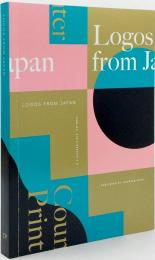
Jon Dowling
ID: 14550
Издательство: Counter-Print

Logos from Japan contains a selection of symbols and logos from this beguiling country. The logos have been carefully selected by Counter-Print to help convey the richness, variety and vitality of Japan’s graphic landscape.

Цена: 780 грн
Есть в наличии
в корзину в избранное
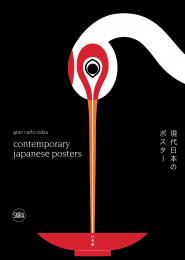
Gian Carlo Calza
ID: 14485
Издательство: Skira

The most complete volume on the subject in any language Japanese graphic design has been researched and published in Italy up to the first decade of the new millennium, but there is a gap from then to today.
edited by Gian Carlo Calza with Elisabetta Scantamburlo

This research aims at filling that gap considering the first two decades of the new millennium, covering on one side the past, in the names of important recognized masters, and on the other side exploring new names and trends. The volume includes 85 graphic designers and 756 posters. It is the most complete volume on the subject in any language.

Japanese contemporary posters are considered to have started in the mid 50’s, after the Second World War and following a period of depression, post-militarism, and post-autarchy. The new expressive mode was fuelled by stimuli coming from abroad, but it was also a chance to reinterpret traditional themes and colours, bringing them into modernity in refreshing and successful ways.

Since the post-war period, Japan has seen a rapid evolution in the arts: painting, architecture, sculpture, graphics, theatre, music, and cinema. Influences, assimilations, denials, transformations, new creative processes gave rise to a vast quantity of cultural and artistic movements. In this maze of expressive forms, graphic design is a precious tool for tracing and following the thread of national creativity and the more or less intense permanence of traditional aesthetic sensibility in the new forms taken.

Over half a century after the inception of graphics and with the coming Olympic Games taking place now in 2021, this volume aims at taking a wide view at the trends and aesthetic shifts that can be traced in the development of graphic design in Japan.

______________

This book brings together the best of Japanese graphic design in the posters that accompanied Japan from the 1964 Tokyo Olympics to the creation of the Issey Miyake logo, and from the Osaka Expo to the official poster for the Pan-Pacific Design Congress. Ken’ya Hara was born in the province of Okyama in 1958. After graduating from the Department of Design at Musashino Art University in 1981 and obtaining his M.A. in 1983, he joined the Nippon Design Center where he established the Hara Design Institute in 1992.

Yusaku Kamekura was born in Kanbara in 1915. He is considered to be the figure who contributed most to the spread of Japanese graphic design in the post-WWII period. He graduated with a degree in architecture and industrial arts in 1933; in 1940, he became the director of Nippon Kobo and in 1949 he was appointed artistic director of the magazine Commerce Japan. His most important designs, including the posters for the 1964 Olympic Games, the 1970 Osaka Expo, the Hiroshima Appeals, and the logo for the Nippon Telegraph and Telephone Corporation, all made a significant contribution to increasing his fame.

Shin Matsunaga was born in 1940 in Tokyo. After graduating in 1964 from the department of design at Tokyo National University of Fine Arts and Music, he joined the advertising division at Shiseido. He designed the PEACE ’86 poster and curated all the graphic design for the Sezon Museum of Modern Art. He also designed the symbol and official poster for the 1989 Pan-Pacific Design Congress, the human rights poster commemorating the 200th anniversary of the French Revolution, the medal for Mint’s 120th anniversary, the logo for Issey Miyake and RHIGA Royal Hotels, and the package design for the French cigarette brand Gitanes Blondes (1995).

Film director and art director Nagi Noda was born in Tokyo and made a name for herself as one of the most important young Japanese designers. She first achieved fame as an art director, designing publicity for the print media and graphics for publishing and the music industry, before working for bigger clients such as Nike and the Laforet Harajuku department stores. Ikko Tanaka was born in 1930 in Nara. In 1950, at just 19 years old, he graduated from the Kyoto City School of Fine Arts (now the Kyoto University of Arts) and immediately afterwards started working for companies such as the Kanegafuchi textiles company and the Sankei Shinbun daily newspaper. He designed the signage and medals for the 1964 Tokyo Olympics and the pavilion dedicated to Japanese history at the 1970 Osaka Expo.


Цена: 3000 грн
Есть в наличии
в корзину в избранное
Irwin Wong
ID: 14478
Издательство: Gestalten

Whether it be Cosplay, Rockabilly, HipHop or Gothic: when the Japanese immerse in a subculture, they do it like no other.

The otaku’s passion is all-consuming. Whether it be cosplay, gothic, or rockabilly, when the Japanese embrace a subculture, they do it like no other. From Lolita fashion and latex couture to neon-drenched big-rigs, anime-plastered vans, and chrome-heavy hot rods, subcultures in Japan are as varied as they are fascinating.

Delving into these worlds, The Obsessed reveals the extraordinary passion devotees have for their hobbies and lifestyles. With dazzling photography, on-the-ground interviews, and cultural essays, this book showcases a kaleidoscope of scenes and individuals drawn from Japan’s many countercultural groups.

About the Author:

Irwin Wong is an editorial and commercial photographer based in Tokyo. Originally from Melbourne, Australia, he moved to Japan in 2005. He was Co-editor of gestalten’s Handmade in Japan, published in 2020.

Цена: 1980 грн
Есть в наличии
в корзину в избранное
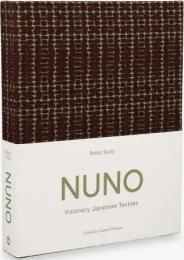
Reiko Sudo, Naomi Pollock
ID: 14355
Издательство: Thames & Hudson

The first comprehensive, career-spanning monograph of NUNO, one of Japan’s most innovative and respected textile design studios

Named with a simple word meaning ‘cloth’, NUNO is one of Japan’s most important textile-design companies. Founded in 1984 by the legendary Junichi Arai and the company’s current director, Reiko Sudo, it is recognized as one of the world’s most innovative textile producers. Known for weaving together tradition and cutting-edge technology, NUNO designers are inspired by the past, present and future, integrating unexpected elements, such as paper or feathers or aluminium, with industrial methods, such as spatter-plating and chemical etching. All NUNO textiles – more than 2,500 have been created – are produced in Japan and are usually the handiwork of an individual craftsperson. Each bolt of cloth has a story to tell.

Though their textiles appear regularly in books, textile exhibitions and museum collections, a comprehensive NUNO monograph has not existed - until now. Featuring the most outstanding, influential or experimental fabrics, the book is organized into seven chapters, each based on a theme deriving from the onomatopoeic coupling in Japanese that defines a family of fabrics. For example, ‘Shima Shima’, meaning ‘striped’, presents striped designs ranging from bold and contrasting like zebra to subtly variegated like a tabby cat. Based on interviews, archival research and factory visits, the texts are illustrated with specially commissioned photos and drawings. Interspersed are essays by a wide range of contributors, from writer Haruki Murakami and architect Toyo Ito to curator Anna Jackson.

Bringing all the threads together in a beautifully designed package, NUNO is a document of exceptional beauty and a rare glimpse into the essence of Japanese design.

Contents List:

Foreword
Introduction
1. FUWA FUWA: Fuwa Fuwa by Haruki Murakami; Portrait of a Textile: Threadstray
2. SHIWA SHIWA: Shiwa Shiwa by Kenya Hara; Portrait of a Textile: Paper Rolls
3. SHIMA SHIMA: Stripes of All Colours by Brooke Hodge; Portrait of a Textile: Origami Weave
4. KIRA KIRA: Shining Within by Akane Teshigawara; Portrait of a Textile: Amate
5. SUKE SUKE: Three Transparencies by Toyo Ito; Portrait of a Textile: Turkish Wall
6. ZAWA ZAWA: Poems by Arto Lindsay; Portrait of a Textile: Jellyfish
7. BORO BORO: Essay by Anna Jackson; Portrait of a Textile: Colourplate On Colours
Chronology of Textiles
Acknowledgements
Biographies
Picture Credits

About the Authors:

Reiko Sudo is one of Japan’s most influential contemporary textile designers and managing director of NUNO. In recent years, she has become known as an advocate for textile artisans in Japan, creating designs that are technologically forward without diminishing the value of handicraft. Naomi Pollock is a design writer who lived and worked in Japan for over 30 years. Her most recent publication is Japanese Design Since 1945 (2020), also published by Thames & Hudson.

Цена: 3000 грн
Есть в наличии
в корзину в избранное
Philip Jodidio
ID: 13923
Издательство: Taschen

Modern by Tradition. A survey of Japan’s contemporary architecture scene

The contemporary architecture of Japan has long been among the most inventive in the world, recognized for sustainability and infinite creativity. No fewer than seven Japanese architects have won the Pritzker Prize.

Since Osaka World Expo ’70 brought contemporary forms center stage, Japan has been a key player in global architecture. With his intentionally limited vocabulary of geometric forms, Tadao Ando has since then put Japanese building on the world’s cultural map, establishing a bridge between East and West. In the wake of Ando’s mostly concrete buildings, figures like Kengo Kuma (Japan National Stadium intended for the Olympic Games, originally planned for 2020), Shigeru Ban (Mount Fuji World Heritage Center), and Kazuyo Sejima (Kanazawa Museum of 21st Century Art of Contemporary Art) pioneered a more sustainable approach. Younger generations have successfully developed new directions in Japanese architecture that are in harmony with nature and connected to traditional building. Rather than planning on the drawing board, the architects presented in this collection stand out for their endless search for forms, truly reacting on their environment.

Presenting the latest in Japanese building, this book reveals how this unique creativity is a fruit of Japan’s very particular situation that includes high population density, a modern, efficient economy, a long history, and the continual presence of disasters in the form of earthquakes. Accepting ambiguity, as seen in the evanescent reflections of Sejima’s Kanazawa Museum, or constant change and the threat of catastrophe is a key to understanding what makes Japanese architecture different from that of Europe or America.

This XL-sized book highlights 39 architects and 55 exceptional projects by Japanese masters — from Tadao Ando’s Shanghai Poly Theater, Shigeru Ban’s concert hall La Seine Musical, SANAA’S Grace Farms, Fumihiko Maki’s 4 World Trade Center, to Takashi Suo’s much smaller sustainable dental clinic. Each project is introduced with photos, original floor plans and technical drawings, as well as insightful descriptions and brief biographies. An elaborate essay traces the country’s building scene from the Metabolists to today and shows how the interaction of past, present, and future has earned contemporary Japanese architecture worldwide recognition.

The editor:

Philip Jodidio studied art history and economics at Harvard, and edited Connaissance des Arts for over 20 years. His TASCHEN books include the Architecture Now! series and monographs on Tadao Ando, Santiago Calatrava, Renzo Piano, Jean Nouvel, Shigeru Ban, Richard Meier, Zaha Hadid, and soon Norman Foster.

Цена: 3500 грн
Есть в наличии
в корзину в избранное
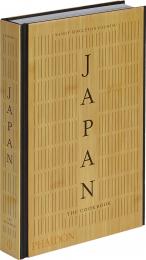
Nancy Singleton Hachisu
ID: 13876
Издательство: Phaidon

The definitive, home cooking recipe collection from one of the most respected and beloved culinary cultures

Japan: The Cookbook has more than 400 sumptuous recipes by acclaimed food writer Nancy Singleton Hachisu. The iconic and regional traditions of Japan are organized by course and contain insightful notes alongside the recipes. The dishes - soups, noodles, rices, pickles, one-pots, sweets, and vegetables - are simple and elegant.

About the Author:

Nancy Singleton Hachisu lives on a farm in Japan with her family, and is a James Beard Award-nominated author of two cookbooks: Japanese Farm Food and Preserving the Japanese Way. Her work has appeared in Food & WineSaveurThe Art of Eating, and Lucky Peach. A native Californian, she has resided in Japan for thirty years, and is widely respected as an authority on Japanese cooking, both in Japan and the United States.

Цена: 2800 грн
Есть в наличии
в корзину в избранное
ID: 13777
Издательство: Victionary

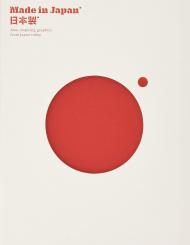
When a product is labelled as “Made in Japan”, it is often a promise of quality, and the consistent clarity, order and precision of Japanese designs definitely ensures that the reputation is not exaggerated. Known for their minimalist, clean lines, the iconic styles of Japanese designs are admired and imitated all over the world. Truly standing forefront in the establishment of a national design identity, it is the prime example of culture-meets-design, mixing history, traditional art and philosophy into contemporary designs.

With the spotlight on more than 40 local creatives behind all sorts of different projects in different fields, Made in Japan spans from brand identities to spatial design to illustrations and more, examining how variety is held together by the influence of a common culture.

Цена: 1980 грн
Есть в наличии
в корзину в избранное
Axel Rüger, Marije Vellekoop
ID: 13735
Издательство: Thames & Hudson

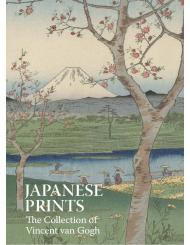
Showcases and analyses highlights from Van Gogh’s collection of Japanese prints, exploring the key role they played in his creative output

Here is a beautiful exploration of Van Gogh’s obsession with Japan, revealing a selection of the prints he owned himself (all from the Van Gogh Museum), side by side with his own paintings and sketches, including the Almond Blossoms masterpiece, The CourtesanPlum Blossom and Bridge in the Rain. This opportunity to share Van Gogh’s vision lends us a compelling insight into one of the most powerful creative influences behind his art.

Vincent van Gogh fell under the spell of Japanese printmaking in Paris, where he purchased more than 600 prints from a dealer. He hung them in his studio, and they taught him a new way of looking at the world. Van Gogh liked the unusual spatial effects, the expanses of strong colour, the everyday subjects and the attention to details from nature. He was also keen to find a modern, more primitive kind of painting that engaged directly with the viewer. Japanese prints showed him the way, with nature still as his starting point.

About the Authors:

Axel Rüger is Director of the Van Gogh Museum.
Marije Vellekoop is the Van Gogh Museum’s Head of Collections, Research and Presentation.

Contents List:

1. Foreword by Axel Rüger, director Van Gogh Museum • 2. Van Gogh’s collection of Japanese prints: from commodities to a study collection and utopian ideal, Louis van Tilborgh • 3. The Van Gogh Museum’s collection of Japanese prints: an analysis, Chris Uhlenbeck • 4. Popular Collectibles in Van Gogh’s Time: Japanese Crepe Prints, Shigeru Oikawa • 5. A selection of 130 Japanese prints from the Van Gogh Museum collection

Цена: 1700 грн
Есть в наличии
в корзину в избранное
показать по:
на странице
Издательства
A B C D E F G H I G K L M N O P Q R S T U V W X Y Z 0-9
А Б В Г Д Е Ё Ж З И Й К Л М Н О П Р С Т У Ф Х Ц Ч Ш Щ Ы Э Ю Я