800 photos/illustrations
Подобрать по характеристикам
Разделы
Наличие на складе
Издательства
Цена (980 - 4500 грн)
800 photos/illustrations
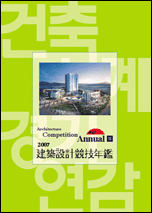
Architecture Competition Annual features 137 projects from total 90 architecture design competitions. It consists of two volumes: volume VII is classified into exhibition & culture facility, education facility, medical & welfare facility and government facility, and volume VIII into residential facility, commercial facility, public official facility and physical facility & others.
*Exhibition & Culture Facility
*Education Facility
*Medical & Welfare Facility
*Government Facility
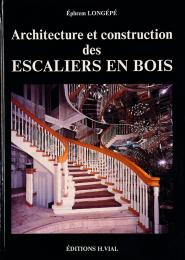
C’est à une étude pratique des escaliers en bois que nous convie Ephrem Longépé, entrepreneur en charpente, compagnon du devoir et Meilleur Ouvrier de France. Il nous livre l’expérience de toute une vie à travers une centaine de cas concrets avec description, plan, commentaires et photos. Pour chaque escalier, l’auteur décrit en détail le mode de construction et résout les problèmes techniques propres à chaque type d’ouvrage, du plus simple au plus complexe.
Ce livre concerne surtout les cas pratiques auxquels se frotte l’artisan dans son travail quotidien : même si l’auteur est capable de tracer les courbes les plus compliquées avec virtuosité, il décrit ici les modèles les plus fréquemment fabriqués de nos jours, généralement plus simples, mariant fréquemment le bois avec d’autres matériaux.
Après une courte étude de l’escalier et de ses différentes parties, les conditions de réalisation à l’atelier sont décrites en détail. Puis viennent les études de cas concrets, depuis la simple échelle de meunier jusqu’à l’escalier monumental, en passant par les escaliers à l’anglaise, à limon central ou menant à une mezzanine.
Ce livre veut être le compagnon indispensable de l’artisan qui réalise des escaliers, que ce soit de manière exceptionnelle ou régulière. Paru en 1984 et constamment demandé, il a dû être réédité ce qui a permis de rajouter quelques cas concrets supplémentaires parmi les plus récentes réalisations de l’auteur.
Sommaire :
PREMIERE PARTIE, Généralités
Evolution des escaliers depuis le moyen-age
Terminologie
Choix du type d'escalier
Étude de l’escalier dans ses différentes parties : Le départ, les rampes et garde-corps (main courante, barreaudage, remplissage, suspentes, poteaux et pilastres, balustres), les limons (traditionnel, central simple ou double), les marches, les paliers de repos, les ferrures d’ancrage, les matériaux.
La réalisation : établissement de l’avant-projet et du plan d’exécution, tracés et épures, exécution en atelier et mise en œuvre, finition des ouvrages.
DEUXIEME PARTIE, Cas concrets
Escailers droits d'une seule volée
Escaliers droits a un ou plusieurs quartiers tournants
Escaliers à échiffre central
Escaliers à noyau évidé
Escaliers à courbes en bois massif avec fil vertical
Escaliers en bois massif a courbes avec fil rampant
Escaliers en bois lamellé-collé
Sur plan semi-circulaire
Escaliers a marches rayonnantes sur base carrée
Escaliers a marches rayonnantes sur base circulaire
Escaliers à l'anglaise
Escaliers à limon central, simple ou double,
Escaliers à deux limons
Escaliers aux formes speciales
Mezzanine
Habillage en bois des escaliers en maçonnerie.
TROISIEME PARTIE, Compléments
Quelques escaliers monumentaux réalisés depuis la dernière édition :
Escalier à limon central et marches en fuseau,
Escalier à double limon en forme d’escargot,
Escalier circulaire sur deux niveaux,
Formulaire des escaliers droits a marches isolées et a marches prenant appui les unes sur les autres,
Conclusion
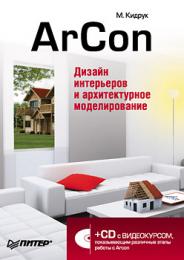
В книге рассказывается об известной немецкой разработке — приложении ArCon, предназначенном для быстрого моделирования жилых зданий и оформления их интерьера и экстерьера. Программа достаточно проста в использовании, не требует практически никаких навыков трехмерного моделирования, однако позволяет создавать дизайнерские проекты, которые почти ничем не уступают разработанным в 3ds Max или Maya. Книга содержит подробное описание функционала последней версии программы ArCon, множество примеров, полное описание библиотеки стандартных элементов, которые используются при проектировании в ArCon. Но главное преимущество издания — прилагаемый компакт-диск, на котором вы найдете видеокурс, демонстрирующий различные этапы работы с программой.
Книга предназначена для архитекторов и дизайнеров, а также для обычных пользователей, которые хотят быстро выполнять проекты различной сложности в сравнительно простом и недорогом графическом редакторе.
Оглавление.
Отрывок.
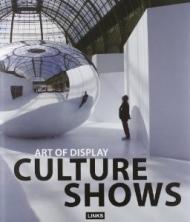
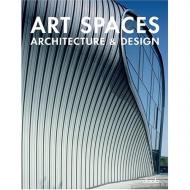
What makes an effective exhibition space?
How can we give center stage to the works on display whilst also creating a place of architectural merit?
Cultural Exhibit attempts to find answers to these questions, and more, through a wide variety of proposals for exhibition spaces.
Ideas that can transform what would otherwise be an undistinguished series of rooms into a space that facilitates the enjoyment of the subject in question, whether they be works of art or artifacts in a museum.
Architects with a wealth of experience in the field share their ideas and concepts through explanatory texts and full-color photographs of some of their finest projects.
This will surely be an invaluable aid to anyone involved in this highly challenging field of architecture and design.
A surprising trend can be discerned in museum building since the end of the 1990s, one that still seems to be going strong today: an unprecedented number of grand-scale projects have been undertaken in recent years, ont only by private sponsors, but in many cases made possible instead by public funding.
This book not only shows new museums , galleries and exhibition venues for the fine arts, but also features unusual buildings housing special collections, as well as museums exhibting material from other fields of knowledge. One central focus of contemporary architecture can be traced particulary well in the examples illustrated in the book: new surfaces that enable the creation of new forms.
Astoundingly, parallel to this development another architectural approach which can be already be called classical is also experiencing a Renaissance - the clearly defined, austere cube cloaked in a free-floating glass shell. No less than three buildings depicted here demonstrate the immense variety that is possible within these rigid parameters.
The works shown here are no more than five years old and show, what a broad bandwidth can be discerned within a moment's snapshot. There are visionaries like Asymptote and masters such as Günter Behnisch and Tadao Ando, whose buildings span an arc from classical modernism to the architecture of today.
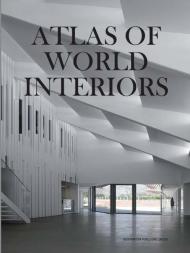
In the past five years, the globalised trend of interior design has seemingly been led by the five cities-renowned as the cities of design, including Tokyo, Paris, Milan, London and New York. At the same time, it has become a common realization of designers around the world to explore and employ the local features for each project with the advancement of economy and culture.
The book, Atlas of world Interiors, with 500 projects selected, is a detailed and comprehensive portrayal of the best and newest interior projects from 6 continents of more than 50 countries. In detail, the projects are of different styles, such as the pragmatism of North America, the naturalism of South America, the regionalism of Asia, the minimalism of North Europe and the luxurism of the Mediterranean area. In countries such as, Iran, United Arab Emirates, South Africa, Morocco, Tunisia and so on, the history and culture of a particular location was subtly integrated into the interior design through innovative approaches. Moreover, designers can also be inspired a lot by this book to search a balance between the overwhelmingly globalized trend and the increasingly personalized feature.
This book offers readers a visual feast with the collection of world's most classic interior projects and is categorized into 10 parts, including culture and leisure, restaurant, bar, shop and showroom, spa and fitness, hospital and pharmacy, office, teaching and research, house, hotel, transport and factory. Each project is illustrated with real photos, plans and text. In addition, each geographic region is distinguished by a different color-code. We firmly believe and hope it will serve as a source of pleasure and inspiration to all its readers.
As one of the series books Atlas of world Interiors, this book is featured with its timeliness, globalization, regionalization, and professionalization to help readers from all over the world to find inspiration, and approach new materials and the cultural heritage.
TABLE OF CONTENTS
North America
8 | Canada
18 | USA
110 | Mexico
South America
126 | Brazil
133 | Peru
134 | Chile
Asia
140 | China
164 | Taiwan
172 | Hongkong
189 | Macau
190 | Korea
192 | Japan
220 | Thailand
223 | Philippines
224 | Indonesia
228 | Vietnam
229 | Bahrain
230 | Pakistan
232 | Singapore
234 | Maldives
235 | India
248 | Turkey
254 | Qatar
255 | Cyprus
256 | Saudi Arabian
257 | Israel
Africa
262 | South Africa
263 | Morocco
264 | Egypt
265 | Cape Verde Islands
Europe
266 | Denmark
270 | Norway
274 | Sweden
276 | Finland
278 | Iceland
280 | UK
294 | Spain
306 | Portugal
318 | France
326 | Belgium
332 | The Netherland
342 | Germany
387 | Switzerland
397 | Austria
408 | Poland
410 | Hungary
412 | Russia
414 | Italy
452 | Slovenia
454 | Croatia
459 | Greece
Australia
468 | New Zealand
469 | Australia
508 | index
Посмотреть избранные развороты книги Atlas of World Interiors
Посмотреть ролик издательства о книге Atlas of World Interiors

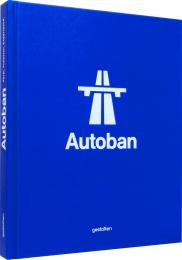
Istanbul bridges Europe and Asia. Based in that city, Autoban creates sought-after work that masterfully melds western design traditions with eastern elegance
Autoban is one of the most sought-after design studios worldwide. Its gorgeous furniture and spectacular spaces meld respect for tradition with modern straightforwardness. Surprisingly, Autoban doesn’t hail from an established design center such as Berlin, London, or New York, but rather from Istanbul.
Since they founded Autoban 10 years ago, Seyhan Özdemir and Sefer Çağlar have been creating design at the nexus between Orient and Occident, Asia and Europe — a fitting reflection of the city in which they live and work. Throughout the ages, Istanbul has brought together East and West, as well as Islam and Christianity, in its cultural realm. This unique history continues to influence both the cityscape of the metropolis on the Bosporus and the self-image of its inhabitants.
Özdemir and Çağlar met at Mimar Sinan Fine Arts University, whose school of architecture is known for teachings that are strongly oriented around classic modernism. The name Autoban is inspired by the Turkish “Otoban” and the German “Autobahn” and stands for its penchant for “really stepping on the gas.”
Autoban’s understanding of design is based in equal measure on local elements and European design theory. Its interiors and furniture designs, which have attracted an international following, move fluidly between modern and traditional, minimalistic and elaborate, luxurious and rustic, and sparse and decorative, without ever appearing superficial or blatant.
This book presents a rich selection of Autoban’s breathtaking projects that are documented in striking photographs and plans. The distinctive and premium-quality concepts for restaurants, hotels, apartments, offices, and retail spaces collected here showcase the studio’s worldview between global cosmopolitanism and its own cultural idiosyncrasies.
The texts in the book were written by Vasif Kortun, director of Istanbul’s SALT, by the curator and cultural historian Deniz Erduman-Calis, and by design journalists Marie Le Fort and Shonquis Moreno. They give further insight into Autoban’s creative process and philosophy as well as the cultural context in which it works.
In only a short time, Autoban’s Seyhan Özdemir and Sefer Çağlar have established themselves as stars on the global design scene. They founded the studio in 2003 and, only one year later, were named “Best Young Designers of the Year 2004” by the magazine Wallpaper*. Autoban’s furniture is successfully distributed worldwide by De La Espada. The design studio epitomizes a new Turkish design sensibility and its designs for hotels and restaurants define the cityscape of modern Istanbul. Meanwhile, Autoban’s work can also be found around the world in places including Madrid, St. Petersburg, and Hong Kong as well as in Baku, Azerbaijan where they designed all of the interiors for the city’s airport. The hotels that they have designed and furnished appear regularly in the best-of lists of publications such as the Sunday Times Magazine, Condé Nast Traveller, and Tatler Travel.
___________
Посмотреть ролик издательства о книге Autoban: Form. Function. Experience
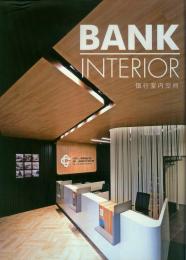
Contents:
ING BANK
CORPORATE DEPARTMENT OF ING BANK SLASKI
CHEBANCAI
NATIONAL BANK OF OMAN
BARWA BANK
...
STANDARD BANK LONDON
HSBC REGIONAL
KOREAN EXCHANGE BANK
INDEX
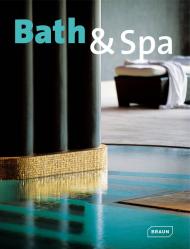
Spas are becoming increasingly common all over the world. In holiday resorts as well as in private homes, yesterday’s bathrooms are giving way to wellness rooms for recovery from modern life’s hustle and bustle. Architects and designers integrate their clients’ longing for rest and relaxation in their designs.
Bath & Spa presents seventy projects for relaxation, recreation and dreaming with photos, plans and drawings. Whether in a small bathroom or a top-flight spa, surprising design opportunities arise from different combinations of materials. The publication of the series Architecture in Focus invites the reader to discover the new trends at this exciting interface between the solid and liquid states.
From the contents:
* Thermae Bath Spa, England (Grimshaw)
* Tschuggen Bergoase in Arosa, Schwitzerland (Mario Botta)
* Bliss Spa Soho in New York, USA (Jeff Etelamaki Design Studio)
* Therme Meran, Italy (Matteo Thun)
* Moku Moku Yu in Kobuchizawa, Japan(Klein Dytham architecture)
The beauty market is developing and booming world wide. Wellness programs allow one to rediscover one's own body and inspire us to look toward inner tranquility. This trend demands architecturally-holistic approaches which recongnizes the unity of the room, the beauty experience and the perception of one's own body. The balance between body, mind, and spirit can only be found in an esthetic atmosphere. Thus the hairdresser on the corner is turning into an extraordinary wellness oasis - often created by outstanding designers and architects. Architects, designers and industry often face theses challenges together, the results ar quite individual and unique. Over 60 successful projects are presented extensively and for the first time in this volume with exclusive photos and even including some of the plans. Of course not only hairdressers studios are shown but the whole field of BEAUTY: Cosmetics, Gyms and Dayspas.
Any space that involves descending from our typical aboveground environment is a provocation to our sensory perceptions. Such hidden spaces evoke latent mythical images and confront us with the clash between nature and artifice in our built environment. This book explores the character, use and design of underground space as a space of its own. International examples of commercial premises, restaurants, sports facilities, subway stations, museums, churches, libraries, concert halls, houses and other building types form the core material. Interviews with many renowned designers including Norman Foster, Floris Alkemade (OMA) and Francine Houben (Mecanoo) convey the architects' own views on the subject. Essays reflect on the cultural aspects, planning conditions, design considerations, technical requirements and sustainability aspects of building below ground level. Chapters include: Urban Development, Architecture, Functions, Perception and Cognition, Constructions, Energy and Interior Climate.