Подобрать по характеристикам

Издательства

Цена (400 - 75000 грн)

Цена
грн ok

Искусство

Искусство

Вы выбрали:
Сортировка:
наличие
цена
алфавит
Havard Bergland
ID: 1595
Издательство: Vial

Ce livre présente la technologie de base et les différentes activités du travail du fer.
Il détaille les savoirs et les pratiques utilisés pour la réalisation d'objets simples en fer forgé.

Товар отсутствует
cообщить о поступлении
Tobias G. Natter, Max Hollein, Klaus Albrecht Schröder
ID: 13004
Издательство: Taschen

Cutting Edge. A revealing trend in turn-of-the-century Vienna

Discover a moment when traditional craft met burgeoning modernism. This revelatory catalogue sheds light on the understudied Vienna woodblock revival of the early 20th century, a uniquely influential artistic current which not only sought to democratize art through mass media but also sowed key stylistic seeds for Die Brücke, Der Blaue Reiter, and beyond.

At the turn of the 20th century, amid the domed grandeur of Vienna, a group of Secession artists reclaimed the humble woodblock. The gesture, though short-lived, and long overlooked by established art histories, may be seen as a decisive social, as well as aesthetic, moment. Elevating a primarily illustrative, mass-production medium to the status of fine art, the woodblock revival set a formal precedent for Expressionism while democratizing art for all.

Coinciding with the travelling exhibition through the Schirn Kunsthalle, Frankfurt and Albertina, Vienna, this TASCHEN edition brings together leading examples of the Viennese woodblock renaissance to give a long-overdue exploration of its achievements and influence. Through prints, publications, calendars and pages from Ver Sacrum, the official magazine of the Vienna Secession, it gathers works remarkable for their graphic and chromatic intensity, and vital with the traces of japonisme as much as the stylistic seeds of Die Brücke, Der Blaue Reiter and later Expressionist movements.

Through figure studies, landscapes, patterns, and typographical treasures, the featured works are accompanied by detailed captions, as well as essays exploring their aesthetic and ideological implications, and biographies for the more than 40 artists. Examining their stark contours, stylization of the surface per se, and tendency towards contained colour areas we evaluate the Viennese woodblocks as essential harbingers, and benchmarks, of the 20th-century modernism to come. At the same time, we assess how the dissemination of the woodblocksubstantiated the Seccessionist claim for a democratized, all-encompassing art, while adding to their reappraisal of originality, and authenticity, and convention.

The editors:

Tobias G. Natter is an internationally acknowledged expert on art in “Vienna around 1900.” For many years he worked at the Austrian Belvedere Gallery in Vienna, latterly as head curator. He also worked as guest curator at the Tate Liverpool, the Neue Galerie New York, the Hamburger Kunsthalle, the Schirn in Frankfurt am Main, and the Jewish Museum in Vienna. From 2006 to 2011, he directed the Vorarlberg Museum in Bregenz, and from 2011 to 2013 was director of the Leopold Museum in Vienna. In 2014 he founded Natter Fine Arts, which specializes in assessing works of art and developing exhibition concepts. He is the author of TASCHEN’s Gustav Klimt. Complete Paintings, Art for All. The Colour Woodcut in Vienna around 1900 and Egon Schiele. The Complete Paintings 1909–1918.

Max Hollein studied business administration and art history in Vienna. From 1995 to 2000 he had a leading function at Solomon R. Guggenheim Museum in New York. Max Hollein is curator of numerous exhibitions and editor of more than one hundred exhibition catalogues. He has published on modern and contemporary art and on museums in general. From October 2001 to May 2016 he was director of the Schirn Kunsthalle in Frankfurt, and as of January 2006 also of the Städel Museum and the Liebieghaus with its sculpture collection. He has been director of the Fine Arts Museums in San Francisco since June 2016.

Klaus Albrecht Schröder studied art history and history at Vienna University. From 1988 to 2000, he was director of the Kunstforum Wien and established it as an exhibition venue with trailblazing presentations. From 1996 to 2000 Schröder was a board member and commercial director of the newly-founded private Leopold Foundation, and in 1999 he was appointed designated managing director of the Albertina in Vienna. Since January 2000 he has headed the Albertina as managing director and director. After it reopened in 2003, within the shortest space of time the Albertina was ranked as the most visited museum in Austria.

Товар отсутствует
cообщить о поступлении
Susie Hodge
ID: 11702
Издательство: Thames & Hudson

An accessible guide to the finer details of 100 masterpieces of Western art

Great works of art cannot be fully understood in a single encounter: to revisit and reconsider art again and again throughout one’s life is to be richly rewarded with an ever-deepening appreciation and insight. Similar benefits come from analysing a work of art in detail.

Art in Detail: 100 Masterpieces spotlights the finer points that even connoisseurs may miss, casting light upon minutiae that a quick glance will almost certainly fail to reveal. These include subtle internal details, such as hidden symbols. Expert commentary reveals the technical tricks employed by the artist to achieve particular effects, such as the placement of the subject, the lighting and the style of brushstrokes.

The book also looks at the themes and external and personal factors influencing the creation of an artwork – everything from the broad socio-economic context in which the artist operated, to personal, individual circumstances at the time of the work’s creation, which are often of great relevance.

The book examines 100 works of art down the ages, from Giotto’s 14th-century fresco Adoration of the Magi, to a twenty-first-century pastel by Paula Rego. It approaches each work not only, to quote Matthew Arnold, ‘as in itself it really is’, but also as part of a tradition that links the oldest work of art to the most recent, as artists pass a metaphorical baton down through the ages.

About the Author:

Susie Hodge is an art historian, author, artist and journalist with more than 100 books to her name. She has an MA in the History of Art from Birkbeck, University of London, and is a Fellow of the RSA. She has twice been named the No. 1 art writer by the Independent.

Товар отсутствует
cообщить о поступлении
Peter Vergo
ID: 11942
Издательство: Phaidon

The fascinating story behind the Viennese Secession, the art movement that shocked European society at the turn of the nineteenth century

The rebel artists of Vienna overwhelmed the artistic establishment of Europe at the end of the 19th century, having seceded from the traditional Viennese institutions of fine art and named themselves the Vienna Secession. Their works shocked a conservative public, but their daring sensibilities and dedication to the applied arts and architecture soon brought them an enthusiastic following and wealthy patronage. The boldly modernist paintings of Gustav Klimt, Egon Schiele, Oskar Kokoschka and others were matched by the buildings and applied designs of architects such as Joseph Maria Olbrich, who created the Secession Building as an architectural manifesto for the group. This classic book, now updated and with additional colour illustrations and a completely new introductory chapter, brilliantly traces the course of this influential artistic movement.

About the Author:

Peter Vergo is a leading expert on modern Russian, German and Austrian art, and the recipient of the Golden Order of Merit, bestowed by the Republic of Austria for services to Austrian art. His other publications include Kandinsky: Complete Writings and Twentieth-Century German Painting: The Thyssen-Bornemisza Collection. His two books about the relationship between art and music, That Divine Order and The Music of Painting, were published by Phaidon in 2005 and 2010. Vergo is Professor of Art History and Theory at the University of Essex.

Товар отсутствует
cообщить о поступлении
ID: 11987
Издательство: Phaidon

Advice, strong opinions, and personal revelations by the world's greatest artists - exclusively researched for this new book

Featuring the most inspirational and insightful collection of quotes by artists through the ages and across the globe, this exquisite keepsake is the ideal book for artists, collectors, and armchair enthusiasts. As painters, sculptors, photographers, and other visual artists see and experience the world through a unique lens, Art Is the Highest Form of Hope & Other Quotes by Artists shows that their life lessons, private revelations, and frank, often irreverent, opinions can guide us all.

This unique and carefully curated book, packed with totally original research, is a go-to resource for revealing thoughts and personal advice on subjects as diverse as beauty, colour, light, sex, chance, discipline, money troubles, originality, fear of failure, danger of success, the creative process, and more – all messages transmitted from the artistic trenches.

Товар отсутствует
cообщить о поступлении
Dona Z. Meilach
ID: 2664
Издательство: Schiffer

550 color photos

Art Jewelry Today. Dona Z. Meilach. Here is a beautiful new look at contemporary art jewelry. This invaluable reference will guide those who buy, wear, collect, and create one-of-a-kind, hand-made jewelry to the newest developments and their artist/innovators. Peek into the minds of today's craftspeople to understand their motives and methods. These are today's top art jewelers whose work is often shown in art galleries and museums. Chapters present contemporary designs in gold, silver, mixed metals, found objects, glass, enamel work, and imaginative jewelry pieces that go beyond tradition. Over 540 color photographs and lots of detailed information give ideas galore to inspire jewelry makers. In the 21st century craftspeople are striving to have their work considered fine art. This book will convince doubters that today's art jeweler is creating serious sculpture regardless of its size. It is sculpture to be worn, enjoyed, and appreciated today. Here are the trend setting artists with masterpieces that will be the collectibles of the future.

Товар отсутствует
cообщить о поступлении
Lynne Perrella
ID: 8092
Издательство: Rockport

This large format, full-color, inspirational book is about how artists use their collections to make artwork. The gallery-style format allows readers to see what artists collect, and the resulting spectacular artwork they make from it. The book will feature the collections and the artwork of thirty-five major mixed-media artists. The artwork will include journals, assemblages, altered books, as well as jewelry pieces, and detailed descriptions of the materials and techniques used, plus tips and insights into using unusual materials and collections.

Mixed-media artists are naturally collectors. They are fascinated by the stuff of life, and they are always looking for the right elements to add to their collages and journals. This book offers a juicy combination -- sort of a walk through an artist-filled flea market, and a gallery of the pieces created using these collections with tips and insights on collecting and creating, and how they go hand in hand.

Features a lineup of 35 contributing artists including: Lynn WhippleGraceann WarnGail RiekeBeryl TaylorKeith LoBueMichael DeMengNina BagleySusan Lenart-Kazmerand more

Art Making, Collections, and Obsessions features a beautiful collection of inspirational artwork. You'll enjoy artist's tips, creative ideas, and advice on working with unusual materials for collage

A glimpse into the personal collections and work of 35 major artists..

Товар отсутствует
cообщить о поступлении
Joan Lahor
ID: 2733
Издательство: Grange Books

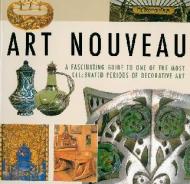
This book has chapters on the Origins of Art Nouveau, Art Nouveau at the 1900 Universal Exposition in Paris, Major Artists and a Bibliography

Товар отсутствует
cообщить о поступлении
Jean Lahor
ID: 3404
Издательство: Parkstone
Art of Century is a collection of thirty titles which glide through the most significant cultural movements from the Antiquity to the twenty-first century. Through its first fives titles, Naive Art, the Renaissance, the Russian Avant-Garde, Symbolism and Art Nouveau, this series offers a new didactic approach to the main currents and major artists who moulded our comprehension of the twenty-first century aesthetics.
Товар отсутствует
cообщить о поступлении
Klaus-Jurgen Sembach (Tascheh 25 - Special edition)
ID: 5218
Издательство: Taschen

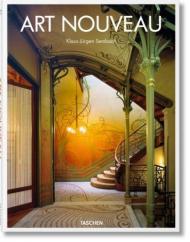
Art Nouveau, whose emergence at the same time as cinema was no mere coincidence, represents the most remarkable attempt to reconcile the demands of the technical age with the undying wish for beauty and glorification—or to pit them against the other.

Here the reform movement of the turn of the century is not only dealt with as an artistic event, but those economic and political interests which inspired, supported, and handicapped it are also taken into account. In the chapters "Movement," "Unrest", and "Equilibrium," the historical phenomenon as a whole is characterised and is also presented with its own distinct local features. The centres of Brussels, Nancy, Barcelona, Glasgow, Helsinki and Chicago are dealt with in subchapters as are Munich, Darmstadt and Weimar. Finally, Vienna, that city in which the synthesis achieved its culmination, is described separately. The outstanding artists are examined in detail in connection with the respective cities of their greatest activity. The result is a complex picture of the symbiosis of architecture, furniture design, and craftsmanship with their corresponding approaches to artistic revitalization.

About the author:
Klaus-Jürgen Sembach organised the exhibitions "Die Nützlichen Künste" (Useful Arts), 1981 in Berlin, "Zug der Zeit – Zeit der Züge" (The Railway Era), 1985 in Nuremberg, "So viel Anfang war nie – Deutsche Städte 1945–1949" (Never have there been so many beginnings – German cities 1945–1949), in Nuremberg and Berlin 1989, and has numerous publications on architecture, design, photography and film to his name.

Товар отсутствует
cообщить о поступлении
Gabriele Fahr-Becker
ID: 5992
Издательство: Ullmann

The unity of art and life was the expressed goal of the Art Nouveau movement, the prelude to modernity. On the basis of shared ideas its adherents strove for a homogenous style, which nonetheless took on manifold variations in its expression. Dr. Gabriele Fahr-Becker pursues this will to style in architecture, interior decor, furniture design, silver and gold-smithery, ceramics and glasswork, graphic arts and painting. The author leads her readers through the diverse national variations of Art Nouveau in Europe and the United States. The significance of the literary and philosophical as well as cultural and political background is explained by means of many theories and writings by artists and their contemporaries. The countless permutations of Art Nouveau are woven into a complex and yet distinctive picture of this artistic movement at the turn of the twentieth century.

Товар отсутствует
cообщить о поступлении
Norbert Wolf
ID: 8287
Издательство: Prestel

This sumptuous volume explores key aspects of Art Nouveau - decorative arts, architecture, fashion, dance, advertising, and more - with an in-depth approach and stunning illustrations.

The Art Nouveau movement became an international phenomenon at the beginning of the twentieth century that ushered in the era of modernity in almost every aspect of cultural life. For decades critics have argued that Art Nouveau was not an artistic period in its own right, but an amalgam of artists and styles that served as a bridge between neoclassicism and modernism. In this comprehensive, authoritative, and copiously illustrated book, art historian Norbert Wolf explores Art Nouveau as a logical outgrowth of the historic forces in which it arose.

This book focuses on the movement’s wide variety of applications and reclaims its prominence in the pantheon of modern art history. Chapters on aesthetics, spirituality, and the cult of beauty offer luminous examples of works by Mucha, Gaudi, Hoffman, Klimt, Horta, Munch, and Tiffany, among many others.

Wolf’s text is both informed and accessible, providing an exciting narrative that brings the Art Nouveau movement into clear focus. Beautifully produced to appeal to a wide range of readers, this new volume gives one of the world’s most popular styles the serious consideration it deserves.

Товар отсутствует
cообщить о поступлении
Klaus-Jurgen Sembach
ID: 11528
Издательство: Taschen

For a fruitful period between the 1880s and the First World War, European and North American culture deferred to nature. With a symphony of flowing lines and organic shapes, Art Nouveau ( New Art ) inflected architecture, design, painting, graphic work, applied arts, and illustration.

Art Nouveau was deliberately nouveau. With a spirit of willful reform, its practitioners sought to distance themselves from the imitative historicism that characterized much 19th-century art and replace it with undulating, decorative qualities. Turning to vine tendrils, flowering buds, and bird feathers as ornamental reference, they pursued not only a linear freedom but also liberation from the weight of artistic tradition and expectation.

At the same time, Art Nouveau followed the example of the earlier English Aesthetic and Arts and Crafts movements to reject established hierarchies of artistic practice, to emphasize a return to handcraftsmanship, and to synthesize artistic media and practices into a Gesamtkunstwerk, or total work of art. In this, as in its turn to nature, Art Nouveau is often seen as an aesthetic response to the Industrial Revolution, a recoil from the mass-produced and mechanic, and an elevation of the human hand and wonders of the great outdoors.

This fresh TASCHEN edition considers Art Nouveau as a broad historical phenomenon with distinct local features. We consider the style s wider artistic, economic, and political circumstances, as well as its particular flavor in such hubs as Vienna, Glasgow, Munich, Weimar, and Chicago. Outstanding proponents such as Victor Horta, Antoni Gaudi, and Charles Rennie Mackintosh are featured in connection with the cities of their greatest activity. The result is a vivid portrait of the age and a movement that is as much entrenched in our imagination of the fin de siecle as it is in the trajectory of modernism.

Klaus-Jürgen Sembach is a writer, curator, and former director of the Museum for Industrial Culture in Nuremberg. He has produced numerous publications on architecture, design, photography, and film.
Товар отсутствует
cообщить о поступлении
ID: 2867
Издательство: Schiffer

Illustrations:  500 color and 275 b/w graphics

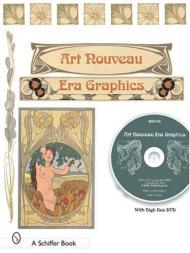
This rich treasury of Art Nouveau designs will inspire and enrich your decorative arts projects. The images were originally presented in the 1890s for use in home interiors, ceramics, textiles, stationary, stained glass, and ironwork. Now, even easier to use, they are in both print and digital forms, referenced by page numbers. 775 graphics, 500 in color, are at your fingertips. Specifically created more than a century ago to appeal to an emerging aesthetic called Art Nouveau, or New Art (derived from "La Maison de l'Art Nouveau," a gallery for interior design that opened in Paris in 1896), this style became an international fad by the early 20th-century. Art Nouveau is characterized by organic foliate forms, sinuous lines, and non-geometric, "whiplash" curves that are highly appealing again today. With this wealth of beautiful designs, you can add an authentic antique touch to today's graphics with modern technology.


Товар отсутствует
cообщить о поступлении
Fritz Falk
ID: 4750
Издательство: Arnoldsche

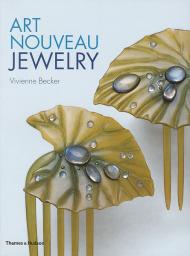
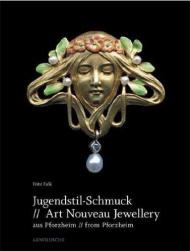
Around 1900 the Pforzheim jewellery-making industry, which had been established since 1767, underwent an upturn to flourish as never before. The participation of Pforzheim businesses in the 1900 Paris World Exhibition and the thorough assimilation of a variety of influences from abroad – including the figurative French Art Nouveau style – ensured that Pforzheim Art Nouveau jewellery developed confidently towards aesthetic autonomy.

Collaboration between the jewellery industry and professors at the Pforzheim School for the Applied Arts as well as sharp eyes for new developments outside the jewellery capital shaped Pforzheim jewellery creations around 1900. Other fecund sources of colla-boration were the Darmstadt Mathildenhöhe artists and Wiener Werkstätte. The author has discovered hitherto unpublished contemporary source material and has been able to draw on hundreds of extant original pieces of jewellery – brooches, pendants, collars, hatpins and hair combs that are now in museums, private collections and on the art market – to make a choice selection for this book. Thus a living picture emerges of the diverse formal and technical -possibilities that gave rise to the design, craftsmanship and industrial manufacture characteristic of Pforzheim Art Nouveau jewellery.

Many important designers worked for the Pforzheim jewellery industry around 1900. This is the first wide-ranging survey – informative on both artists and firms and lavishly illustrated.
Artists (a selection): Franz Böres | Max Gradl | Patriz Huber | Georg Kleemann | Ferdinand Morawe | Otto Prutscher | Emil Riester | Fritz Wolber
Firms (a selection): Theodor Fahrner | Gebr. Falk | Hermann & Speck | Kollmar & Jourdan | Lauer & Wiedmann | Levinger & Bissinger | Victor -Mayer | Meyle & Mayer | A. Odenwald | Rodi & Wienenberger | F. Zerrenner

Товар отсутствует
cообщить о поступлении
Издательства
A B C D E F G H I G K L M N O P Q R S T U V W X Y Z 0-9
А Б В Г Д Е Ё Ж З И Й К Л М Н О П Р С Т У Ф Х Ц Ч Ш Щ Ы Э Ю Я