Издательства
- Rizzoli (481)
- Thames & Hudson (156)
- Prestel (149)
- Gestalten (106)
- Braun (105)
- teNeues (71)
- Vendome Press (60)
- DOM Publishers (51)
- Monacelli Press (50)
- Phaidon (49)
Подобрать по характеристикам
Разделы
Наличие на складе
Издательства
Цена (130 - 229830 грн)
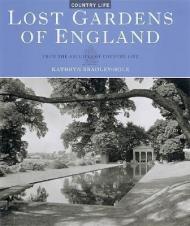
Протягом ХХ століття впливові щотижневі статті про сади у видавництві «Country Life» призвели до створення неперевершеного архіву історії садівництва, який є основою для цієї книги. Ефемерна природа садів означає, що вони дуже легко можуть «загубитися». 45 втрачених англійських садів, проілюстрованих та детально розглянутих, організовані за регіонами та охоплюють широкий діапазон періодів та стилів від 1890-х до 1930-х років, розкриваючи магію вікторіанського та едвардіанського дизайну садів.
Чудово відтворені у двотоновому кольорі, 160 приголомшливих фотографій свідчать про багату та різноманітну спадщину англійських садів та людей, які їх створили. Кетрін Бредлі-Хоул знову відвідала ці місця, і її ретельно досліджений, проникливий текст пояснює їхнє походження та долю.
Born in Estonia in 1901, Louis Isidore Kahn was to become one of the United States’ most important architects of the post-war period, alongside the Modern masters Mies van der Rohe, Walter Gropius and Le Corbusier.
Although renowned for a number of seminal modern works, he came to question many of the precepts of the Modern Movement. In particular, he questioned the ability of the International Style of Modernism to house the social spaces required by the latter half of the century.
In 1947 Kahn was appointed Professor at Yale University. He was to continue teaching throughout his architectural career, influencing a younger generation of architects along the way. His teaching enabled him to further develop his own concepts and to inform his ever-evolving definition of design. He was drawn to investigate monumentality in architecture, creating buildings out of heavy, solid materials and forms and incorporating vivid plays of light, in complete contrast to the lightweight glass and steel structures being created elsewhere by his peers. This monumentality was also imbued with his concern for the ritual of human experience. His career, although extending to just over twenty years, was a rich and varied one, where he continually readdressed the issues of light, mass, structure, monumentality, geometry and materials.
This monograph follows a predominantly chronological order, identifying major themes and examining key works according to these themes. A comprehensive list of projects by Kahn spanning his lifetime and drawn from the Louis I Kahn Collection at the University of Pennsylvania Archives is also included, listing over 231 projects, of which at least c30 were previously unattributed.
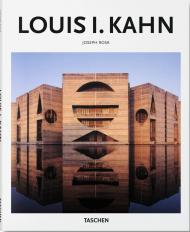
Brilliant Buildings. Louis Isadore Kahn and a luminous modernist language
Louis Isadore Kahn (1901–1974) treated each building like a temple. Across the United States, in India, Bangladesh, Pakistan, and Israel, his designs combined the sleek, utilitarian surfaces of modernism with a devotion to geometric forms and a reverence for natural light that suffused his structures with a monumental and breathtaking spirituality.
This essential introduction brings together 17 of Kahn’s most important buildings across his cultural, governmental, religious, and residential repertoire. Plans, views, descriptions, and quality photographs trace the context and development of each project, while an introductory essay explores Kahn’s unique architectural ideology and his legacy as one of the most important 20th-century American architects since Frank Lloyd Wright.
Through Kahn masterworks, such as the National Assembly Building in Dhaka, Bangladesh, or Kimbell Art Museum in Fort Worth, Texas, we’ll explore Kahn’s his “back to basics” grammar inspired by ancient sites in Italy, Greece, and Egypt; and his unique vocabulary of mass, void, and light that suffused the International Style with a near-celestial luminescence.
The author:
Joseph Rosa is the Director of the University of Michigan Museum of Art. He is author of numerous publications and has taught at Southern California Institute of Architecture (SCI-Arc), the California College of the Arts, The College of Environmental Design at the University of California in Berkeley, and the Graduate School of Architecture, Planning, and Preservation at Columbia University.
The editor:
Peter Gössel runs an agency for museum and exhibition design. He has published TASCHEN monographs on Julius Shulman, R. M. Schindler, John Lautner, and Richard Neutra, as well as several titles in the Basic Architecture series.
About the series:
Born back in 1985, the Basic Art Series has evolved into the best-selling art book collection ever published.
Each book in TASCHEN’s Basic Architecture series features:
- an introduction to the life and work of the architect
- the major works in chronological order
- information about the clients, architectural preconditions as well as construction problems and resolutions
- a list of all the selected works and a map indicating the locations of the best and most famous buildings
- approximately 120 illustrations (photographs, sketches, drafts, and plans)
Though Louis Isidore Kahn (1901–1974) started his career late in his life, the few projects he was able to undertake were realized to perfection. With the Jonas Salk Institute in La Jolla, California (1959–1965) Kahn created a workspace with superb functional and aesthetic qualities; the institute`s Minimalist elements radiate a sense of eternal beauty. The Kimbell Art Museum in Fort Worth (1966–1972) occupies the somewhat faceless city like an island of spiritual space, an effect that is achieved by simplicity in design and materials. Also, the Indian Institute of Management in Ahmedabad (1962–1974) and the Sher-e-Bangla Nagar, National Assembly of Bangladesh in Dhaka that was finished after his death are buildings of monumental importance, demonstrating the vision of a talented and very unusual man.
This book brings together 17 Kahn projects, ranging from private housing to commercial architecture, religious buildings, exhibition spaces, and government buildings.
About the Series:
Every book in TASCHEN's Basic Architecture Series features:
- approximately 120 images, including photographs, sketches, drawings, and floor plans
- introductory essays exploring the architect's life and work, touching on family and background as well as collaborations with other architects
- the most important works presented in chronological order, with descriptions of client and/or architect wishes as well as construction problems and resolutions
-an appendix including a list of complete or selected works, biography, bibliography, and a map indicating the locations of the architect's most famous buildings
An exploration of the dynamic and innovative architecture and interiors commissioned by Louis Vuitton. A prescient advocate of contemporary interiors and architecture, Louis Vuitton continues to encourage innovation and playfulness in the designs of their retail spaces without losing sight of the essence of luxury central to its identity. This process of designing places to display high-style objects has created a new venue for cutting-edge architecture and transformed city streetscapes.
This exploration of Louis Vuitton’s international stores, as well as industrial sites and unrealized projects, includes interviews with some of today’s most talented architects and designers who discuss the beautiful and complex structures they have produced in collaboration with Louis Vuitton. This book examines the physical aspects of these buildings as well as the ideas that went into their composition.
Acting as both a backdrop for luxurious retail goods and the physical manifestation of the brand, these spaces are a genre unto themselves that invite exploration. With luxurious finishes and unexpected textures, these fantastic buildings represent the intersection of fashion and interior design. The book includes interviews with Jun Aoki, Peter Marino, Christian de Portzamparc, David McNulty, and Christian Reyne.
About the Authors:
Mohsen Mostafavi is an architect and dean of the Harvard Graduate School of Design. Frederic Edelmann has been the architecture critic for Le Monde since 1977. Ian Luna is an author and editor. Rafael Magrou is an architect, journalist, and curator based in Paris
Luxury and art have never been more closely linked than they are in these early years of the twenty-first century.
Virtually all the world’s major luxury houses have associated themselves with contemporary art through sponsorships, commissions, or foundations, and these points of exchange nourish the increasingly symbiotic relationship between fashion, art, and other design disciplines. Of all modern luxury brands, Louis Vuitton can claim to maintain the richest and most varied associations with the world of art. Included in this volume are Louis Vuitton’s important collaborations with an elite group of artists, architects, designers, and photographers, such as Jun Aoki, Shigeru Ban, Vanessa Beecroft, Olafur Eliasson, Zaha Hadid, David LaChapelle, Jean Larivière, Annie Leibovitz, Takashi Murakami, Richard Prince, Stephen Sprouse, James Turrell, Inez Van Lamsweerde, and Vinoodh Matadin. The book is structured as a seductive anthology of the house’s most visible collaborations. Critical essays examine and position Louis Vuitton’s patronage — under the guidance of Artistic Director Marc Jacobs — during one of the most fertile periods of contemporary art and design.
About the Author:
Marc Jacobs is the Creative Director of Louis Vuitton Malletier and the chief designer of Vuitton’s ready-to-wear collections.
________
Пролистать книгу Louis Vuitton: Art, Fashion and Architecture
With the term lounge, one associates a place accompanied with lingering physical relaxation and a pleasant atmosphere. Relaxing in contemporarily designed surroundings thus becomes an attitude toward life. This volume shows over 60 international design examples that illuminate exactly this lounge feeling from various perspectives and so offers an up-to-date and comprehensive survey of this topic for the first time. Divided into chapters on airline lounges, corporate lounges, public facilities, gastronomy, hotels, and trade fair and events, contractor, planners, and interested parties will find a wealth of inspiring and useful stimuli.
One of the toughest challenges for architects and interior designers is providing a high-quality product whilst juggling with a budget. The delicate economic climate in many countries across the globe has further reinforced this trend, or need. This book presents a vast range of projects – houses, prefab dwellings, tree houses, eco-friendly homes, etc. – and solutions which couple low budgets with masterful architectural design that also offers every home comfort.
At times architecture does appear to be all luxury and splendour, depending on the client, but in the majority of cases architects are in fact working to a fixed budget for the region and the client’s prospective. In spite of this, architects are still considered to be a source of inspiration, with the ability to stick to a tight budget and excel themselves, even within the established boundaries of a project.
The low-tech architecture comes to the oil crisis, in opposition to the coldness of modern architecture, and proposes an active user participation in the design and implementation of Community building with an accent. This book presents a curated selection of projects with different organic materials such as wood, straw, mud, stone and reeds from rural and urban areas.
A collection of well-designed, affordable single-family home plans, multi-family home plans, or small office plans created specifically for building contractors