Издательства
- Rizzoli (101)
- Thames & Hudson (25)
- Taschen (10)
- Phaidon (8)
- Monacelli Press (6)
- Flammarion (6)
- Vendome Press (6)
- Beta-Plus (6)
- Gestalten (6)
- Princeton Architectural Press (5)
Подобрать по характеристикам
Разделы
Наличие на складе
Издательства
Цена (660 - 15000 грн)
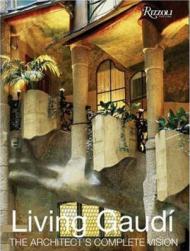
Antoni Gaudi is celebrated as one of the most important architects of the early 20th century.
His unbelievable Art Nouveau buildings were marked by their whimsical design and fantastic details. While much has been written on this extraordinary figure, Living Gaudi is one of the few books to consider his gardens, parks and residential projects as a body of work, and one of the few to particularly focus on his designs for interior furnishings, which were part and parcel of his overall vision for a building. This little-known aspect of his work is surveyed in this book with stunning photography and exquisite detail.
The volume also includes a selection of the architect's own writings, which give the reader a revealing look at his incomparable genius. Complete with archival photographs and more than 150 full-colour contemporary photographs, Gaudi's amazing talent is revealed in this landmark work.
Classic style and impeccable attention to detail are hallmarks of the work of interior designer Matthew Patrick Smyth. His comfortable, timeless rooms are tailored to fit his clients’ personalities and lifestyles, whether they are dynamic young couples with children or cultured art collectors. Smyth masterfully blends contemporary pieces with antiques to endow each space with a sense of solidity and history while maintaining a completely fresh, modern sensibility.
Smyth credits his mentor David Easton for teaching him how to see the intrinsic value of any given piece and to successfully mix furnishings with similar lines, materials, and forms even when they are products of different centuries. Easton also embedded in Smyth a love for travel - leading to the designer’s devotion to all things French that permeates his work. Smyth opened his own firm in New York in 1987 and now works with clients around the globe. His designs - characterized by refined, flawless interior architecture - are seen in grand Shelter Island mansions, classically proportioned San Francisco townhouses, and demure Parisian pied-à-terres alike.
In this lavishly illustrated volume, Smyth reveals his own design tips, rules, and approaches to meeting challenges offered by uniquely shaped spaces. He focuses on editing collections to better showcase individual works, the personal nature of color selection, adding - or restoring - historical references, and finishing a space off with glorious, often unexpected fabrics and trims. Over two hundred color photographs showcase a wide variety of styles, from a nature-infused Aspen vacation home to the quintessential Upper East Side apartment to a London flat that smoothly blends its owner’s inherited collection of Renaissance art with fine Indian pieces.
Born in Estonia in 1901, Louis Isidore Kahn was to become one of the United States’ most important architects of the post-war period, alongside the Modern masters Mies van der Rohe, Walter Gropius and Le Corbusier.
Although renowned for a number of seminal modern works, he came to question many of the precepts of the Modern Movement. In particular, he questioned the ability of the International Style of Modernism to house the social spaces required by the latter half of the century.
In 1947 Kahn was appointed Professor at Yale University. He was to continue teaching throughout his architectural career, influencing a younger generation of architects along the way. His teaching enabled him to further develop his own concepts and to inform his ever-evolving definition of design. He was drawn to investigate monumentality in architecture, creating buildings out of heavy, solid materials and forms and incorporating vivid plays of light, in complete contrast to the lightweight glass and steel structures being created elsewhere by his peers. This monumentality was also imbued with his concern for the ritual of human experience. His career, although extending to just over twenty years, was a rich and varied one, where he continually readdressed the issues of light, mass, structure, monumentality, geometry and materials.
This monograph follows a predominantly chronological order, identifying major themes and examining key works according to these themes. A comprehensive list of projects by Kahn spanning his lifetime and drawn from the Louis I Kahn Collection at the University of Pennsylvania Archives is also included, listing over 231 projects, of which at least c30 were previously unattributed.
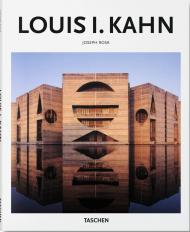
Brilliant Buildings. Louis Isadore Kahn and a luminous modernist language
Louis Isadore Kahn (1901–1974) treated each building like a temple. Across the United States, in India, Bangladesh, Pakistan, and Israel, his designs combined the sleek, utilitarian surfaces of modernism with a devotion to geometric forms and a reverence for natural light that suffused his structures with a monumental and breathtaking spirituality.
This essential introduction brings together 17 of Kahn’s most important buildings across his cultural, governmental, religious, and residential repertoire. Plans, views, descriptions, and quality photographs trace the context and development of each project, while an introductory essay explores Kahn’s unique architectural ideology and his legacy as one of the most important 20th-century American architects since Frank Lloyd Wright.
Through Kahn masterworks, such as the National Assembly Building in Dhaka, Bangladesh, or Kimbell Art Museum in Fort Worth, Texas, we’ll explore Kahn’s his “back to basics” grammar inspired by ancient sites in Italy, Greece, and Egypt; and his unique vocabulary of mass, void, and light that suffused the International Style with a near-celestial luminescence.
The author:
Joseph Rosa is the Director of the University of Michigan Museum of Art. He is author of numerous publications and has taught at Southern California Institute of Architecture (SCI-Arc), the California College of the Arts, The College of Environmental Design at the University of California in Berkeley, and the Graduate School of Architecture, Planning, and Preservation at Columbia University.
The editor:
Peter Gössel runs an agency for museum and exhibition design. He has published TASCHEN monographs on Julius Shulman, R. M. Schindler, John Lautner, and Richard Neutra, as well as several titles in the Basic Architecture series.
About the series:
Born back in 1985, the Basic Art Series has evolved into the best-selling art book collection ever published.
Each book in TASCHEN’s Basic Architecture series features:
- an introduction to the life and work of the architect
- the major works in chronological order
- information about the clients, architectural preconditions as well as construction problems and resolutions
- a list of all the selected works and a map indicating the locations of the best and most famous buildings
- approximately 120 illustrations (photographs, sketches, drafts, and plans)
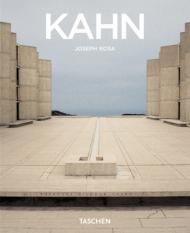
Though Louis Isidore Kahn (1901–1974) started his career late in his life, the few projects he was able to undertake were realized to perfection. With the Jonas Salk Institute in La Jolla, California (1959–1965) Kahn created a workspace with superb functional and aesthetic qualities; the institute`s Minimalist elements radiate a sense of eternal beauty. The Kimbell Art Museum in Fort Worth (1966–1972) occupies the somewhat faceless city like an island of spiritual space, an effect that is achieved by simplicity in design and materials. Also, the Indian Institute of Management in Ahmedabad (1962–1974) and the Sher-e-Bangla Nagar, National Assembly of Bangladesh in Dhaka that was finished after his death are buildings of monumental importance, demonstrating the vision of a talented and very unusual man.
This book brings together 17 Kahn projects, ranging from private housing to commercial architecture, religious buildings, exhibition spaces, and government buildings.
About the Series:
Every book in TASCHEN's Basic Architecture Series features:
- approximately 120 images, including photographs, sketches, drawings, and floor plans
- introductory essays exploring the architect's life and work, touching on family and background as well as collaborations with other architects
- the most important works presented in chronological order, with descriptions of client and/or architect wishes as well as construction problems and resolutions
-an appendix including a list of complete or selected works, biography, bibliography, and a map indicating the locations of the architect's most famous buildings
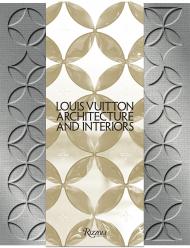
An exploration of the dynamic and innovative architecture and interiors commissioned by Louis Vuitton. A prescient advocate of contemporary interiors and architecture, Louis Vuitton continues to encourage innovation and playfulness in the designs of their retail spaces without losing sight of the essence of luxury central to its identity. This process of designing places to display high-style objects has created a new venue for cutting-edge architecture and transformed city streetscapes.
This exploration of Louis Vuitton’s international stores, as well as industrial sites and unrealized projects, includes interviews with some of today’s most talented architects and designers who discuss the beautiful and complex structures they have produced in collaboration with Louis Vuitton. This book examines the physical aspects of these buildings as well as the ideas that went into their composition.
Acting as both a backdrop for luxurious retail goods and the physical manifestation of the brand, these spaces are a genre unto themselves that invite exploration. With luxurious finishes and unexpected textures, these fantastic buildings represent the intersection of fashion and interior design. The book includes interviews with Jun Aoki, Peter Marino, Christian de Portzamparc, David McNulty, and Christian Reyne.
About the Authors:
Mohsen Mostafavi is an architect and dean of the Harvard Graduate School of Design. Frederic Edelmann has been the architecture critic for Le Monde since 1977. Ian Luna is an author and editor. Rafael Magrou is an architect, journalist, and curator based in Paris
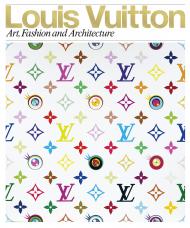
Luxury and art have never been more closely linked than they are in these early years of the twenty-first century.
Virtually all the world’s major luxury houses have associated themselves with contemporary art through sponsorships, commissions, or foundations, and these points of exchange nourish the increasingly symbiotic relationship between fashion, art, and other design disciplines. Of all modern luxury brands, Louis Vuitton can claim to maintain the richest and most varied associations with the world of art. Included in this volume are Louis Vuitton’s important collaborations with an elite group of artists, architects, designers, and photographers, such as Jun Aoki, Shigeru Ban, Vanessa Beecroft, Olafur Eliasson, Zaha Hadid, David LaChapelle, Jean Larivière, Annie Leibovitz, Takashi Murakami, Richard Prince, Stephen Sprouse, James Turrell, Inez Van Lamsweerde, and Vinoodh Matadin. The book is structured as a seductive anthology of the house’s most visible collaborations. Critical essays examine and position Louis Vuitton’s patronage — under the guidance of Artistic Director Marc Jacobs — during one of the most fertile periods of contemporary art and design.
About the Author:
Marc Jacobs is the Creative Director of Louis Vuitton Malletier and the chief designer of Vuitton’s ready-to-wear collections.
________
Пролистать книгу Louis Vuitton: Art, Fashion and Architecture
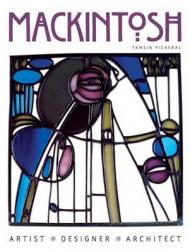
"Mackintosh" is a celebration of the extraordinary career of one of the most intriguing and influential artists of his time, Charles Rennie Mackintosh. The book reveals a selection of some of his most important and popular works, from stained glass pieces and furniture through to architecture, at the same time giving an overview of his life and career. Secondary images draw on connections and echoes with each main entry to give depth and fuller understanding to create a beautifully rich and enjoyable tribute to the father of the 'Glasgow Style'.
MAD DINNER is the first book by MAD office, Beijing-based architectural office.
Organized around the metaphor of dinner table conversation, the book is a collection of ideas and opinions about topics ranging from politics to ecology to fame to the future.
The dinner's "guests" include people from all levels of Chinese society: a government official, hairdresser, migrant laborers, a doctor, a taxi driver, and a developer are all brought together to offer their views in an atmosphere of openness and exchange. MAD's work is embedded in a series of extended conversations with international advisors, including the Swiss curator Hans Ulrich Obrist, British writer Ian Buruma, filmmakers Zhang Yimou and Jia Zhangke, and the artist Ai Weiwei.
The conversations work in tandem with MAD's proposals to reveal their essential account of the architect's practice and experience inside of China, the fastest urbanization in world history
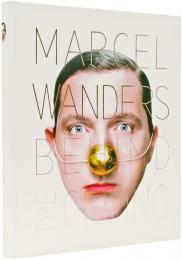
Dutch designer Marcel Wanders is undeniably one of the most prolific and celebrated international designers today. Marcel Wanders: Behind the Ceiling is the highly anticipated first monograph on the star designer. It charts his provocative body of work and stellar career.
Wanders has garnered fame through his ingenious talent, turning conceptual visions into stunning products and dazzling environments by fusing cutting-edge technology, artistry and a love of the bizarre. Wanders’ designs are characteristically buoyant and imbued with his signature irony and quirky dry wit that evoke imagination; nevertheless, his furniture, lighting, interior designs, tableware, decorative porcelain and ceramic vases are unpretentiously urbane.
Lavishly printed, this book showcases Marcel Wanders’ work over the past decade. It features tableware for the renowned Dutch porcelain manufacturers Tichelaar Makkum and Royal Delft, as well as his personal art editions such as his acclaimed oversized ceramic bells, crochet seating and sculptures launched by his own studio. In addition, it presents textiles and furniture he has designed for an extensive client list including brands such as B&B Italia, Poliform, Moroso, Cappellini, Droog as well as Moooi, of which he is also Art Director and co-owner. An entertainer at heart, his theatrical performances and installations are also included, which prove his exceptional skill at amplifying experience with mesmerising environments.
The book also introduces designs for interiors and architecture such as the extraordinary “all over city” hospitality-concept Lute Suites he established in Amsterdam as well as unpublished projects, including the new Mondrian South Beach Hotel in Miami and the Villa Moda flagship store in Bahrain, scheduled to open its doors in 2009.
Marcel Wanders: Behind the Ceiling includes stunning photographs and sketches, and accompanying text along with abundant quotes from the designer himself offers a first-hand account of Wanders’ irresistible universe.
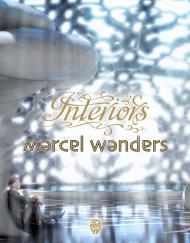
The first large-format monograph on the interiors and building projects of Marcel Wanders, one of the most original designers working today. Marcel Wanders’s distinctive output combines a flair for the theatrical with a unique understanding of space that has vaulted him into the top ranks of contemporary design. His interiors projects range from iconic hotels like the Mondrian South Beach in Miami, to fairy-tale private residences in Amsterdam, Mallorca, and Jakarta. Developed integrally with his product design, his spaces incorporate a romantic, monumental sensibility that has redefined interior design. Starting with his work for the Morgans boutique hotel chain (The Rivington in New York) and the London flagship for Mandarina Duck, Wanders’s work has spread to four continents. He also has recently partnered with Philippe Starck’s and John Hitchcox’s design-focused property development brand, yoo. The interiors developed by his Marcel Wanders Studio are drawn from a graphic tradition that combines the everyday with the ornamental, and these inspirational sources will be harnessed to create an unprecedented interior design volume.
About the Author:
Marcel Wanders is the founding principal of Marcel Wanders Studio, an interdisciplinary design practice based in Amsterdam.